

Why Must You Use Certified Explosion-Proof Lights? — A Straight Talk on International Regulations
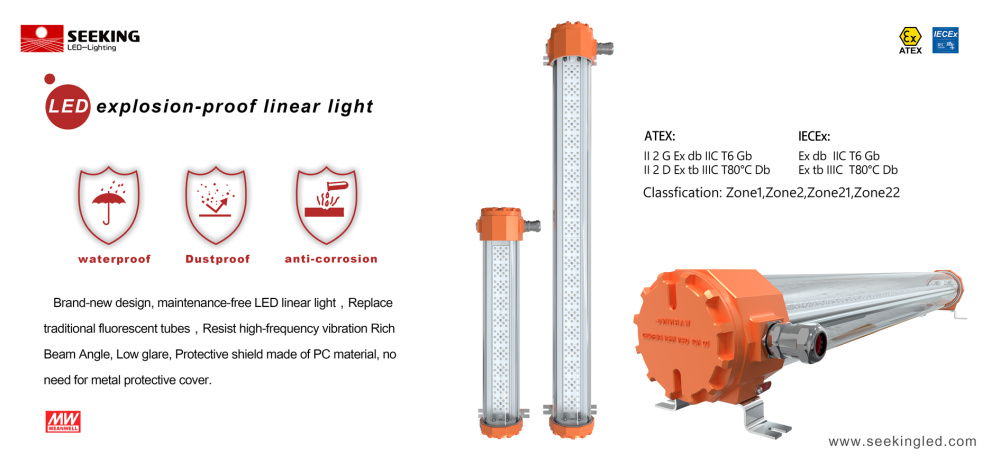
In high-risk industries like petrochemical, oil & gas, pharmaceuticals, coatings, and mining, choosing the right explosion-proof lighting isn't just a simple purchase — it's a serious decision that can affect both safety and whether your project is even allowed to operate.
How International Explosion-Proof Rules Work
Around the world, any electrical equipment used in hazardous areas must meet strict certification requirements. You are not allowed to use non-certified explosion-proof lights in explosive environments. It's not a suggestion — it's the law.
Key International Standards You Need to Know
- EU ATEX Directive (2014/34/EU): This is the mandatory rule across Europe. It applies to Zone 0, Zone 1, and Zone 2 hazardous areas (both gas and dust). Every product must pass rigorous testing, risk assessments, and quality checks, and carry the CE mark. If it doesn't have ATEX certification, you simply can't use it on EU projects. Otherwise, you risk fines, product seizures, or even having the whole project shut down.
- IECEx International Certification: Based on the IEC 60079 international standards, this is one of the most widely accepted certifications globally. One IECEx certificate is recognized in many countries — including the US, Canada, Australia, Middle East, and Russia. It makes life much easier for international projects because you don't need to get separate certifications for every country.
- North American UL/CSA Standards: In the US and Canada, equipment must meet the National Electrical Code (NEC) and CEC rules. UL 844 is the main standard for explosion-proof lights. Many big oil & gas and chemical projects specifically demand UL certification in their bidding documents.
What Actually Happens in Real International Projects
On global oil & gas, chemical, or pharma projects, the project owner, main contractor, and insurance company will always require full certification documents — including the certificate, test reports, and proof of quality control.
If your lights don't have ATEX, IECEx, or the required local certification, you'll face serious problems like:
- Failing safety audits
- Goods stuck at customs
- Project delays or even contract cancellation
- Insurance companies refusing to cover you
Bottom Line: Certification isn't optional — it's the basic requirement to do business internationally. Using non-certified explosion-proof lights is a violation that can lead to big legal headaches and serious commercial risks.
- Products
- Explosion proof light
- Portable explosion proof lighting
- Explosion proof emergency light
- Explosion proof LED T8 tube
- Explosion proof Junction Box
- Explosion proof street light
- Service
- FAQ
- Docs download
Service hotline
Tel:+86 755 29846615
Work time:9:00-20:00
E-mail:sales02@seekingled.com
address:5F, Building 5, Guole Science and Technology Park, Lirong Road, Dalang Street, Longhua, Shenzhen, China