

How Can You Tell from the Nameplate Whether an Explosion-Proof Light Is Genuinely Qualified?
Date: 2025-04-29
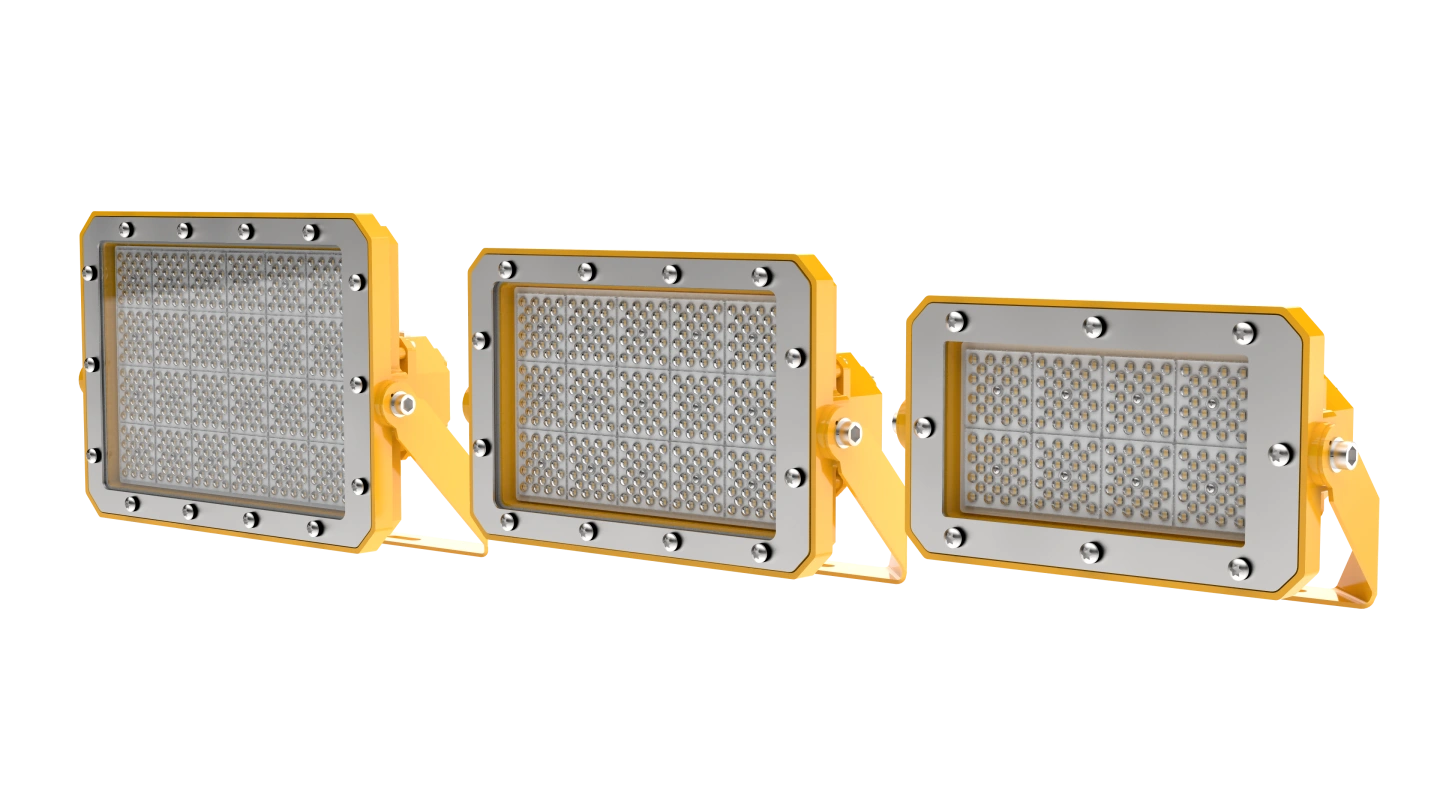
All explosion-proof lights have very strict requirements for what must be shown on the nameplate. Once a lamp receives its certification from the notified body, its production and use are strictly controlled.
Here are the key things you should check:
1. It Must Have a Clear Ex Marking
For example: Ex II 2 G Ex db IIC T6 Gb
- Ex — Means it complies with ATEX directives.
- II — For explosive atmospheres other than mines (like chemical plants, refineries, etc.).
- 2 — High level of protection, suitable for Zone 1 (gas) or Zone 21 (dust) — areas where explosive atmospheres may appear.
- G — For explosive gas environments.
- db — Flameproof enclosure (Ex d), the housing can withstand an internal explosion without transmitting it to the outside.
- IIC — Suitable for the most dangerous gases (like hydrogen, acetylene). It also covers IIB and IIA gases.
- T6 — Maximum surface temperature ≤ 85°C (when ambient temperature is 55°C). It also covers T5, T4, T3, and T2.
2. The Certificate Number Must Be Engraved on the Nameplate
Genuine certified lights always show the official certificate number.
3. There Should Be a Unique Manufacturer Serial Code
This allows traceability later if any issues arise.
4. Manufacturer's Name, Address, and Contact Phone Number Must Be Clearly Marked
- Products
- Explosion proof light
- Portable explosion proof lighting
- Explosion proof emergency light
- Explosion proof LED T8 tube
- Explosion proof Junction Box
- Explosion proof street light
- Service
- FAQ
- Docs download
Service hotline
Tel:+86 755 29846615
Work time:9:00-20:00
E-mail:sales02@seekingled.com
address:5F, Building 5, Guole Science and Technology Park, Lirong Road, Dalang Street, Longhua, Shenzhen, China
Copyright © 2026 All rights reserved:Exlights/seekingled