

Why Are Explosion-Proof Lights Necessary in Natural Gas Midstream Processing?
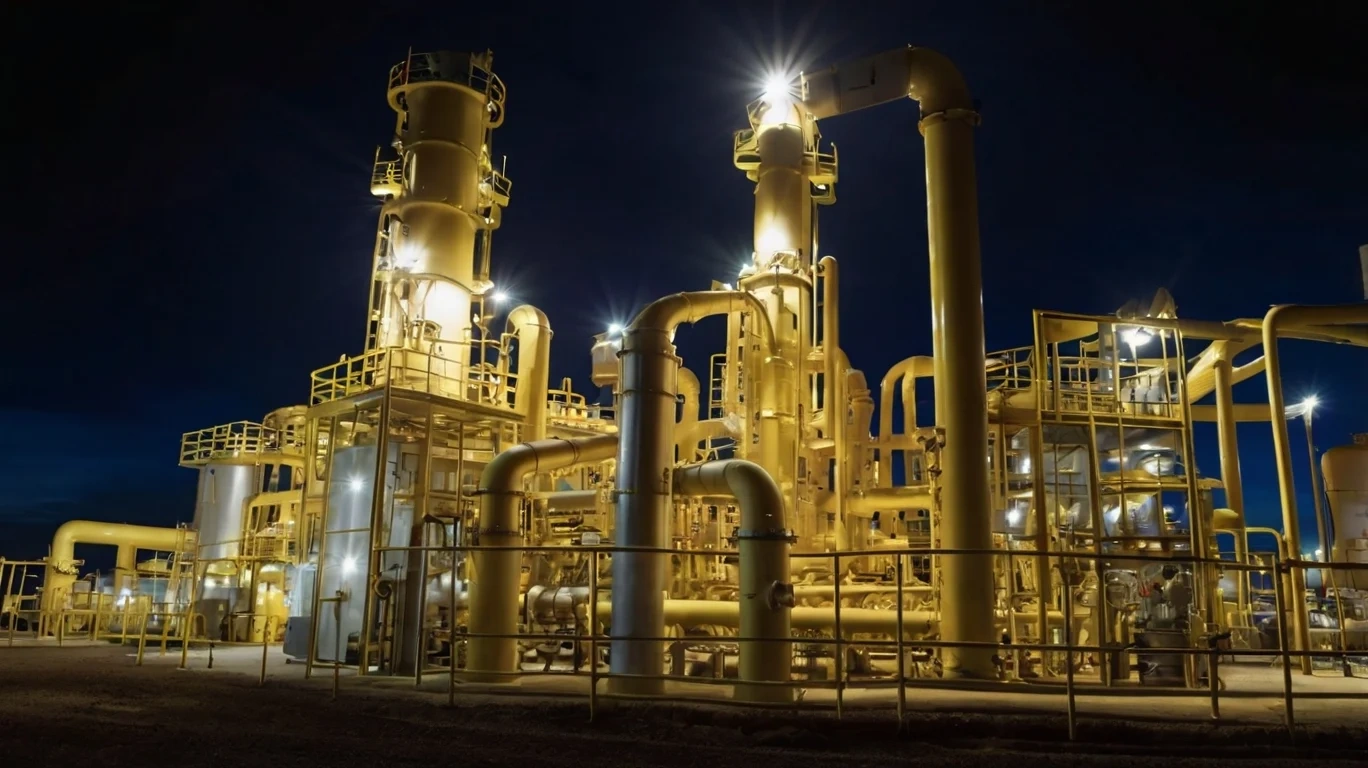
Natural gas midstream processing turns raw gas into pipeline-quality gas or LNG. It includes gathering, dehydration, acid gas removal (desulfurization & decarbonization), NGL recovery, and compression. This stage carries extremely high explosion risks and requires the mandatory use of explosion-proof lights.
1. Hazardous Characteristics of Midstream Processing Environments
- Large amounts of flammable gases are present, such as methane, ethane, propane, and hydrogen sulfide (H₂S). These gases can easily form explosive mixtures with air.
- Equipment such as amine absorbers, compressors, separators, storage tanks, valve manifolds, and pipe racks may leak gas. This may occur during normal operation and maintenance.
- IECEx and ATEX standards classify most gas processing plant areas as Zone 1. They also identify some high-risk spots as close to Zone 0.
2. Hazards of Ordinary Lights
Ordinary lighting fixtures can create sparks, arcs, or hot surfaces during use or failure. These can ignite flammable gas mixtures and cause fires or explosions.
3. Core Protection Principles of Explosion-Proof Lights
- Ex d Flameproof Structure: Withstands internal explosions and prevents flame propagation to the outside.
- Strict Temperature Control: Uses T4–T6 ratings, keeping surface temperature well below the gas ignition point.
- High Protection Performance: IP66/IP67 + IK10, suitable for corrosive and vibrating environments.
- Authoritative Certification: Certified to IECEx, ATEX, and other relevant standards.
4. Regulatory and Practical Significance
International standards (IECEx, ATEX, API RP 500, etc.) clearly mandate the use of properly rated explosion-proof electrical equipment in hazardous areas. Gas processing plants are high-risk continuous production facilities, making explosion-proof lighting essential for safety, accident prevention, and regulatory compliance.
Selection and Installation Guidelines
- Confirm the area classification and gas properties — Zone rating (0, 1, or 2), gas group (IIA, IIB, or IIC), and temperature class (T1 to T6).
- Confirm the required IP and IK ratings for weather, washdown, dust, and mechanical impact.
- The luminaire must have a valid certification and marking (e.g., ATEX/IECEx Ex db IIB T4 Gb) that meets or exceeds the site requirement.
- All installation must follow the applicable electrical code and the manufacturer's instructions.
- Use certified glands and seals, approved conduit and cable methods, and ensure proper earthing and bonding.
- Establish a routine inspection and maintenance plan, including visual, close, and detailed inspections. Keep records for audits. Replace components only with approved parts.
Summary: Using explosion-proof lights in natural gas midstream processing is a mandatory safety and compliance requirement. Zone 1 Ex d flameproof LED lighting gives strong ignition-source control and reliable illumination during continuous gas processing operations.
- Products
- Explosion proof light
- Portable explosion proof lighting
- Explosion proof emergency light
- Explosion proof LED T8 tube
- Explosion proof Junction Box
- Explosion proof street light
- Service
- FAQ
- Docs download
Service hotline
Tel:+86 755 29846615
Work time:9:00-20:00
E-mail:sales02@seekingled.com
address:5F, Building 5, Guole Science and Technology Park, Lirong Road, Dalang Street, Longhua, Shenzhen, China