

Explosion Proof Lighting for Marine and Coastal Sites
A luminaire on a jetty or a quay faces two problems at once: it sits inside a hazardous area, and it spends its life in salt-laden air. Most suppliers can certify the first. Far fewer address the second, which is why coastal installations so often look five years old after eighteen months.
What Salt Air Does to a Luminaire
Corrosion on a coastal site is not a single process. Four mechanisms run at the same time, and each one attacks a different part of the assembly.
| Mechanism | What it attacks | How it shows up after 2–3 years |
|---|---|---|
| Chloride pitting | Aluminium castings and any exposed cut edge | White bloom, pitting under the coating, paint lifting at edges |
| Galvanic corrosion | Joints between dissimilar metals — aluminium housing with stainless or plated fasteners | Corrosion concentrated at screw holes, gland entries and bracket fixings |
| UV degradation | Seals, gaskets, cable sheathing and any polymer component | Hardened gaskets, cracking around the lens seal, ingress failures |
| Thermal cycling with humidity | Sealed enclosures | Internal condensation, water droplets on the lens, driver failures |
The fourth mechanism surprises people most. A sealed luminaire that heats up by day and cools at night draws moist air through any imperfect seal — and on a quay the air it draws in is salty. This is why the seal and the breather design matter more on a coastal site than the wattage.
Corrosion Classes and Where C4 Sits
Corrosion resistance for steel and aluminium structures is classified under ISO 12944, which defines atmospheric environments from C1 (interior, heated, dry) to CX (offshore, extreme). The class should be stated explicitly in the lighting specification — an unqualified "corrosion resistant" claim carries no information.
| Class | Environment | Examples for lighting |
|---|---|---|
| C2 | Low pollution, inland | Rural and inland industrial interiors |
| C3 | Moderate pollution or moderate salinity | Urban and inland industrial exteriors |
| C4 | High pollution or moderate salinity coastal | Ports, jetties, chemical plants, coastal process areas |
| C5 | Very high — high salinity or aggressive industrial | Offshore structures, splash zones, heavy chemical atmospheres |
| CX | Extreme, offshore and tropical | Permanent offshore installations, salt spray zones |
Most port, quay and coastal process installations are specified at C4 to ISO 12944, which is the class our certified explosion-proof range is rated to. Projects in the splash zone, or with continuous salt spray, should be assessed against C5 instead — if a supplier cannot tell you which class their coating system has been tested to, that is the answer.
Five Failure Points, in Order of How Often They Occur
| # | Failure point | What to check in the specification |
|---|---|---|
| 1 | Cable entry and glands | Whether the gland is supplied, its material, and whether it is certified for the protection concept. This is the most common source of both ingress and corrosion complaints. |
| 2 | Fasteners | Material of housing screws and bracket bolts. Plated steel fasteners are the first thing to corrode and the first to seize. |
| 3 | Coating at cut edges and threads | Whether the coating system is applied after machining, and how damaged edges are treated. Corrosion almost always begins at a break in the coating. |
| 4 | Gaskets and breathers | The elastomer type and its UV resistance, plus how the enclosure manages internal pressure changes. |
| 5 | Bracket and mounting hardware | Whether the bracket is painted or hot-dip galvanised, and whether the fixing holes create a drainage path or a water trap. |
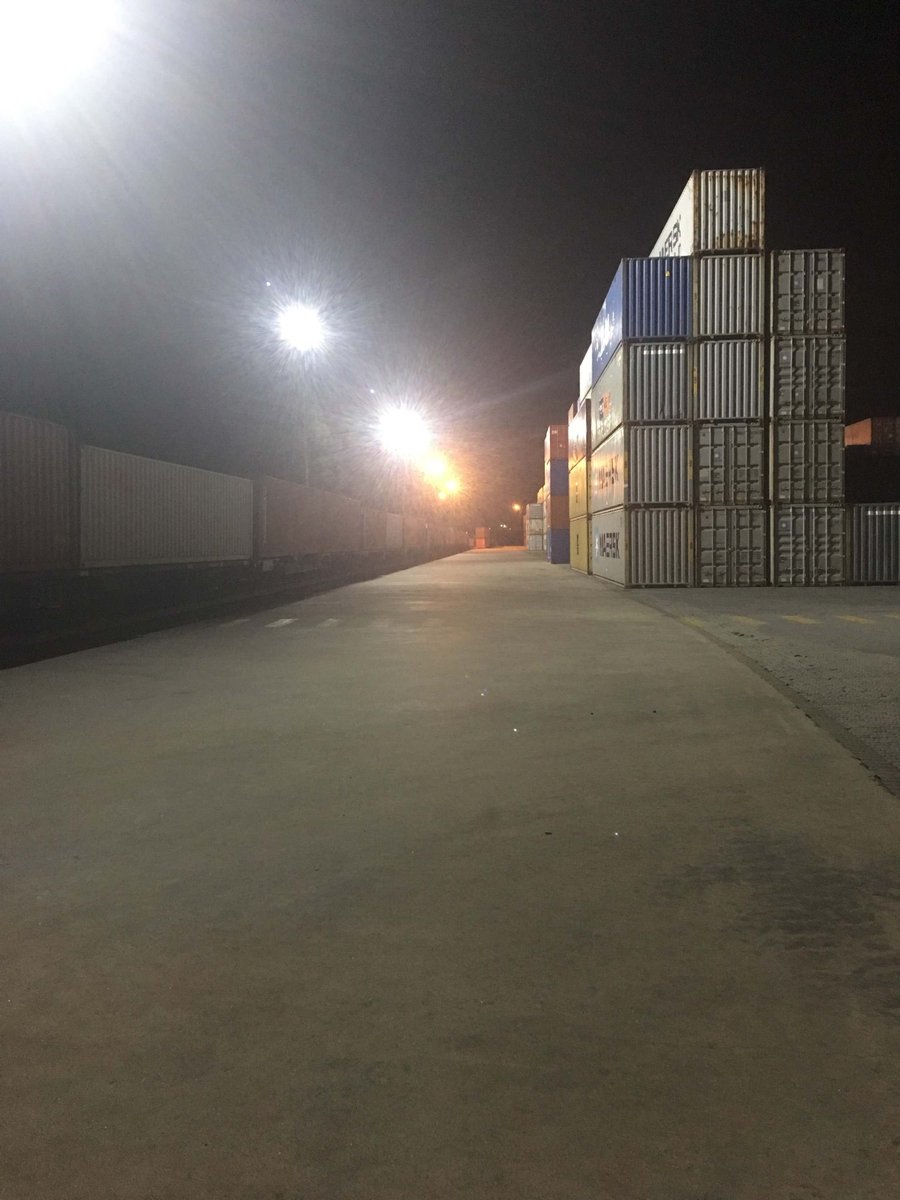
Where Marine and Coastal Hazardous-Area Lighting Is Used
| Location | Hazardous area driver | Corrosion driver |
|---|---|---|
| Oil and gas terminals, jetty and berth lighting | Loading arms and vapour release | Continuous salt spray, splash zone |
| Fuel depots and bunkering points | Product transfer areas | Coastal air, humidity |
| Shipyards and dry docks | Painting, solvent and fuel handling | Salt air plus abrasive dust |
| Fishing harbours and fish processing | Refrigerant and fuel areas | Highest humidity combined with salt |
| Offshore platforms and FPSO decks | Wellhead and process modules | Permanent salt spray, wind-driven |
| Coastal chemical and fertiliser plants | Process areas and tank farms | Salt air plus chemical atmosphere — often a C5 case |
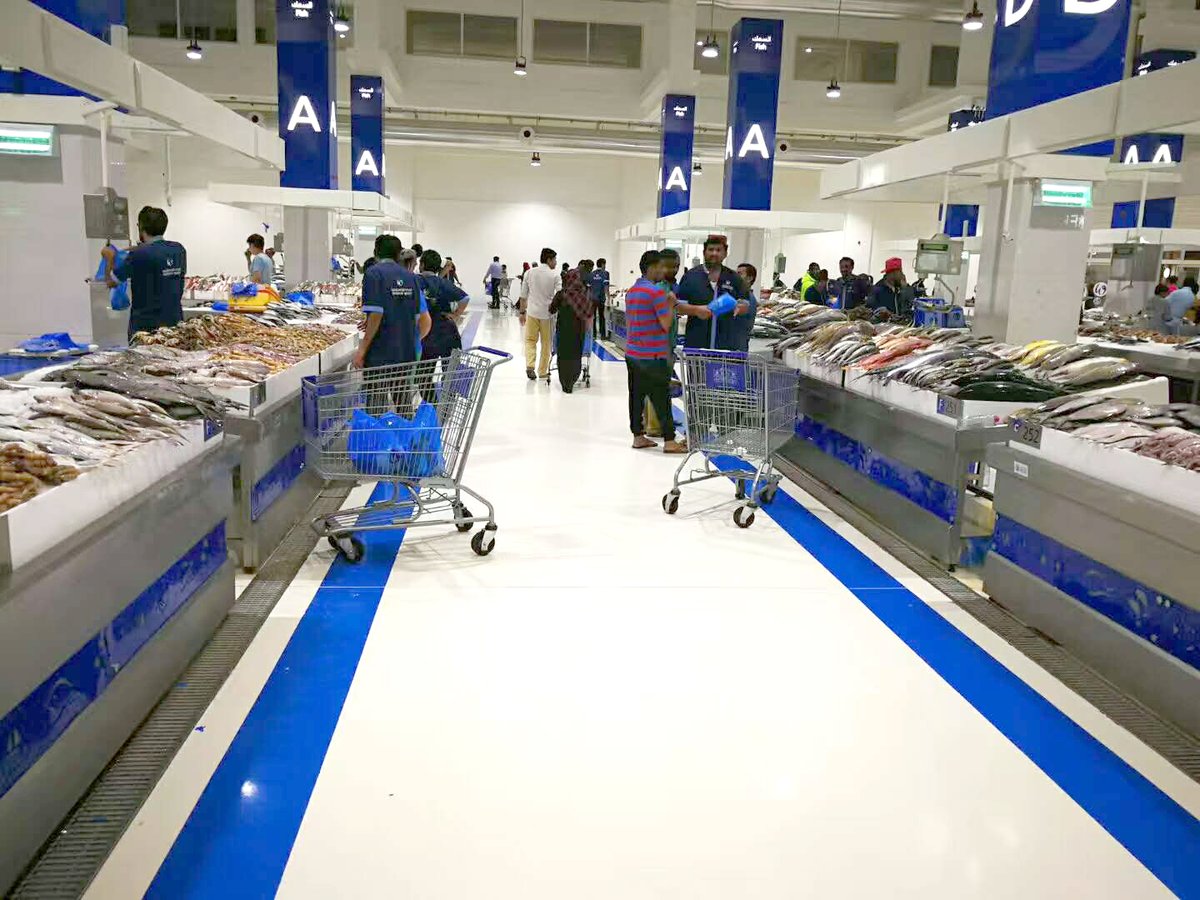
Food processing and markets handling fish and seafood occupy an interesting middle ground. They are not classified areas in most cases, but humidity, salt and daily washdown mean the luminaire is judged on exactly the same sealing and corrosion standards. We have supplied lighting into this type of environment for years, which is where our insistence on IP67 and IK10 across the range comes from rather than from coastal installations alone.
Specification Checklist for Coastal Hazardous Areas
- Certification first. Zone, category, gas group and temperature class as required by the classification drawing — marine conditions do not change any of this.
- Corrosion class stated explicitly. C4 to ISO 12944 as a minimum for coastal process areas; assess for C5 in splash zones.
- IP67 and IK10. IP is the minimum for washdown and weather; IK matters on poles and quays where impact is routine.
- Salt-spray test evidence. Neutral salt spray to ISO 9227, with the duration and the condition of the sample after test.
- Fastener and gland materials. Ask directly. This is where coastal installations fail first and where quotations differ most.
- Drainage geometry. Housings and brackets should shed water rather than trap it; check for horizontal ledges and upward-facing joints.
- Access for replacement. On a jetty, the cost of reaching a luminaire dominates. Fewer, higher-output units with a longer service interval usually beat a dense grid of small ones.
Inspection and Replacement Planning
Coastal installations degrade on a predictable curve, and planning around it costs far less than reacting to it.
| Interval | What to inspect | What to look for |
|---|---|---|
| Year 1 | Glands, brackets, fasteners | Early galvanic attack at dissimilar-metal joints; loose or seized fixings |
| Year 2–3 | Coating integrity, seals | Paint lifting at cut edges; hardened gaskets; first signs of internal condensation |
| Year 3–5 | Optical output, driver condition | Lens discolouration, measured light loss beyond the design maintenance factor |
| Year 5+ | Full installation review | Whether repair or replacement is more economical against the access cost |
The inspection interval should also be checked against the certification: a luminaire whose Ex marking depends on a gasket that has visibly hardened is not compliant, whether or not it is still producing light. On coastal classified sites, replacing a hardened gasket is an electrical-integrity task, not a cosmetic one.
Frequently Asked Questions
What does C4 mean in a lighting specification?
C4 is a corrosion category in ISO 12944, the standard covering protective paint systems on steel and aluminium structures. It describes a high-corrosion environment — moderate-salinity coastal areas or heavily polluted industrial sites, which is the typical classification for port, jetty and coastal process installations. It is one step below C5, which applies to high-salinity or splash-zone conditions, and one step above C3 for urban and inland industrial exteriors.
Is IP67 enough for a coastal or offshore installation?
IP67 addresses water and dust ingress into the enclosure, and it is the right minimum for washdown, weather and jetty conditions — our whole certified range meets it. But ingress protection does not by itself address external corrosion of the housing, fasteners and brackets, which is a materials and coating question. The two need to be specified together: IP67 for what goes in, C4 to ISO 12944 for what the salt air does to the outside.
How quickly do luminaires corrode on a coastal site?
With plated-steel fasteners and an unqualified coating, visible corrosion at fixings and cut edges is common within 18–24 months, and seized fasteners make the first service visit far more expensive than it should be. With a C4-rated coating system, stainless or correctly treated fasteners and a proper gland, the same installation typically reaches its first cosmetic inspection without structural degradation.
Do I need different luminaires for the splash zone?
Often yes. A splash-zone location frequently justifies C5 rather than C4, and it may also sit in a different hazardous area zone than the deck above it — explosive gas and salt spray do not respect the same boundaries. Since the two requirements are assessed separately, it is entirely normal for one jetty to need C4 Zone 2 luminaires on the deck and C5-rated units along the waterline.
What is the most common cause of failure in marine hazardous-area lighting?
Cable entry. The gland is the point where the enclosure is opened in the field, where dissimilar metals most often meet, and where sealing depends on a torque value that is frequently not applied. On coastal installations we see more problems originating at the gland than at any other single point, which is why we ask about gland specification and supply before discussing wattage.
Can the same fixture serve a fish processing plant and a coastal jetty?
Frequently yes, if the hazardous area requirement is met. Both environments punish weak sealing, humidity and salt, so the IP67, IK10 and C4 requirements are much the same. The difference is that the jetty is normally a classified area needing ATEX and IECEx certification, while a processing hall may be unclassified and specify on durability alone. Where the hall does have a classified refrigerant or fuel area, that area needs the certified range.
Lighting a quay, terminal or coastal process area?
Send us the zone and the distance from the waterline. We will confirm the certification and corrosion class for each area and return a luminaire schedule with the gland and bracket specification included, since those are where coastal installations usually fail.
Email: sales02@seekingled.com
Tel: +86 755 2984 6615
WhatsApp: +8613418600102
- About Us
- Products
- Explosion proof light
- Portable explosion proof lighting
- Explosion proof emergency light
- Explosion proof LED T8 tube
- Explosion proof Junction Box
- Explosion proof street light
- Service
- FAQ
- Docs download
Service hotline
Tel:+86 755 29846615
Work time:9:00-20:00
E-mail:sales02@seekingled.com
address:5F, Building 5, Guole Science and Technology Park, Lirong Road, Dalang Street, Longhua, Shenzhen, China