

Explosion Proof Lighting Retrofit: Assess Before You Specify
A hazardous-area lighting retrofit is an engineering exercise, not a purchasing one. The projects that go wrong almost never fail on the fixture — they fail because someone matched a 250 W HPS unit to a 100 W LED unit and assumed the classified area had not changed since 2009. Here is the assessment sequence that prevents that.
Why Retrofits Fail Before They Start
The traditional lamp being replaced and the LED replacing it behave completely differently, so the old installation tells you almost nothing about the new one.
| Property | 250–400 W metal halide / HPS | LED luminaire | Consequence for the design |
|---|---|---|---|
| Luminous efficacy | 60–90 lm/W at the lamp | 140–160 lm/W at the luminaire | One-to-one wattage replacement usually over-lights by 50% or more |
| Lumen depreciation | 30–50% over life; lamps go yellow | L80B20 beyond 100,000 h | The old installation was already under-lit at end of life |
| Optical control | Largely uncontrolled, wide diffuse output | 25°–120° engineered distributions | Fewer, better-aimed luminaires can beat more, badly-aimed ones |
| Ignition risk | Hot lamp envelope, ballast faults | Surface temperature governed by T-class | The T-class of the new fixture, not its wattage, decides the zone it can serve |
Three of the four rows above make the retrofit a redesign. Only the electrician's labour is genuinely like-for-like.
Step 1 — Re-check the Area Classification
This is the step that gets skipped, and it is the one that carries legal weight. Area classification drawings are typically issued for a specific process configuration. Pumps get relocated, vents get added, secondary containment gets modified, and the drawing from the original build no longer describes the plant as it stands.
| Zone | Flammable atmosphere | Equipment category required | Typical protection concepts |
|---|---|---|---|
| Zone 0 | Continuous or long periods | Category 1 (Ga) | Ex ia — not generally achievable with mains LED luminaires |
| Zone 1 | Likely during normal operation | Category 2 (Gb) | Ex db flameproof, Ex eb increased safety, Ex mb |
| Zone 2 | Unlikely, short duration only | Category 3 (Gc) | Ex nR restricted breathing, Ex ic, Ex nA |
| Zone 21 / 22 | Combustible dust, continuous / occasional | Category 2D (Db) / 3D (Dc) | Ex tb enclosure protection, Ex tc |
Mixed installations are the norm rather than the exception. On a typical refinery, the pump and compressor areas are Zone 1 while the tank farm perimeter and pipe racks beyond the release sources are Zone 2. Lighting both from a single Zone 1 specification "for spares commonality" is the single most expensive habit in hazardous-area lighting — the reasoning is covered in our Zone 1 vs Zone 2 comparison.
Step 2 — Set the Real Illuminance Target
Ask what task happens on the floor, not what the old fixtures were. In most retrofits the existing installation is either far below the standard or far above what the task requires, and the assessment exists to find out which.
| Area | Typical maintained illuminance | Notes |
|---|---|---|
| Process area, general | 100–200 lx | Safe movement, reading local gauges at close range |
| Control rooms and workstations | 300–500 lx | Task lighting is usually the better answer than more high bays |
| Loading and unloading areas | 150–200 lx | Vehicle movement and hose connection work |
| Warehouse aisles and racking | 150–300 lx | Aim along the aisle, not across it — beam direction matters more than wattage |
| Outdoor process and tank farm | 50–100 lx | Perimeter security lighting is often a separate requirement |
Two mechanisms matter at this stage. Maintenance factor: enter the design at roughly 70–80% of initial output, because dirt and depreciation are real on a plant. Uniformity: a U0 ratio below 0.4 shows up as pools of light with dark gaps between them, which is exactly what end users complain about after a cheap retrofit even when the average lux number looks correct.
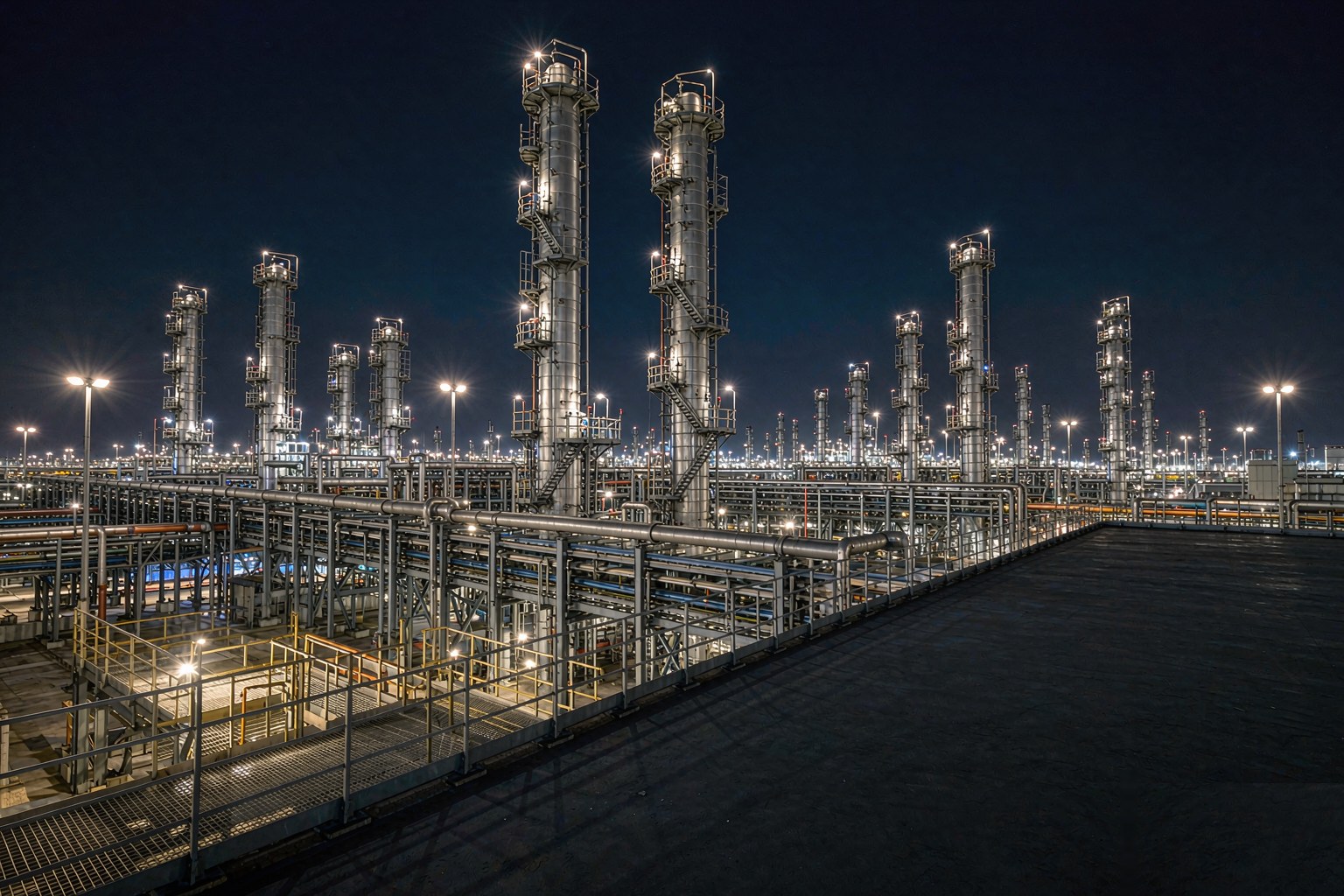
Step 3 — Size the Wattage From the Lux Target
With the target known, wattage falls out of the calculation rather than being guessed from the label on the old ballast. The practical pattern across industrial retrofits is a large reduction in installed wattage for the same or better measured illuminance.
| Facility type | Before | After | Result |
|---|---|---|---|
| Machining workshop, Germany | 600 W metal halide | 150 W LED high bay | 75% lower consumption |
| Distribution warehouse, Germany | 400 W metal halide × 192 units | 150 W LED × 72 units | 86% lower consumption after re-layout |
| Logistics warehouse, Russia | Metal halide, one-for-one | 150 W LED high bay | 63% saving, double the previous lux |
| Farm building, Spain | 400 W metal halide | 130 W LED high bay | 67.5% saving, double the previous lux |
| Steel plant workshop | 400 W metal halide | 150 W LED high bay | 63% saving with higher floor illuminance |
| Auto parts warehouse, Israel | 600 W traditional | 150 W LED high bay | 75% saving, racking aisles aimed at 45° |
| Sports hall, Australia | 400 W metal halide | 120 W LED high bay | Down-rated from 150 W after photometric check |
These are outcomes from our own industrial retrofit projects. The two rows that matter most for planning are the last two: the Australian hall was down-rated from a 150 W proposal after the photometric calculation showed excess lux, and the German distribution warehouse cut fixture count from 192 to 72 by re-planning the layout rather than replacing units one-for-one. Both saved more money than the lamp swap itself.
Step 4 — Confirm the Protection Concept
The wattage tells you nothing about where the luminaire may be installed. That is decided by the protection concept and its T-class, both of which must match the zone and the gas or dust group.
| Check | What to confirm | Why it catches people out |
|---|---|---|
| Equipment category | Gb for Zone 1, Gc for Zone 2, Db/Dc for dust | A "Zone 2" fixture installed in Zone 1 fails inspection and can void insurance |
| Gas group | IIB or IIC — IIC covers hydrogen, acetylene and is a superset of IIB | Hydrogen and acetylene areas need IIC even though the layout looks like a normal process area |
| Temperature class | T6, T5 or T4 against the ignition temperature of the gas present | Higher ambient and higher wattage both raise the surface temperature of the same fixture |
| Ingress and impact | IP rating against washdown and weather; IK rating against impact | Washdown bays and coastal sites punish anything less than IP67 |
| Corrosion class | C4 to ISO 12944 for most industrial and coastal plants | Coastal and chemical atmospheres attack unpainted aluminium castings |
| Certificate and marking | Certificate number, marking on the nameplate, and matching Ex marking in the documentation | A file reference that does not appear on the actual product is a documentation failure |
We build both sides of the Zone 1 / Zone 2 border — the FL7 Ex db flameproof flood light for Zone 1 and Zone 21 and the FL8 Ex nR flood light for Zone 2 and Zone 22 — because most sites need both and mixing brands across the border creates two sets of spares, two temperature-class tables and two inspection regimes.
What the Numbers Look Like
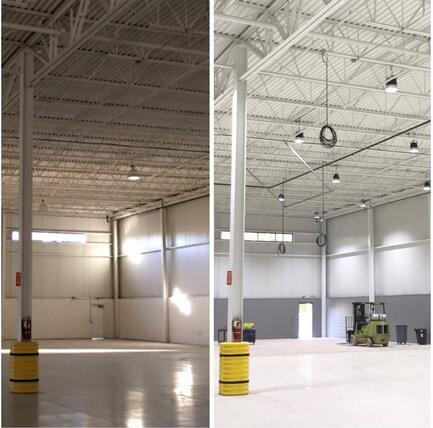
A retrofit proposal earns approval on three figures: energy saved, maintenance avoided, and payback. All three are calculable before the order is placed.
| Item | How to calculate it | Typical industrial result |
|---|---|---|
| Energy saving | (old kW × hours × days) − (new kW × hours × days) | 45–75% reduction where the old installation was on 24 h operation |
| Lamp and ballast maintenance | Historic lamp changes per year × unit cost + access cost (scaffold, MEWP, permit) | Often 20–30% of the total project value over five years |
| Access cost on a live plant | Permit-to-work, gas testing, standby man, MEWP hire | The dominant cost on classified areas — halving fixture count halves it |
| Payback | Project cost ÷ annual saving | 2–4 years on 24 h operation, longer on intermittent lighting |
The figure that ends up deciding approval is usually the second one. On a classified plant, replacing a lamp is not a maintenance task — it is a permit-controlled intervention with gas testing and sometimes a shutdown of the surrounding unit. A luminaire rated for 100,000 hours at L80B20 does not remove that procedure, but it does remove most of the occasions for it.
Five Mistakes That Keep Appearing in Retrofit Tenders
- One-for-one wattage matching. "Replace 250 W HPS with 250 W LED" over-lights the area, wastes budget and can push surface temperature into a worse T-class.
- Trusting an old classification drawing. Zones follow the process, not the building. If the plant changed, the drawing is a legal document describing a plant that no longer exists.
- Ignoring vertical zone extents. A Zone 1 envelope extends upward from a release source. High-level lighting in nominally Zone 2 air can still sit inside it.
- Specifying one fixture family for the whole site. Convenient for spares, expensive in capital, and usually unjustifiable when more than half the area is Zone 2.
- Accepting "replaces 400 W" as a photometric claim. Ask for the calculation, the maintenance factor and the uniformity ratio. If none of the three exists, the claim was copied from a brochure.
Frequently Asked Questions
Do I need a new area classification study for a lighting retrofit?
Only if the existing drawing no longer matches the plant. A classification study is issued against a specific process configuration, so any modification since it was published — relocated pumps, added vents, changed secondary containment — invalidates it for design purposes. If the drawing is current, it can be reused directly; the lighting supplier's role is to match equipment to it, never to produce it.
Can I replace a 250 W HPS lamp with a 250 W LED luminaire one-for-one?
You can physically, but you almost certainly should not. A 250 W LED luminaire at 140–160 lm/W delivers roughly two to three times the light of a 250 W HPS lamp at end of life, which means over-lighting, wasted capital, glare complaints and sometimes a higher surface temperature that affects the T-class. Retrofit wattage should come from the illuminance target, and in practice it is usually 40–60% of the old lamp wattage.
What illuminance should I specify for a hazardous process area?
For general process areas, 100–200 lx is a common design target; loading areas 150–200 lx; control rooms 300–500 lx. Enter the calculation at 70–80% of initial luminaire output to allow for dirt and depreciation, and check the uniformity ratio as well — an average lux figure achieved with a few intense pools of light is not a compliant or comfortable installation.
How much does a hazardous-area lighting retrofit usually save?
Across our industrial retrofit projects the reduction in connected load typically falls between 45% and 86%, with the higher figures coming from projects where the layout was re-planned rather than replaced one-for-one. On continuously operated plants this usually translates to a payback of two to four years, before counting the maintenance and access savings that dominate on classified sites.
Why is fixture count reduction worth more than lower wattage?
Because on a classified plant the expensive part is not electricity — it is access. Replacing or servicing a luminaire inside a zoned area requires a permit to work, gas testing, standby personnel and often a MEWP, and the surrounding unit may need to be taken out of service. Cutting a 192-fixture installation to 72 reduces all of those costs by two-thirds, which is frequently a larger saving than the energy itself.
Can the same LED luminaire be used in Zone 1 and Zone 2 areas of the same plant?
Yes, if it is certified for Zone 1. Category 2 (Gb) equipment is permitted in both Zone 1 and Zone 2. What is not permitted is the reverse: a Category 3 (Gc), Ex nR fixture installed in Zone 1. Many plants run one Zone 1-rated range across a mixed site for spare-part simplicity, but if most of the area is Zone 2 the capital saving from using the Ex nR range is usually worth the separate spares list.
Send us the classification drawing, not a wattage
If you have an area classification drawing and a fixture count, we will return a zone-matched schedule separating Zone 1 and Zone 2 line items, with a photometric calculation against your actual room dimensions and target illuminance.
Email: sales02@seekingled.com
Tel: +86 755 2984 6615
WhatsApp: +8613418600102
- About Us
- Products
- Explosion proof light
- Portable explosion proof lighting
- Explosion proof emergency light
- Explosion proof LED T8 tube
- Explosion proof Junction Box
- Explosion proof street light
- Service
- FAQ
- Docs download
Service hotline
Tel:+86 755 29846615
Work time:9:00-20:00
E-mail:sales02@seekingled.com
address:5F, Building 5, Guole Science and Technology Park, Lirong Road, Dalang Street, Longhua, Shenzhen, China