

Explosion Proof Lights Supplier: How to Qualify a Manufacturer
Buy the wrong explosion proof light and you usually find out at the worst possible moment: at the audit, after the installation, or in the incident report. In hazardous-area equipment the supplier decision carries legal weight, because the person who installs non-compliant Ex equipment owns the consequence — not the trader who sold it. This guide sets out the eight checks we would run if we were buying explosion proof lighting from an unknown supplier, and what a real manufacturer's answer looks like at each step.
- Why qualification is different for Ex equipment
- Check 1: Verify certificates, not logos
- Check 2: Production quality assurance (QAN)
- Check 3: Manufacturer or trader?
- Check 4: Traceability from nameplate to certificate
- Check 5: The documentation set
- Check 6: Engineering support before the sale
- Check 7-8: After-sales and commercial stability
- Red flags table
- FAQ
Why Qualification Is Different for Ex Equipment
A failed office luminaire costs you a lamp. A non-compliant luminaire in a Zone 1 area is a different category of problem: the equipment is legally required to be certified for the zone it is installed in, and "the supplier told us it was fine" is not a defence in an incident investigation. That is why supplier qualification for explosion proof lighting is less about price negotiation and more about evidence collection.
The good news: this is a checks-based process, and most of the evidence can be requested in writing before you spend anything. The eight checks below take a procurement engineer a few hours. Skipping them is how projects end up with luminaires whose markings do not match their certificates.
Check 1: Verify Certificates, Not Logos
Every Ex supplier displays the ATEX and IECEx hexagon logos. The logo is not the evidence — the certificate number is. A genuine certificate number follows a fixed format (issuing body code, year, serial number) and can be looked up in the certification body's public register. An unverifiable "certificate" that exists only as a PDF in an email is worth nothing.
| What to verify | Where | What a pass looks like |
|---|---|---|
| ATEX certificate number | The notified body's public certificate register | Number resolves; holder name matches the supplier; marking on the certificate matches the quote |
| IECEx certificate number | IECEx online certificate system (public, free) | Status "valid"; the Ex marking is identical to the ATEX one |
| Certificate scope | Certificate PDF, page 1 | The exact model range and Ex marking you are buying appears in the scope — not a different model |
| Certificate holder | Certificate PDF | Held by the manufacturing entity itself, not by "a partner factory" |
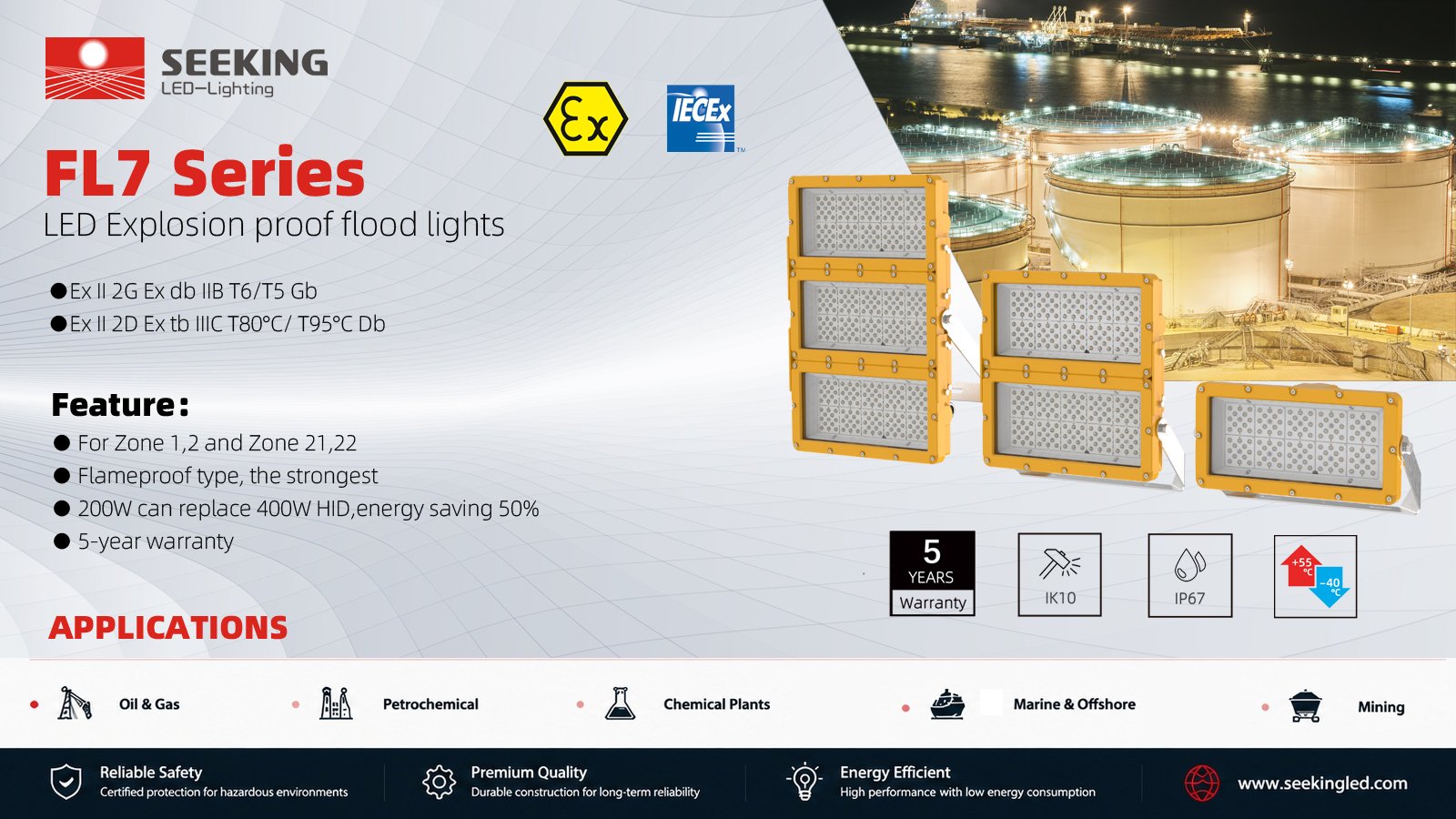
As an example of what a verifiable set looks like, our LO series linear lights carry ATEX certificate CSANe 25ATEX1229X and IECEx certificate IECEx CSA 25.0093X, and our FL8 flood light family carries ATEX certificate TÜV CY 26 ATEX 0207611 X — both issued by the notified bodies directly, both checkable in their public registers. Any supplier who cannot produce numbers in this format, for the exact model you are buying, fails this check.
Check 2: Production Quality Assurance (QAN)
This is the check most buyers have never heard of, and it is the one that separates certificate owners from manufacturers. An ATEX type certificate proves that one sample passed the type tests. It says nothing about the ten thousand units that follow. Under the ATEX framework, series production is covered by a Production Quality Assurance Notification (QAN): the notified body audits the factory's production quality system for Ex equipment and re-audits it periodically.
So the question to ask is not "do you have ATEX certificates?" but "what is your QAN number, and which notified body issued it?" A trading company can hold or borrow type certificates; only the actual production site can hold a QAN.
Our Shenzhen factory holds ATEX production quality assurance (QAN) and QAR registrations audited by CSA Group, alongside ISO 9001. We wrote about the audit process in this factory audit article — a supplier who has been through one will always be able to talk about it in specifics.
Check 3: Manufacturer or Trader?
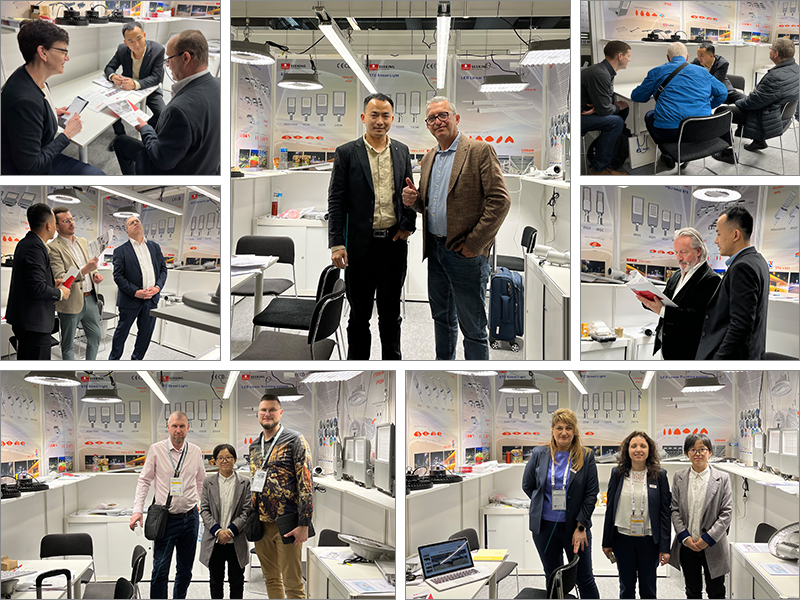
There is nothing inherently wrong with trading companies, but in Ex equipment the chain matters: a manufacturer can change the production of a fitting in response to a field problem; a trader can only forward your question. Verify who you are actually talking to.
| Ask for | Real manufacturer | Typical trader answer |
|---|---|---|
| Live video factory walk-through, unscripted | Yes — production lines, test area, warehouse on request | Hesitates, offers a edited corporate video instead |
| Business licence scope | Manufacturing of the product category | Trading / import-export only |
| Where the certificates are held | In the factory's own name | "Our partner factory holds them" |
| Customisation request (CCT, power step) | Feasible — they control the production line | "Need to ask the factory" |
| HS code and country of origin on the commercial documents | Stated per model, consistent | Vague or inconsistent |
Check 4: Traceability From Nameplate to Certificate
The nameplate on the luminaire is the legal statement. Before shipment, check that for each model:
- The Ex marking on the nameplate is character-for-character identical to the marking on the certificate;
- The certificate number appears on the nameplate or in the documentation supplied with the fitting;
- The serial number or batch allows the manufacturer to trace back the production date and the components used;
- The nameplate manufacturer is the entity on the certificate — not a different company name.
A mismatch here is not a cosmetic defect. It means the unit shipped is not the unit that was certified, and no inspector will accept it.
Check 5: The Documentation Set
A serious Ex manufacturer ships a documentation package, not just a carton. Ask for the full set for one model before ordering:
| Document | What it proves |
|---|---|
| EC-Type Examination / IECEx type certificate | The design passed the tests |
| Declaration of Conformity (DoC) | The shipped units conform to the certified type |
| QAN certificate | Series production is audited |
| Installation, operation and maintenance manual (in English) | Legal requirement; also tells you the real cable entries, torques and spares |
| Control drawings / dimensional drawings | Engineering can plan the installation |
| Photometric files (IES/LDT) | The lighting calculation can be done properly |
If a supplier produces certificates quickly but goes quiet when asked for an installation manual or IES files, that tells you where their capability ends.
Check 6: Engineering Support Before the Sale
The cheapest moment to find out that a fitting is wrong for your area is before the purchase order. Give a real supplier a real problem and measure the answer: send them your area classification ("Zone 2 outdoor, gas group IIB, T3, coastal site, -5 °C to +45 °C") and ask which models they propose and why. A manufacturer's answer will reference protection concepts, gas groups, temperature classes and corrosion category. A reseller's answer will reference a price list.
Two questions worth asking explicitly: whether the proposed luminaires hold their certificate in your gas group and temperature class (an IIB T6 fitting covers T3, but the reverse is not true), and whether the corrosion protection matches the site — for coastal and offshore environments, C4 per ISO 12944 is the working minimum.
Checks 7 and 8: After-Sales and Commercial Stability
Check 7 — after-sales reality. Ask: what is the warranty in writing, which spare parts (glands, gaskets, LED modules, drivers) are held for how many years, and what happens if a unit fails in service. Our own terms, for reference: a five-year warranty on the flood light families, MOQ of 100 pieces with sample and small-batch orders accepted during early cooperation, samples in roughly a week and bulk orders in three to four weeks.
Check 8 — commercial stability. Ex luminaires stay installed for ten to fifteen years. Ask how long the supplier guarantees spare parts and mechanical compatibility for the model you are buying. A factory running its own production can answer in years; a trader can only answer in shipping cycles.
Red Flags That Should End the Conversation
| Red flag | Why it matters |
|---|---|
| Price dramatically below the market band for certified products | Either the product is not certified, or the certification is not theirs |
| "Same as" claims — same as the famous European brands, same quality as the market leaders | Established Ex makers do not sell by comparison; this language comes from the trading layer |
| Certificate PDFs offered before you name a model | Generic certificates, not scoped to your product |
| No QAN, or cannot name the notified body that audits production | Series production is not under Ex quality control |
| Refuses a live factory video call | There is nothing to show |
| Marking, datasheet and certificate tell three different stories | The paper trail already fails before the product does |
FAQ
What is the single fastest way to screen an explosion proof lights supplier?
Ask for the ATEX or IECEx certificate number of the exact model and look it up in the issuing body's public register. It takes ten minutes, costs nothing, and filters out most of the risk in one step.
Is ISO 9001 enough for explosion proof lighting?
No. ISO 9001 covers general quality management. Ex series production is covered by the ATEX production quality assurance notification (QAN), audited by a notified body specifically for explosion-protected equipment. A supplier holding ISO 9001 but no QAN is not an audited Ex manufacturer.
Can I buy explosion proof lights directly from a Chinese manufacturer?
Yes, and it is increasingly common. What matters is not geography but the same evidence set: certificates in the manufacturer's own name, a QAN, traceable nameplates and a complete documentation package. Direct purchasing removes a margin layer but does not remove your duty to verify.
What documents should arrive with each shipment?
At minimum: the declaration of conformity, the certificate copies for the shipped models, and the installation, operation and maintenance manual. For projects, add photometric files and dimensional drawings so the installation contractor is not working from photographs.
How do I verify an ATEX certificate number?
Enter the number in the notified body's public certificate search — TÜV Rheinland, CSA Group and the other bodies all operate one. The holder name, the Ex marking and the model must match what you are being quoted. Our guide to reading and verifying ATEX markings walks through the format character by character.
What MOQ should I expect from a manufacturer?
Our standard MOQ is 100 pieces, with samples and small batches accepted during early cooperation. Be cautious of suppliers quoting a single-piece price with no MOQ at all — it usually means they do not hold stock or production, only a sourcing channel.
Qualifying us as a supplier?
We will send the full evidence set for any model you are evaluating — certificate numbers, QAN, DoC template, installation manual and IES photometric files — and put the factory on a live video call. Name the model and the zone you are buying for.
Email: sales02@seekingled.com
Tel: +86 755 2984 6615
WhatsApp: +8613418600102
- About Us
- Products
- Explosion proof light
- Portable explosion proof lighting
- Explosion proof emergency light
- Explosion proof LED T8 tube
- Explosion proof Junction Box
- Explosion proof street light
- Service
- FAQ
- Docs download
Service hotline
Tel:+86 755 29846615
Work time:9:00-20:00
E-mail:sales02@seekingled.com
address:5F, Building 5, Guole Science and Technology Park, Lirong Road, Dalang Street, Longhua, Shenzhen, China