

Hazardous Lighting: Complete Guide to Ex LED Fixtures
Hazardous lighting is lighting equipment certified to operate where flammable gases, vapours, mists or combustible dusts could ignite. This guide covers the classification system, protection methods, temperature classes and the three major certification schemes — everything an engineer or buyer needs before specifying fixtures for an oil & gas, petrochemical, or refinery project.
What Counts as Hazardous Lighting?
In a refinery, offloading terminal or gas compression station, the air itself is part of the process risk. A single spark from a light fixture's driver, switch or terminal block can release enough energy to ignite a hydrocarbon atmosphere. Hazardous lighting — also called explosion proof lighting, Ex lighting, or flameproof lighting depending on region — is designed so that it cannot become the ignition source.
Globally, the market searches for these products under several names. Our export data and Google search volumes show a clear split:
| Search term | Monthly volume | Dominant markets |
|---|---|---|
| hazardous lighting | 27,100 | US (8,100), India (4,400), Canada (1,600), UK (1,300), Australia (720) |
| explosion proof lighting / lights | 5,400 / 5,400 | UAE (390), Saudi Arabia (210), Indonesia (320), global |
| led explosion proof light | 1,600 | US-led |
| flame proof lights | 1,300 | UK, India, Pakistan (legacy IEC terminology) |
| ex lighting / hazardous area lighting | 390 / 390 | Technical buyers |
These are all the same product family. What matters technically is not the name but the certification marking — which we decode in section 5.
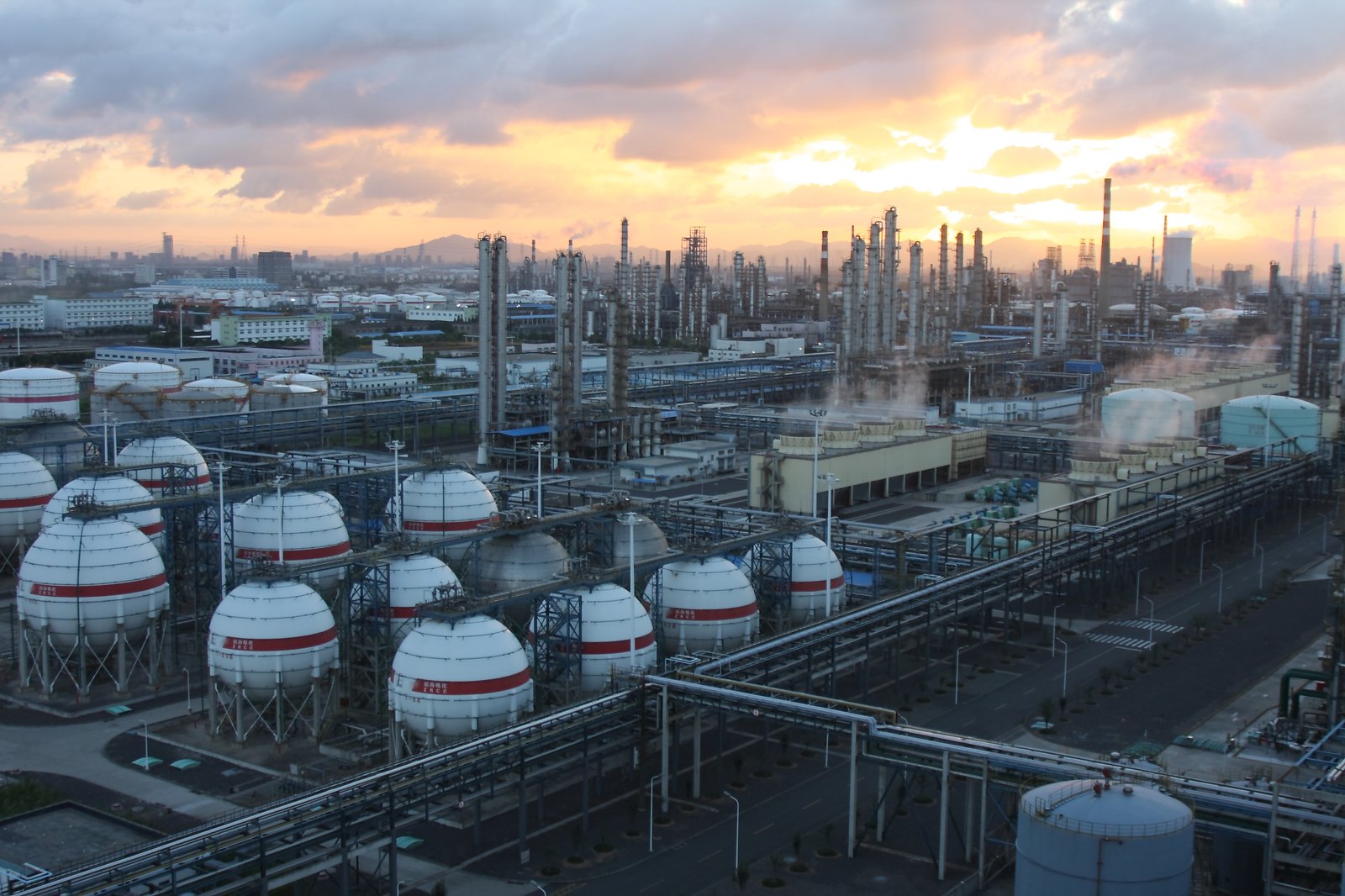
Zone Classification: Where Hazardous Lighting Is Required
The IEC/ATEX world divides hazardous locations by how often a flammable atmosphere is present:
| Zone | Flammable atmosphere presence | Typical locations | Minimum equipment category |
|---|---|---|---|
| Zone 0 (gas) | Continuously or >1,000 h/year | Inside tanks, closed process vessels | Category 1 Ga (Ex ia or Ex ma) |
| Zone 1 (gas) | Occasionally — normal operation (10–1,000 h/yr) | Around seals, valves, sampling points | Category 2 (Ex db, Ex eb, Ex px) |
| Zone 2 (gas) | Rarely & briefly (<10 h/yr) | Adjacent to Zone 1, storage areas | Category 3 (Ex nR, Ex ic) |
| Zone 20/21/22 (dust) | Continuous / occasional / rare | Milling, grain, coal handling | Da/Db/Dc dust protection |
The North American NEC system uses Class I/II/III and Division 1/2, which map onto the zone system: Division 1 ≈ Zone 0+1, Division 2 ≈ Zone 2.
If your project hinges on the Zone 1 / Zone 2 boundary, our Zone 1 vs Zone 2 lighting comparison breaks down what each classification actually costs.
The Five Protection Methods You'll See on LED Fixtures
| Marking | Method | How it prevents ignition | Typical zones |
|---|---|---|---|
| Ex d (flameproof) | Flameproof enclosure | Contains an internal explosion; cools flames through flame paths so nothing exits hot | Zone 1 / 21 |
| Ex e (increased safety) | No arcs, sparks or hot spots | Extra margins on terminals, creepage and temperature | Zone 1 / 21 |
| Ex i (intrinsic safety) | Energy-limited circuits | Live energy kept below ignition energy of the gas | Zone 0–2, mainly small devices |
| Ex nR (non-sparking + restricted breathing) | Sealed enclosure | No arcs in normal operation; breathing restriction limits gas ingress | Zone 2 / 22 |
| Ex m (encapsulation) | Potted in compound | Ignition source buried in resin | Zone 1, small modules |
Modern LED hazardous lighting uses these methods differently from legacy fixtures: an Ex db LED flood light keeps the flameproof housing concept but with far less internal energy than HID. An Ex nR LED (like SEEKINGLED's FL8 series, Ex nR IIC T6 Gc) achieves Zone 2 compliance at lower cost and weight — a smart choice when the area classification allows it.
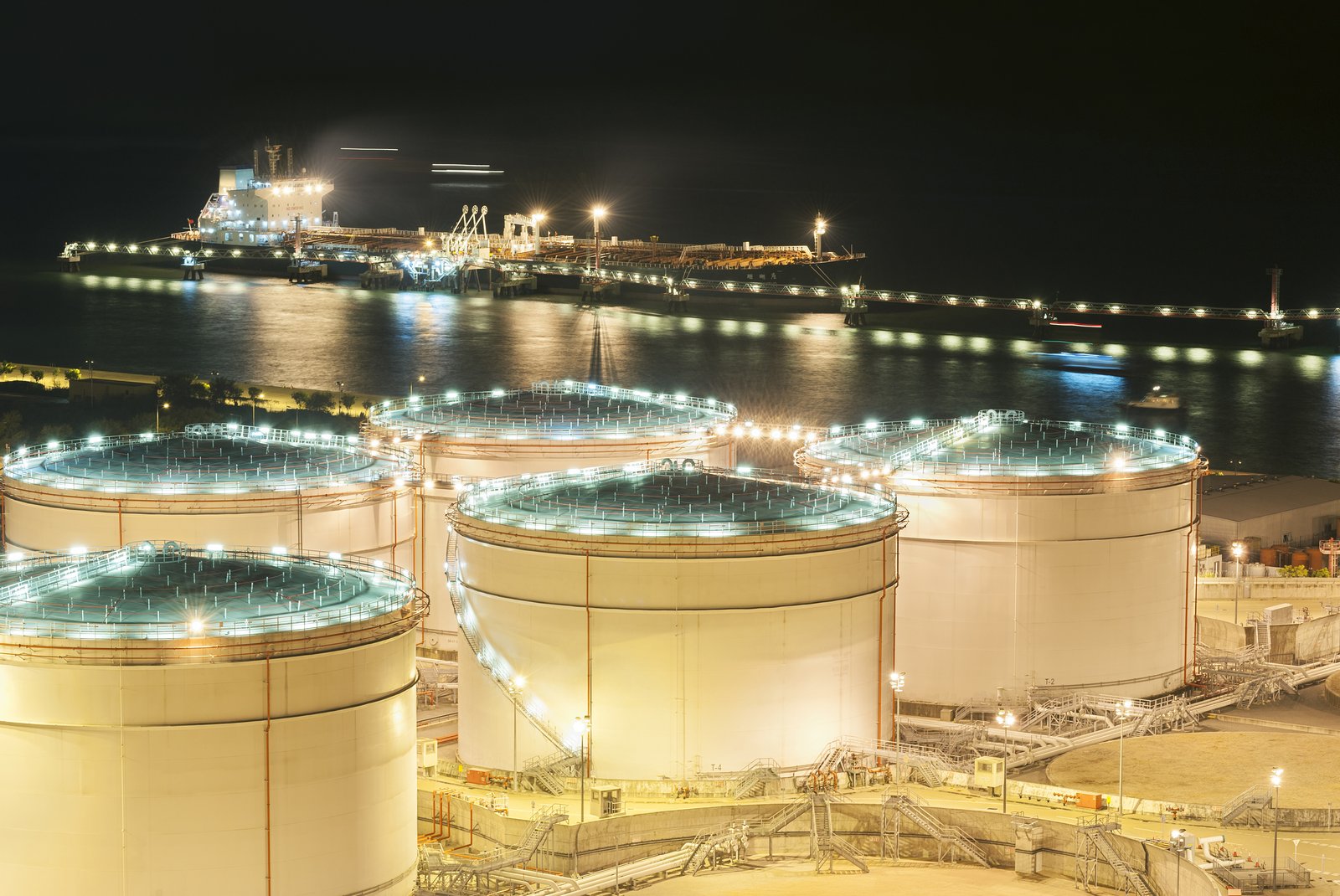
Temperature Classes: T1–T6
The hottest external surface of the fixture must stay below the auto-ignition temperature of the surrounding gas mixture:
| T-class | Max surface temp | Example gases needing this class |
|---|---|---|
| T6 | 85°C | Carbon disulphide |
| T5 | 100°C | Ethyl ether |
| T4 | 135°C | Acetaldehyde, most hydrocarbon processing |
| T3 | 200°C | Petrol/gasoline, many oils |
| T2/T1 | 300°C / 450°C | Hydrogen, methane (T1) |
Rule of thumb: T6 covers everything below it. Fixtures marked T6/T5 (like the FL8 series) are the safe default for oil & gas projects unless a specialist gas study says otherwise.
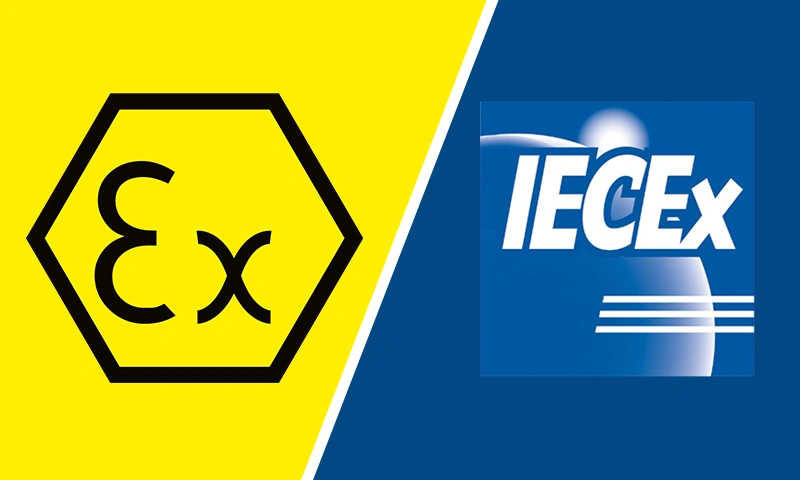
Certification Schemes: ATEX, IECEx and NEC
- ATEX — mandatory for equipment sold into the EU (Directive 2014/34/EU). Issued by notified bodies; each certificate number is traceable.
- IECEx — the international scheme (IEC 60079 series), accepted across the Middle East, Southeast Asia, Australia and increasingly everywhere.
- NEC Class/Division — the North American system (UL/FM marks); a zone-marked IECEx or ATEX fixture does not automatically qualify.
Always verify the certificate number with the issuing body — counterfeit Ex markings are a documented problem in the LED industry. SEEKINGLED's certificate portfolio includes TÜV CY ATEX numbers 26 ATEX 0207611/612/613 X (FL8, GS, LU series) and CSANe 25 ATEX 1229X with IECEx CSA 25.0093X for the LO linear series.
For a step-by-step walkthrough of reading Ex markings and verifying a certificate before payment, see our ATEX lights certification guide.
How to Specify: A 6-Step Checklist
- Get the area classification drawing: zones, gas group (IIA/IIB/IIC), T-class
- Pick the protection method the zone allows (Zone 2 → Ex nR saves budget; Zone 1 → Ex db)
- Define photometrics: lux target, mounting height, beam angle for floods or spacing for linear/high-bay
- Verify electrical data: voltage range (100–277 VAC is standard export spec), surge protection, power factor
- Check the certificate covers your exact model and rating — model number on the cert must match the nameplate
- Request a lighting layout (DIALux) and photometric files (IES) before ordering in bulk
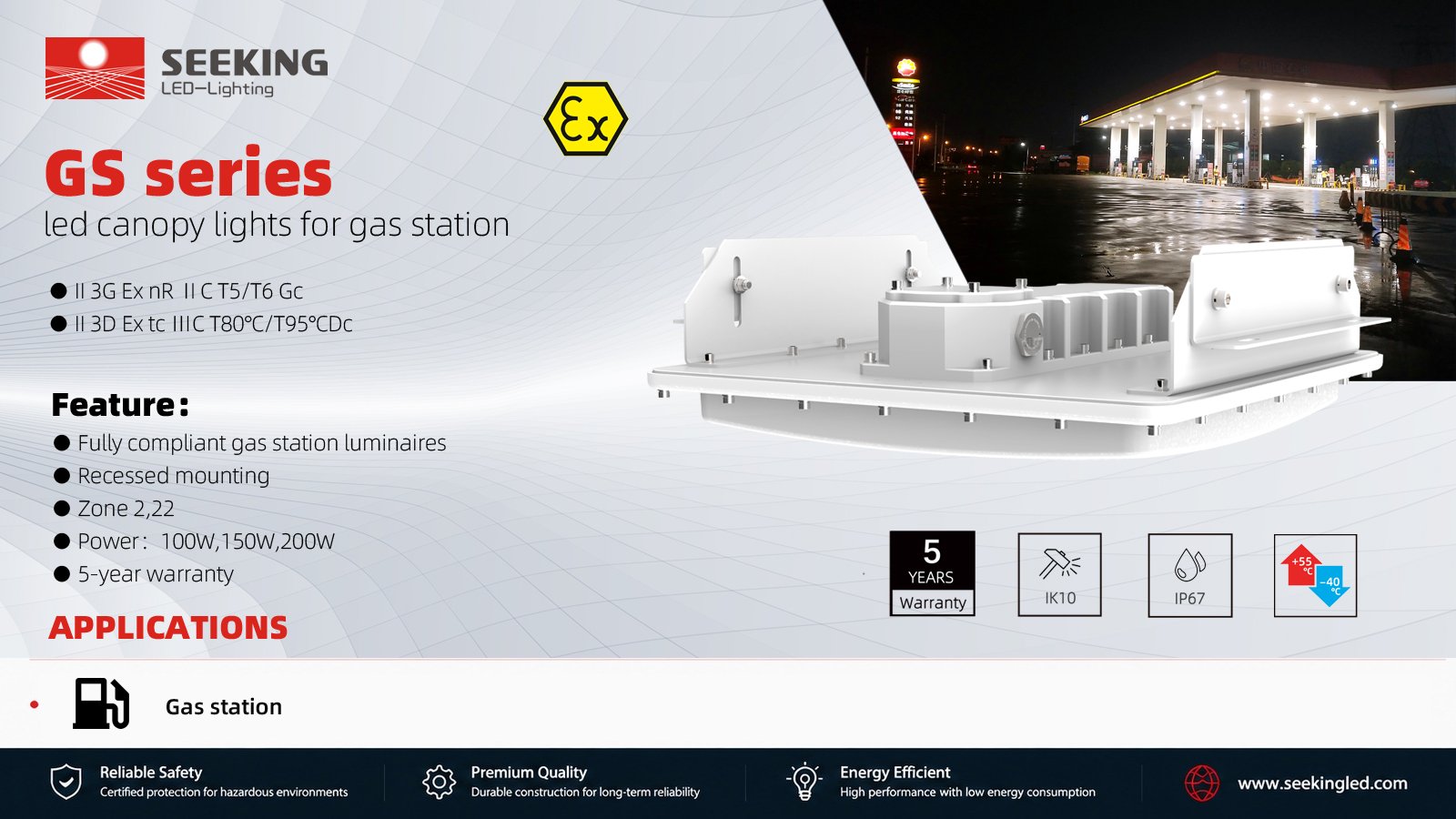
Fuelling and forecourt projects have their own zoning geometry — covered in the gas station canopy lighting guide.
Frequently Asked Questions
What is hazardous lighting?
Hazardous lighting refers to light fixtures engineered and certified to operate safely in areas where flammable gases, vapors, or dusts may be present. Unlike standard industrial LEDs, hazardous lighting is built with certified protection methods (flameproof, increased safety, non-sparking, or intrinsic safety) and marked with an Ex rating showing where it may be installed.
Which term is correct: hazardous lighting or explosion proof lighting?
Both describe certified fixtures, but usage differs by region. Buyers in the United States, India, Canada, the UK and Australia search mostly for "hazardous lighting" or "hazardous location lighting" (NEC-influenced terminology), while Middle East and Southeast Asian markets prefer "explosion proof lights". A compliant fixture meets IEC 60079 or NEC 500/505 requirements regardless of the label.
Can I use ordinary LED lights in a Zone 2 area?
No. Even Zone 2, where flammable atmospheres occur only briefly, requires certified equipment — typically Ex nR (non-sparking, restricted breathing) or better. Ordinary LEDs have switches, connectors and drivers that can arc or spark during fault conditions.
What does T6 mean on an Ex light?
T6 is a temperature class rating meaning the fixture's maximum surface temperature does not exceed 85°C. This makes it safe around gases with very low ignition temperatures. T5 allows 100°C, T4 135°C, and so on down the scale.
How do I know which hazardous lighting my facility needs?
Start with your area classification drawing (zones and gas groups), then match: zone → equipment category, gas group (IIA/IIB/IIC) → enclosure rating, and auto-ignition temperature → T-class. Send these three data points plus your lux targets to a certified manufacturer for a lighting layout.
What is the difference between ATEX and IECEx certified lighting?
ATEX is the EU scheme (Directive 2014/34/EU) and is legally required to place Ex equipment on the EU market. IECEx is the international scheme built on the same IEC 60079 standards and is accepted across the Middle East, Southeast Asia, Australia and Latin America. A fixture certified to both carries the widest market access — our LO linear series, for example, holds ATEX CSANe 25ATEX1229X and IECEx CSA 25.0093X. The technical requirements largely overlap, but the certificates are issued separately and neither substitutes for the other.
How much does hazardous area lighting cost?
Certified Ex luminaires typically run 2–4× the price of equivalent general-industrial LEDs, driven by the certification process, the heavier certified enclosure and the smaller production volumes. Within that range, the variables that move price most are protection method (Ex nR for Zone 2 is materially cheaper than Ex db for Zone 1), wattage, gas group (IIC enclosures cost more than IIB), and whether custom brackets or a lighting layout are included. Ask for per-fixture pricing against your zone and wattage list rather than a catalogue number.
How long does hazardous area lighting last?
Modern LED luminaires are rated by lumen maintenance rather than a failure date. Our fixtures are specified at L80B20 > 100,000 hours — 80% of initial light output maintained for 100,000 hours in 80% of units, roughly 11 years of continuous 24/7 operation. The driver is normally the limiting component, which is why surge protection quality at the installation determines real-world service life more than the LED chip itself.
Get a Quote for Your Project
Send us your hazardous area classification (zone, gas group, temperature class) and target lux levels — our engineers will reply with a full lighting layout and FOB Shenzhen quotation within 24 hours.
Email: sales01@seekingled.com | Exporting to 70+ countries · 1,000,000+ units shipped per year
Email sales01@seekingled.com · WhatsApp +86 134 1860 0102 · or browse the full certified range.
- About Us
- Products
- Explosion proof light
- Portable explosion proof lighting
- Explosion proof emergency light
- Explosion proof LED T8 tube
- Explosion proof Junction Box
- Explosion proof street light
- Service
- FAQ
- Docs download
Service hotline
Tel:+86 755 29846615
Work time:9:00-20:00
E-mail:sales02@seekingled.com
address:5F, Building 5, Guole Science and Technology Park, Lirong Road, Dalang Street, Longhua, Shenzhen, China