

Zone 1 vs Zone 2 Lighting: Differences and Real Costs
One letter in the zone number moves equipment categories, prices and inspection obligations. Here is the complete picture — what each zone means, what each costs, and how to stop paying for protection you don't need.
The Definitions
| Zone | Flammable atmosphere frequency | Annual hours | Typical sources |
|---|---|---|---|
| Zone 0 | Continuous | >1,000 h | Inside tanks, vessels |
| Zone 1 | Occasional, normal operation | 10–1,000 h | Seals, valves, flanges, sampling |
| Zone 2 | Rare, abnormal only | <10 h | Secondary containment, remote from leaks |
Zones are assigned by the area classification study — release sources, ventilation grade, gas properties. The frequency band is why a pump seal (expected minor leaks) sits in Zone 1 while the walkway three metres away is Zone 2.
New to the classification system? Start with our complete guide to hazardous lighting, which covers all six zones and the protection methods behind them.
What Each Zone Requires From Lighting
| Zone | Minimum category | Accepted methods | Typical LED products |
|---|---|---|---|
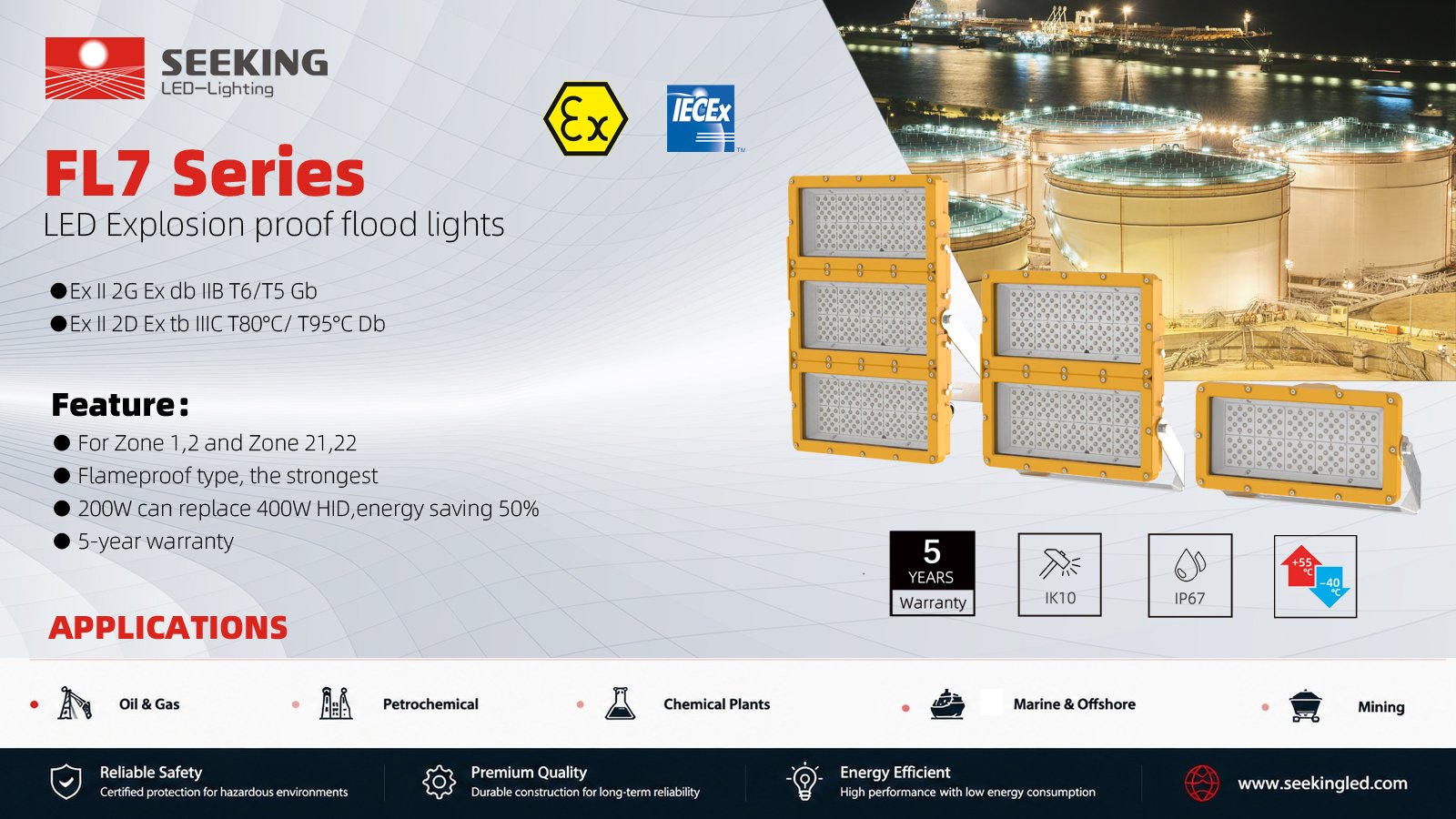
| Zone 1 | Category 2 (Gb) | Ex db, Ex eb, Ex px, Ex mb | FL7 flood (Ex db), HB21 high bay (Ex db), LO linear (Ex db IIB) |
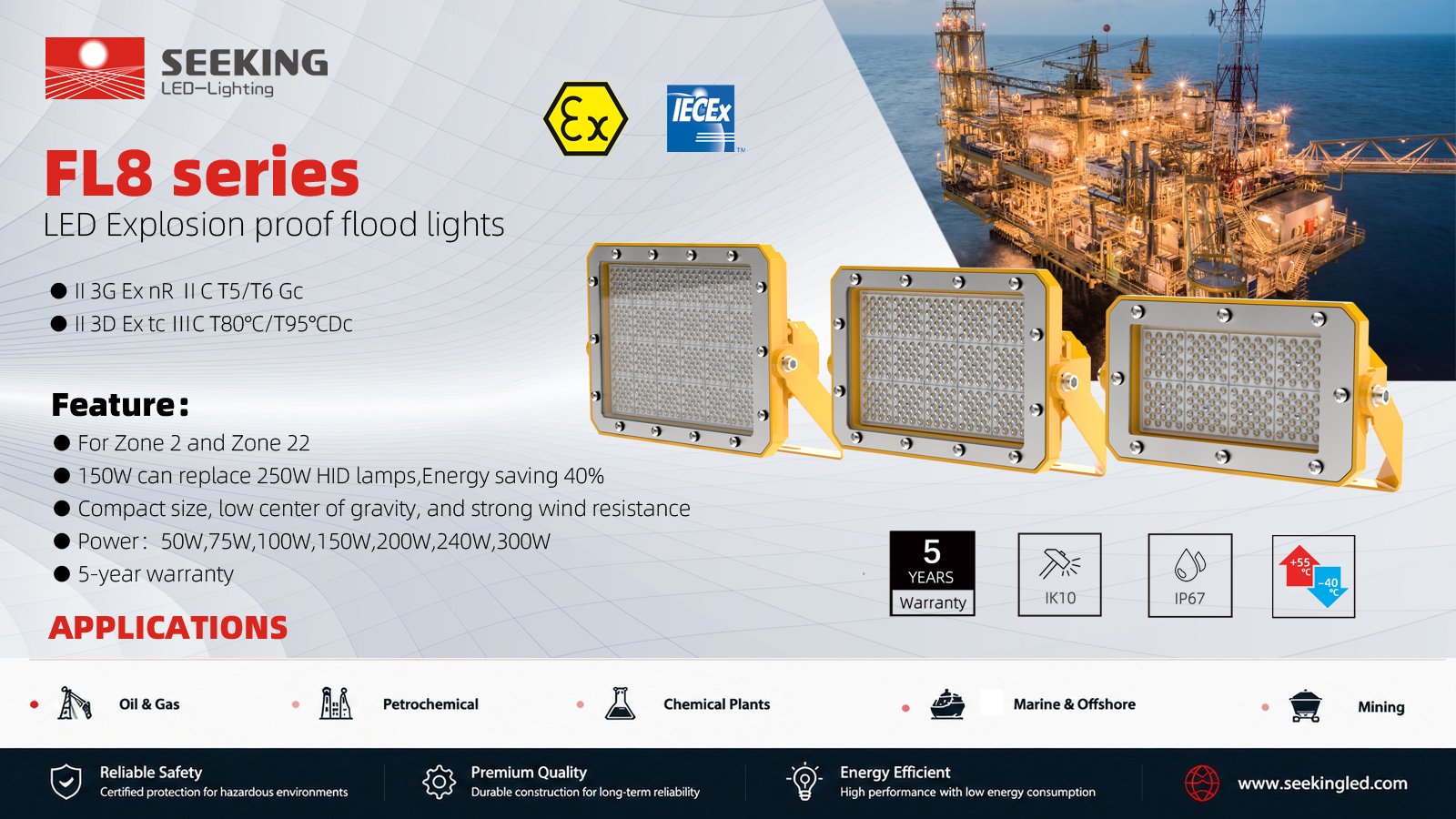
| Zone 2 | Category 3 (Gc) | Ex nR, Ex ic, Ex nA | FL8 flood (Ex nR IIC T6), GS canopy, LU linear |
We build both sides of this divide — the FL7 flood light for Zone 1 and the FL8 flood light for Zone 2 share the same photometrics but use different protection concepts.
What the Difference Costs
| Cost element | Zone 1 (Ex db) | Zone 2 (Ex nR) |
|---|---|---|
| Fixture price index | 130–160 | 100 (baseline) |
| Weight | Heavier flamepath housing | Lighter |
| Installation | Heavier lift, certified glands | Standard Ex glands |
| Inspection regime | More frequent documented inspection | Lighter regime |
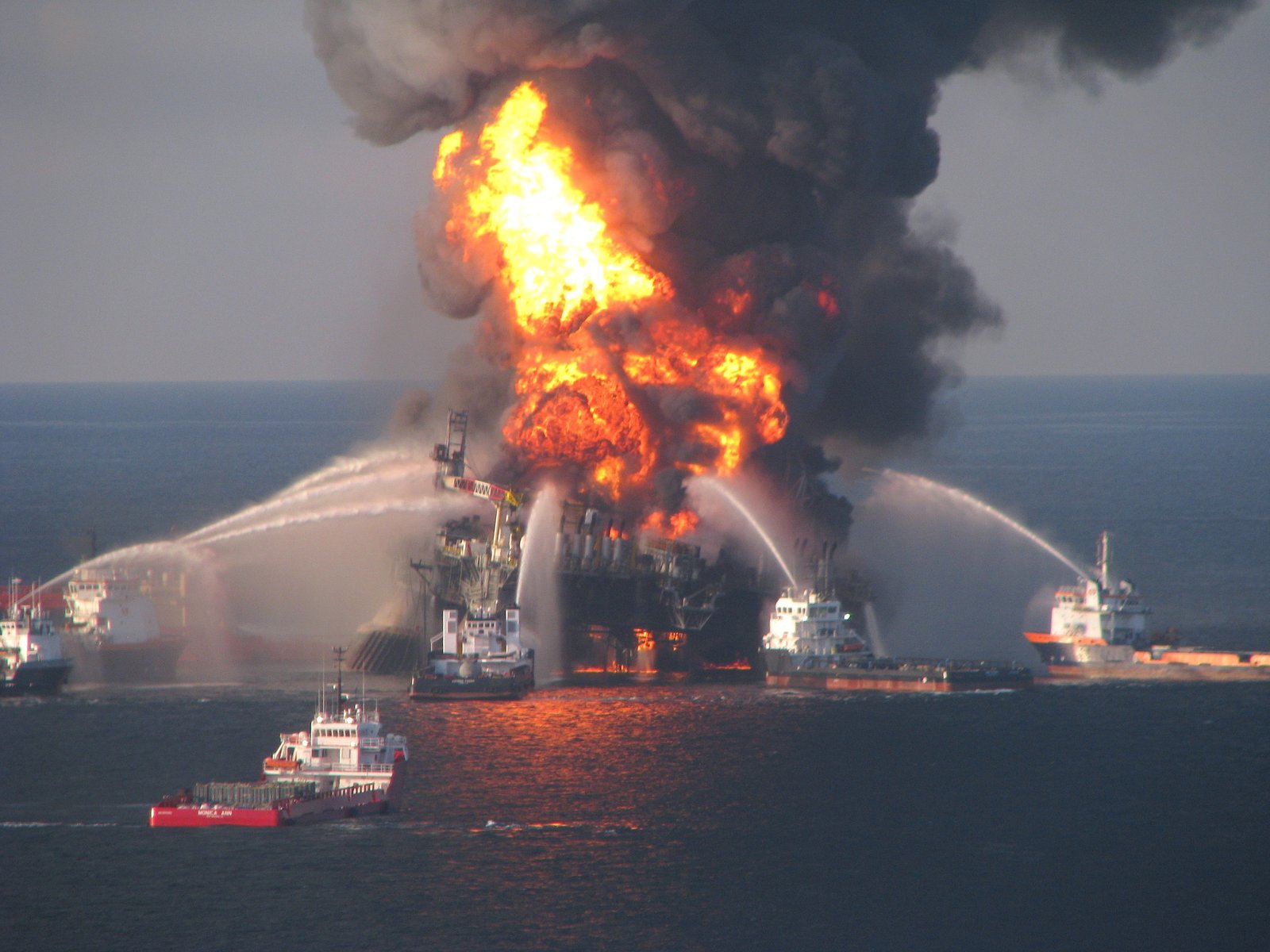
The classic budget error: specifying one Zone 1 fixture type across an entire site "for commonality" when 80% of the area is Zone 2. On a 500-fixture project at a 40% premium, that is 160 fixtures' worth of wasted spend — far more than any spares commonality is worth.
How Real Facilities Split
| Facility | Zone 1 areas | Zone 2 areas |
|---|---|---|
| Refinery | Around pumps, compressors, loading arms | Tank farm shells, roadways, pipe racks beyond release sources |
| Petrol station | Under-canopy near dispensers (by code) | Forecourt perimeter |
| Chemical warehouse | Solvent decant zones | General storage volume |
| Offshore platform | Wellhead and process modules | Living-quarter side, utility areas |
Working at the Zone Border
- Zones are three-dimensional: a Zone 1 envelope can extend upward from a release source through nominally "Zone 2" air — check vertical extents, not just floor plans
- Where the drawing is contested or ventilation is poor, inspectors expect the more onerous zone to govern
- When zones are later re-classified (process change), lighting must be re-assessed — one reason projects favour one manufacturer with both Ex db and Ex nR families, so upgrades stay within the same spares system
Frequently Asked Questions
What is the difference between Zone 1 and Zone 2?
Zone 1 is where a flammable atmosphere is likely to occur during normal operation (10–1,000 hours per year); Zone 2 is where it occurs only rarely and briefly, typically from abnormal conditions like a leak or failure (under 10 hours per year). The distinction comes from the area classification study, not the equipment.
Can I use Zone 2 lights in Zone 1?
No. Equipment is certified by category: Zone 1 requires Category 2 (Gb) protection such as Ex db or Ex eb, while Zone 2 accepts Category 3 (Gc) like Ex nR. Installing Gc equipment in Zone 1 fails hazardous area inspection and can void plant insurance.
Can I use Zone 1 lights in Zone 2?
Yes. Category 2 equipment is certified for Zone 1 and Zone 2. It is common to run one Zone 1-rated fixture type across a mixed area for spares commonality — but for large Zone 2-only areas, Ex nR fixtures are typically 30–60% cheaper, so over-specifying wastes budget.
How much more expensive is Zone 1 lighting?
Flameproof (Ex db) Zone 1 fixtures typically cost 30–60% more than equivalent Ex nR Zone 2 fixtures and weigh more, adding installation cost. On a 500-fixture project, correctly separating Zone 1 and Zone 2 areas often saves a five-to-six figure sum.
Who decides if my area is Zone 1 or Zone 2?
A hazardous area classification study (per IEC 60079-10-1 or equivalent national code) performed by the plant owner or their engineering contractor, based on release sources, ventilation and gas properties. The lighting supplier's job is to match equipment to that drawing — never to draw the zones themselves.
Do I need Zone 1 lighting for a fuel storage tank farm?
Usually both. The area immediately around a tank's fill point, gauge hatch and pump flange is normally Zone 1, while the broader bund area is typically Zone 2 or unclassified. Most tank farms therefore specify a small number of Zone 1 fixtures for the release points and Zone 2 fixtures for general area lighting — which is why the mixed specification is the standard, not the exception.
What happens if I install the wrong zone-rated light?
The installation becomes non-compliant, and the consequences are practical rather than theoretical: failed insurance inspections, refused commissioning, and in most jurisdictions a shutdown order until the fixtures are replaced. Because the certificate is tied to a specific model and zone, an assessor can verify compliance from the nameplate alone. Correcting a wrongful installation usually costs several times more than the saving that motivated it.
Can one fixture cover both Zone 1 and Zone 2 areas?
Yes — a Zone 1 (Category 2) fixture may be installed in Zone 2, but never the reverse. Some projects deliberately standardise on Zone 1 luminaires site-wide to simplify spares and maintenance. The trade-off is real: Zone 1 flameproof housings are heavier and more expensive, so the decision should be made on total cost of ownership across the site's life, not on unit price alone.
Get a Quote for Your Project
Send us your hazardous area classification (zone, gas group, temperature class) and target lux levels — our engineers will reply with a full lighting layout and FOB Shenzhen quotation within 24 hours.
Email: sales01@seekingled.com | Exporting to 70+ countries · 1,000,000+ units shipped per year
Email sales01@seekingled.com · WhatsApp +86 134 1860 0102 · or browse the full certified range.
- About Us
- Products
- Explosion proof light
- Portable explosion proof lighting
- Explosion proof emergency light
- Explosion proof LED T8 tube
- Explosion proof Junction Box
- Explosion proof street light
- Service
- FAQ
- Docs download
Service hotline
Tel:+86 755 29846615
Work time:9:00-20:00
E-mail:sales02@seekingled.com
address:5F, Building 5, Guole Science and Technology Park, Lirong Road, Dalang Street, Longhua, Shenzhen, China