

Explosion Proof Lighting Qatar: North Field, Ras Laffan and LNG Site Selection
Qatar holds the largest single block of new hazardous-area lighting demand in the gas world, and the reason is visible in one number: LNG capacity is being expanded from 77 million tonnes per annum (MTPA) today toward 142 MTPA by 2030, on the North Field — the largest single natural gas field on earth. Every mega-train in that sequence, and the Ras Laffan complex that receives it, adds thousands of classified-area lighting points across process plots, pipe racks, tank farms, loading jetties and the marine interface — each one specified against the zone envelope before a fixture is ever chosen.
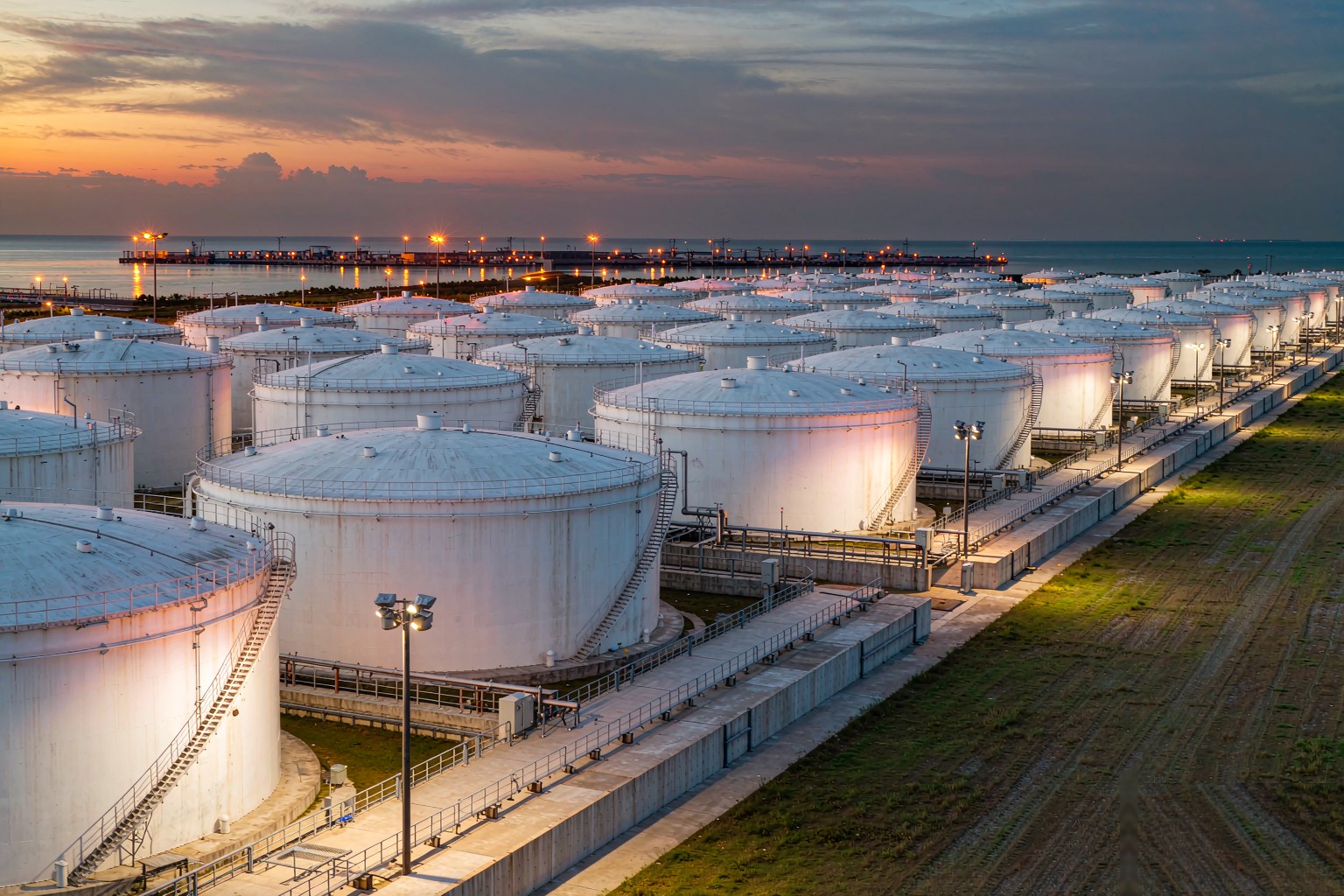
Where Qatar's hazardous-area lighting demand sits
The North Field expansion runs in three phases, each adding mega-trains to Ras Laffan. The table below maps what is driving specification work between 2026 and 2030. These are public, reported figures; the dates are the ones operators and their EPCs are working to, with the caveat that the first phase has already seen its start-up window move.
| Phase | Added capacity | Facilities | Timeline | Investment |
|---|---|---|---|---|
| North Field East (NFE) | 32 MTPA | 4 mega-trains × 8 MTPA | First train mid-2026; first LNG H2 2026; all four targeted Q4 2026 | ≈ US$28.75 bn |
| North Field South (NFS) | 16 MTPA | 2 trains × 8 MTPA | First LNG targeted Q4 2027 | ≈ US$15 bn |
| North Field West (NFW) | 16 MTPA | 2 trains × 8 MTPA | Still in engineering design; works start 2027; first train 2029–2030 | ≈ US$16–18 bn (est.) |
The combined North Field programme totals roughly US$82.5 bn, of which QatarEnergy carries about US$59 bn. The capacity staircase that shapes the lighting workload looks like this:
| Milestone | LNG capacity (MTPA) | What it means for specification |
|---|---|---|
| Today (baseline) | 77 | Existing 14-train Ras Laffan base load |
| End 2026 | 110 | NFE four-train ramp completes the first wave |
| 2027 | 126 | NFS adds a second wave mid-decade |
| 2030 | 142 | NFW closes the step — about +85% over baseline |
One planning note on timing: in February 2026 reporting indicated QatarEnergy had moved the NFE start-up to Q4 2026, with a possibility of slipping into 2027. The useful read is not the exact quarter but the shape of the sequence — NFE, NFS and NFW together form a continuous electrical-and-lighting programme running from 2026 through 2030, and the peak of luminaire demand sits in the pre-commissioning installation-and-testing phase, not at financial close.
Ras Laffan: the complex that concentrates the demand
Ras Laffan Industrial City is where all of this lands. It is the world's largest LNG export complex, about 80 km north of Doha, and it concentrates the entirety of Qatar's LNG production. The table below gives the scale that drives the lighting count.
| Ras Laffan asset | Scale |
|---|---|
| LNG production trains | 14 existing lines — the 77 MTPA base |
| LNG berths | 6 marine loading berths |
| Storage | Total tank capacity exceeding 5 million m³ |
| Power | 2,730 MW on-site generation |
| Helium | World's largest helium production unit |
Each phase releases its lighting packages in the months before mechanical completion, and the classified-area points are specified off the zone envelope long before a fixture is chosen — which is why the certified ambient range, the gas group and the form factor are worth settling early, against the area-classification drawing rather than a catalogue page.
What the Qatar site environment demands
Qatar's sites are not temperate. The conditions that decide whether a luminaire survives commissioning and the first summer push harder here than in most markets, and each one converts into a specific selection rule.
| Site condition | What it demands of the equipment | Selection implication |
|---|---|---|
| Ambient temperature | Qatar summers can reach 55°C; equipment must be rated to the certificate's marked ambient temperature (Ta), not a catalogue wattage | Read the T-class against the certified Ta range; apply derating where the site exceeds it |
| Relative humidity | Coastal and process humidity can reach RH 100% | Sealing and ingress defence are lifetime determinants, not checkboxes |
| Sand and dust storms | Deposited dust degrades heat dissipation and optical output | Genuine sealing and ageing performance; not nominal ratings |
| Corrosion duty | LNG sites are specified to ISO 12944 C4-H (coastal, high corrosivity) | Enclosure, fasteners, coating and seals selected to C4-H, not a generic marine paint |
| System voltage | 415V / 50Hz (LNG site standard) | Driver and ballast matched to 415V 50Hz, not 230V or 60Hz assumptions |
| Area classification | LNG process areas are flammable atmospheres; IECEx Zone 2 is the commonly required level | Match protection concept to the zone on the classified-area drawing |
None of this is a reason to over-engineer. It is a reason to read the certificate before the catalogue — because in a 55°C, RH-100%, salt-laden, sand-blasted process plot, the fixture that wins on paper at a 40°C default ambient is the one that fails at commissioning.
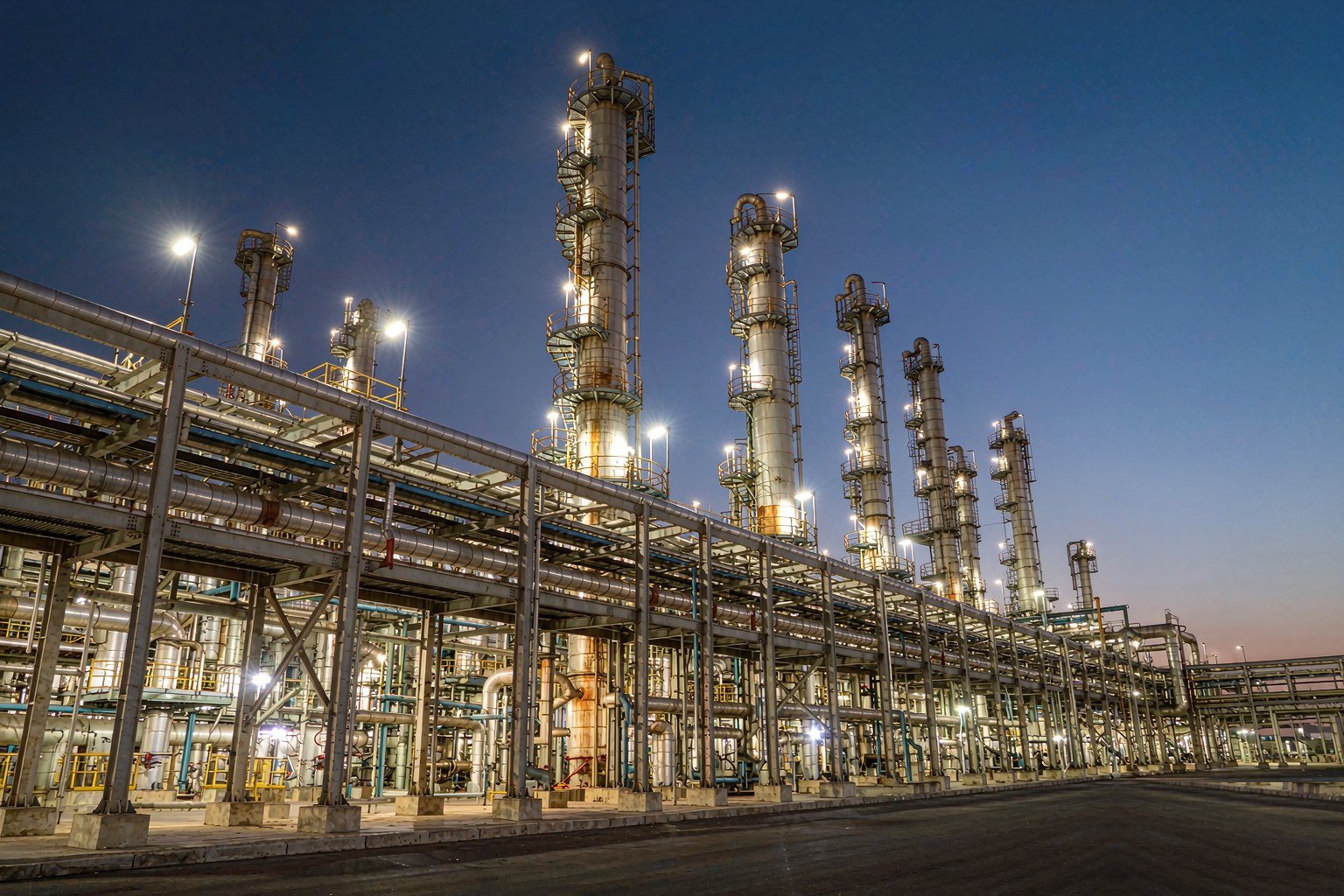
Selecting luminaires for these sites
Selection for a Qatar LNG site follows a four-step judgement, applied point by point off the classified-area drawing rather than across the whole plant:
Step 1 — Confirm the Ta range covers 55°C. Before anything else, check that the certificate's marked ambient temperature range actually covers the site's summer peak. A luminaire certified only to a lower Ta cannot be accepted in a Qatari summer duty, regardless of its output.
Step 2 — Match the corrosion grade to C4-H and coastal salt. Ras Laffan is a marine, high-corrosivity environment. Specify enclosures, fasteners, coatings and seals to ISO 12944 C4-H, and verify the salt-spray and ageing evidence rather than assuming a "marine" label.
Step 3 — Match the zone and gas group. LNG process areas are typically IECEx Zone 2; where the drawing shows Zone 1, an Ex db (flameproof) construction is the matching concept. Group and zone are read per point, not assumed per project.
Step 4 — Choose the form factor by location. For continuous runs along pipe racks, pipe bridges and walkways where uniform light along a line matters more than throw, a linear format carries the load with fewer fittings — our LU Series LED linear luminaire is built for this. For concentrated points — tank tops, loading areas, the perimeter and large open process plots — a floodlight format delivers the output; our FL8 Series explosion-proof floodlight is specified for exactly these points. Both are supplied with the IECEx and ATEX evidence listed below; which certificate applies to a given type is confirmed against the certificate table, not assumed from the series name.
| Zone / environment | Recommended form | Our match |
|---|---|---|
| Zone 2 pipe racks, long process runs | Continuous linear | LU Series LED linear luminaire (Ex nR) |
| Zone 2 tank tops, loading, perimeter | Concentrated floodlight | FL8 Series explosion-proof floodlight (Ex nR) |
| Zone 1 process duty | Flameproof (Ex db) | FL7 / HB21 (Ex db) |
What we provide
The manufacturer's side of the technical file is what we hold and what we hand over. Every number below is stated as issued, and the certificate for a given type is the one listed against that type.
| Document | Number | Issued by / covers |
|---|---|---|
| ATEX Type Examination Certificate | CSANe 25 ATEX 1229X | CSA Group (Netherlands notified body) — LO series |
| IECEx Certificate of Conformity | IECEx CSA 25.0093X | CSA Group — LO series |
| ATEX Quality Assurance Notification (QAN) | CSANe 26 ATEX M076 | CSA Group Netherlands — LO series |
| IECEx Quality Assessment Report (QAR) | GB/CSAE/QAR26.0002/00 | CSA Group (UK) — LO series |
| ATEX Type Examination Certificates | TÜV CY 26 ATEX 0207611 / 0207612 / 0207613 X | TÜV (Cyprus); correspond to the FL8, GS and LU series |
In practice we supply the IECEx test reports, the IECEx Certificates of Conformity, the IECEx QAR, the ATEX certificates and the quality assurance notification — the technical evidence a project needs in order to assess the equipment, together with installation manuals and the parameter set behind each series.
What we need from you to quote
For a quote and lead time, please provide: the area-classification drawing (Zone 0/1/2 or 20/21/22, gas group, temperature class); the site ambient temperature range and the mounting height; the required illuminance and uniformity for the task; the mounting arrangement (pole, bracket, pipe-rack rail, tank top); the supply voltage and frequency; and the project node and required arrival time. With those we can match the EPL, the certified ambient range and the format to the duty, and return a bill of materials rather than a single catalogue item.
Frequently asked questions
What ambient temperature rating do Qatar LNG sites require for luminaires?
Qatar summers can reach 55°C, so the deciding number is not the luminaire's wattage but the ambient temperature (Ta) range marked on its explosion-protection certificate. Before specifying, confirm the certificate's Ta range genuinely covers the site's summer peak; where it does not, derating or a different type is required. Reading the T-class against a 40°C default instead of the certified Ta is one of the most common selection errors on Gulf projects.
Which zone classification applies to Qatar LNG process areas?
LNG process areas are flammable atmospheres, and the commonly required level for Qatar LNG sites is IECEx Zone 2. Where the classified-area drawing shows Zone 1, an Ex db (flameproof) construction is the matching protection concept rather than an Ex nR type. Zone and gas group are read point by point from the drawing, not assumed across the whole plant, because a single project can mix zones on one site.
How do I choose between linear and floodlight formats for a Qatar plant?
Match the form factor to the location. For continuous runs along pipe racks, pipe bridges and walkways where uniform light along a line matters more than throw, a linear luminaire does the work with fewer fittings. For concentrated points — tank tops, loading areas, the perimeter and large open process plots — a floodlight format carries the output. Both must rest on the same IECEx/ATEX evidence as the rest of the classified-area lighting.
What corrosion protection level should I specify for a coastal Qatar facility?
Ras Laffan and the LNG sites are marine, high-corrosivity environments, and they are specified to ISO 12944 C4-H. That means the enclosure, fasteners, coating and seals are selected to C4-H duty, not a generic "marine" label, and the salt-spray and ageing evidence should be verified rather than assumed. In a salt-laden, sand-blasted process plot, sealing and corrosion resistance are lifetime determinants, not optional extras.
Why does the 415V / 50Hz site standard matter for luminaire selection?
LNG site electrical standards in Qatar run at 415V / 50Hz, and drivers and ballasts must be matched to that supply — not to the 230V / 60Hz assumptions common in other markets. Confirming voltage and frequency at specification stage avoids rework at energisation, and the supply data belongs in the enquiry alongside the zone, gas group and ambient range.
- About Us
- Products
- Explosion proof light
- Portable explosion proof lighting
- Explosion proof emergency light
- Explosion proof LED T8 tube
- Explosion proof Junction Box
- Explosion proof street light
- Service
- FAQ
- Docs download
Service hotline
Tel:+86 755 29846615
Work time:9:00-20:00
E-mail:sales02@seekingled.com
address:5F, Building 5, Guole Science and Technology Park, Lirong Road, Dalang Street, Longhua, Shenzhen, China