

Hazardous Area Lighting India: PESO Approval & Ex Selection
Hazardous Area Lighting in India: What the Market Actually Requires
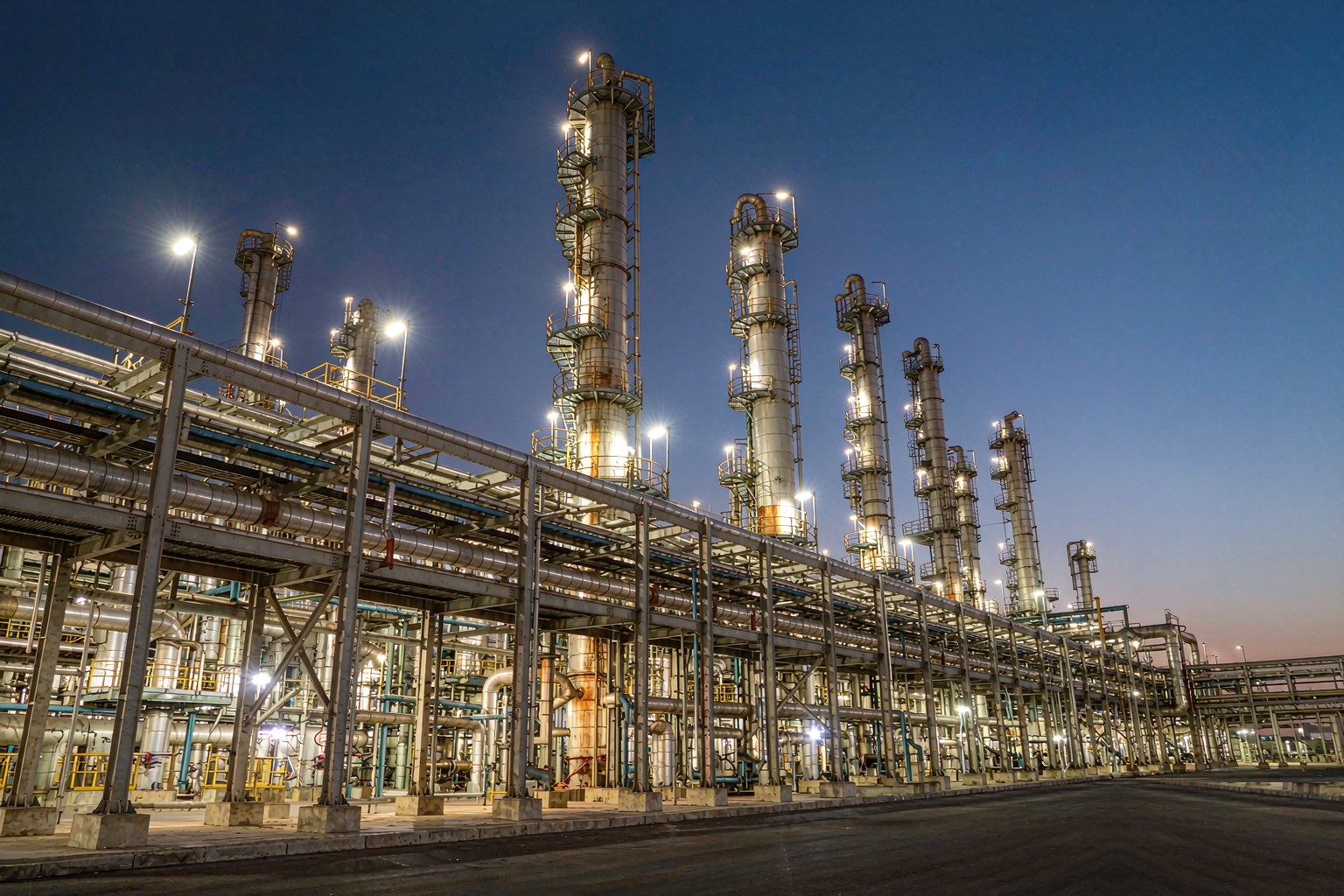
India is one of the two largest sources of industrial hazardous-area lighting demand in the world, and the reason is visible on a map of what is being built right now. The country's installed refining capacity stood at 267.1 million tonnes per annum (MMTPA) as of April 2026, and roughly 21 MMTPA of additional capacity is under execution across Panipat, Koyali, Barauni, Digboi and Bina. Every one of those projects creates Zone 1 and Zone 2 areas that must be lit with certified explosion-proof luminaires — process units, tank farms, pump houses, loading gantries, LPG bottling plants and jetty areas.
For a buyer in India, however, choosing a luminaire is not only a question of watts and lumens. Two constraints decide whether equipment can legally be energised on site: the zone classification of the area, and the approval route that puts the fixture inside Indian law. This guide covers both, in the order a project actually faces them.
Where India's hazardous areas actually are
Hazardous-area demand in India is not spread evenly. It clusters around refining and petrochemical complexes, gas infrastructure and, increasingly, battery plants. The table below maps the sites that drive most specification work in 2026 and 2027.
| Location | Facility type | Status in 2026 |
|---|---|---|
| Jamnagar, Gujarat | Refinery and petrochemical complex, 70 MMTPA | Operating — the largest single-location refinery in the world |
| Panipat, Haryana | Refinery and petrochemical complex | Expansion 15 → 25 MMTPA, 94% complete, commissioning targeted December 2026; new PBR and polypropylene units |
| Koyali (Vadodara), Gujarat | Refinery, 13.7 MMTPA | Expansion to 18 MMTPA, 89% complete, commissioning targeted November 2026 |
| Barauni, Bihar | Refinery, 6 MMTPA | Expansion to 9 MMTPA, 92% complete, targeted December 2026 |
| Paradip, Odisha | Refinery, 15 MMTPA, with new PX-PTA complex | PX-PTA complex 95% complete, entering service in 2026 |
| Digboi, Assam | Refinery expansion, +0.35 MMTPA | Under implementation, targeted July 2027 |
| Bina, Madhya Pradesh | Refinery 7.8 MMTPA with ethylene cracker | Expansion to 11 MMTPA under execution, targeted May 2028 |
| Ramayapatnam, Andhra Pradesh | Greenfield refinery and petrochemical complex, 9 MMTPA | Environmental and CRZ clearance recommended; pre-construction |
| Kochi and Mumbai | Coastal refineries and port terminals | Operating — high corrosion environment |
The practical consequence for procurement is timing. A refinery expansion that commissions in December 2026 has its luminaire package specified in mid-2026. If the certification route is not already understood at that point, the approval timeline — not the production timeline — becomes the critical path.
Zones, gas groups and the standards India uses
India applies the IEC zone system, not the North American Class/Division system. Areas are classified Zone 0, Zone 1 or Zone 2 for gases and vapours, and Zone 20, Zone 21 or Zone 22 for combustible dusts. Equipment is selected against the IS/IEC 60079 series — Indian Standards that adopt the IEC 60079 series, which is why an ATEX or IECEx test file is technically relevant even though it does not by itself grant Indian approval.
| Zone | Typical location in an Indian plant | Protection level required | Common protection types |
|---|---|---|---|
| Zone 0 | Inside tanks, vapour spaces | Ga | Ex ia — rarely used for lighting |
| Zone 1 | Process units, pump houses, loading gantries, LPG bottling | Gb | Ex db (flameproof), Ex eb (increased safety), Ex mb |
| Zone 2 | Peripheral areas, tank farm boundaries, utilities | Gc | Ex nR (restricted breathing), Ex ec, Ex tc |
| Zone 21 | Dust handling, grain, coal, pigment filling | Db | Ex tb / Ex db with dust certification |
| Zone 22 | Dust areas outside normal release points | Dc | Ex tc |
Two specification points are routinely mishandled. First, gas group: hydrogen-rich streams and some petrochemical units require IIC, while most refinery streams are IIB. Specifying IIB equipment into an IIC area is a non-compliant installation. Second, temperature class: T6 (85 °C maximum surface temperature) is the conservative choice and is available across our range; T4 or T5 is sometimes acceptable depending on the auto-ignition temperature of the specific stream, but the decision belongs to the area classification study, not to the lighting vendor. If the boundary between Zone 1 and Zone 2 is still being argued at specification stage, our comparison of what actually changes between Zone 1 and Zone 2 lighting sets out the equipment consequences.
PESO approval: the step imported suppliers most often miss
This is the single most important paragraph for anyone importing explosion-proof lighting into India. ATEX and IECEx certification do not, on their own, authorise installation in India. Rule 106 of the Petroleum Rules, 2002 — read together with the Explosives Act, 1884 and the Petroleum Act, 1934 — requires electrical equipment installed in explosive or potentially explosive atmospheres at petroleum premises to hold approval from PESO, the Petroleum and Explosives Safety Organisation (formerly the Chief Controller of Explosives, CCoE), which sits under DPIIT and is headquartered in Nagpur.
PESO does not re-test equipment that already holds international certification. It evaluates the documentary evidence and endorses it for use under Indian law. International certificates are the core of the application file, not a substitute for it. There are three recognised routes.
| Route | Who it applies to | Evidence required |
|---|---|---|
| Domestic route | Equipment manufactured in India | Test reports from a CCoE-recognised Indian laboratory; BIS licence for flameproof (Ex d) apparatus |
| IECEx route | Imported equipment certified under the IECEx system | IECEx Certificate of Conformity, Ex Test Report (ExTR) and Quality Assessment Report (QAR) |
| ATEX route | Equipment manufactured in the EU and certified under ATEX | EU-Type Examination Certificate, production quality assurance notification, and the manufacturer's Declaration of Conformity |
Approval typically takes 60 to 120 days with a complete file, and is tied to the product design: any change to the design, materials or manufacturing process requires re-evaluation, and approvals need renewal on the terms stated in the certificate. Non-compliance carries penalties under the Explosives Act, 1884. Buyers can and should confirm a supplier's approval status directly through PESO's own portal at peso.gov.in rather than accepting a scanned certificate at face value.
Confirming that a certificate is genuine is a separate skill from being given one. The method — decoding the Ex marking, checking the notified body, and querying the issuing body in writing where no public register exists — is set out in our guide to verifying an ATEX certificate before you pay, and it applies unchanged to the certificate file behind a PESO application.
What SEEKINGLED can provide for a PESO application is the full documentary set from our own certification: the ATEX EC-Type Examination certificate for the relevant series, the IECEx Certificate of Conformity with its ExTR, the CSA Group QAN production quality assurance notification (CSANe 26 ATEX M076) and the QAR audit report, together with EU Declarations of Conformity and the general assembly drawings. We supply the technical file; the Indian applicant makes the application through its authorised representative.
Specifying luminaires for Indian field conditions
Certification gets a fixture onto site. Design keeps it working. Four conditions do most of the damage to lighting installations in India.
| Condition | Where it bites | Specification response |
|---|---|---|
| Ambient heat above 45 °C | Refinery process areas, tank farms, coastal sites | Luminaires rated −20 °C to +55 °C with active thermal design; T6 classification retained at full power |
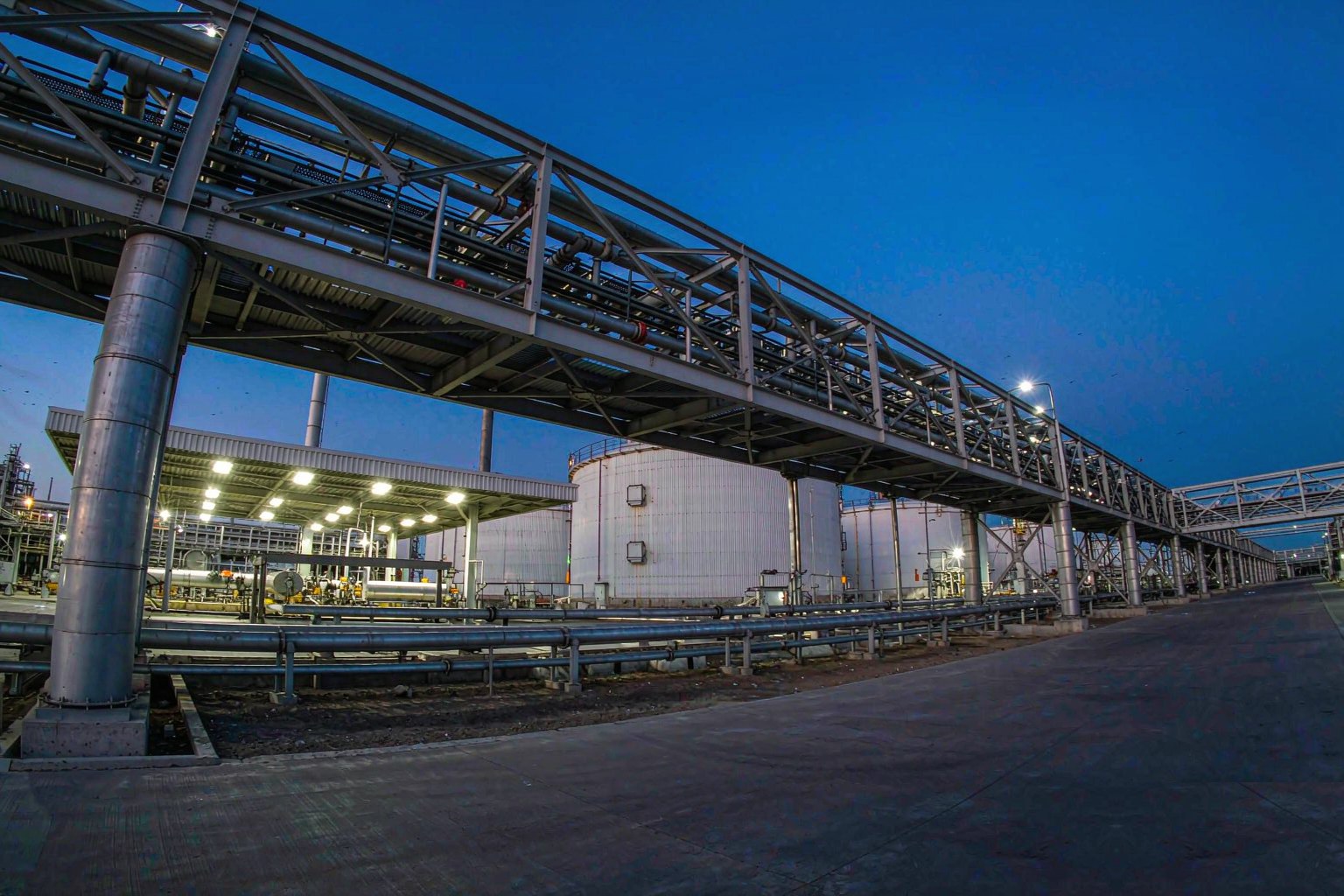
| Monsoon humidity and water ingress | Outdoor and semi-enclosed installations across the country | IP67 sealing on the body, correct cable entry and gland discipline — the gland is part of the certified assembly |
| Coastal and saline atmospheres | Jamnagar, Kochi, Paradip, Mumbai, Ramayapatnam | C4 corrosion resistance to ISO 12944 as standard; 304 stainless steel cable entry hardware and plugs |
| Vibration and mechanical abuse | Pump houses, compressor areas, loading gantries | IK10 impact rating (20 J), vibration-tolerant mounting, no glass optic cover |
Our range addresses these requirements as standard rather than as options: IP67 and IK10 across the series (the BT8 tube light is IP33 by design, since it fits an existing G13 enclosure), C4 corrosion resistance to ISO 12944, 100–277 V AC input covering Indian supply variation, and 150 lm/W efficacy from 15 W to 400 W depending on series.
Which series fits which area
| Application | Typical zone | Series | Power range | Certification |
|---|---|---|---|---|
| Process unit general lighting, pipe racks | Zone 1 / 2, gas group IIB or IIC | FL7 flood light | 60–400 W | ATEX + IECEx |
| High-bay workshops, warehouses | Zone 1 / 2 | HB21 high bay | 15–300 W | ATEX + IECEx |
| Linear runs, corridors, cable tunnels | Zone 1 / 2 | LO linear light | 20–80 W | ATEX + IECEx |
| Tank farm perimeter, plant roads | Zone 2 | FL8 street light | 50–200 W | ATEX + IECEx |
| Loading gantries, canopy areas, retail fuel | Zone 2 / 22 | GS canopy light | 100–200 W | ATEX |
| Dust-handling and process interiors | Zone 2 / 22 | LU linear light | 40–150 W | ATEX |
| Emergency egress and exit marking | Zone 1 / 2 | BAJ52 emergency, BAYD82 exit sign | 2×3 W / 6 W | ATEX + IECEx |
What to send us for a quotation
Full specifications, photometric data and the certificate set for each series are on the product pages — FL7 flameproof flood light, HB21 high bay, LO linear light and GS canopy light.
For an Indian project the fastest route to a usable quotation is sending four things: the area classification drawing or a list of zones and gas groups; mounting positions and heights; the ambient temperature range at the site; and whether the project requires PESO approval handled through your authorised Indian representative or whether you only need the certified luminaires ex-works. Send those to sales02@seekingled.com and we will return a lighting layout, the recommended series and wattage, and the certificate set for the PESO file.
Frequently Asked Questions
Can I install ATEX-certified luminaires in India without PESO approval?
No, not at petroleum premises regulated under the Petroleum Rules, 2002. Rule 106 requires equipment installed in explosive or potentially explosive atmospheres to hold PESO approval. An ATEX or IECEx certificate is the technical evidence that supports the application — it does not replace the approval itself.
Does PESO accept IECEx certificates?
Yes. PESO recognises the IECEx route: the Certificate of Conformity, Ex Test Report and Quality Assessment Report form the application dossier. There is also a separate ATEX route for equipment manufactured in the EU. For flameproof (Ex d) equipment a BIS licence is additionally required.
What is the difference between CCoE and PESO?
They are the same authority under different names. CCoE (Chief Controller of Explosives) was the historic designation of the office; PESO (Petroleum and Explosives Safety Organisation) is the current organisational name. Older project documents will say CCoE approval, newer ones PESO approval.
How long does PESO approval take?
Typically 60 to 120 days once a complete file is submitted. The variables that cause delay are almost always documentary: an incomplete quality assurance report, drawings that do not match the certificate, or an applicant without a properly appointed Indian representative.
Which temperature class should I specify for an Indian refinery?
T6 (85 °C maximum surface temperature) is the conservative and commonly available choice, and it is what our range carries. If a stream's auto-ignition temperature allows T4 or T5, that saving should be confirmed by the area classification study rather than assumed at the lighting package stage.
- About Us
- Products
- Explosion proof light
- Portable explosion proof lighting
- Explosion proof emergency light
- Explosion proof LED T8 tube
- Explosion proof Junction Box
- Explosion proof street light
- Service
- FAQ
- Docs download
Service hotline
Tel:+86 755 29846615
Work time:9:00-20:00
E-mail:sales02@seekingled.com
address:5F, Building 5, Guole Science and Technology Park, Lirong Road, Dalang Street, Longhua, Shenzhen, China