

Explosion Proof Lighting Vietnam: The 2026 Inspection Regime and the Dung Quat Procurement Window
Explosion Proof Lighting Vietnam: The 2026 Inspection Regime and the Dung Quat Procurement Window
Vietnam does not run a registration system for explosion-proof luminaires. It runs an inspection system. The IECEx Certificate of Conformity you already hold can serve directly as the basis for admission, without first being converted into a locally issued type-approval certificate. The practical question is what inspections your equipment still has to pass, and where your IECEx evidence slots in. The answer sits inside four Ministry of Industry and Trade (MOIT) instruments, and the most important one for a lighting supplier is the rule that says lighting is not exempt.
The regulatory framework — four instruments, read together
Vietnam's hazardous-area equipment rules are spread across four MOIT documents, and a lighting supplier has to read them as a set rather than picking the convenient one. The first two govern inspection and the standard equipment must meet; the third is the national technical regulation that sets the technical basis; the fourth is a 2026 amendment easy to misread as a blanket upgrade but tightly scoped.
| Instrument | What it says for lighting | Status |
|---|---|---|
| Circular 33/2015/TT-BCT (MOIT; in force 2017-01-06) | Annex I lists Explosion-proof lights under "equipment for explosive gas and dust hazardous environments (all voltage levels)" as subject to technical safety inspection. | In force |
| Circular 32/2022/TT-BCT | Hazardous-area facilities must use ATEX/IECEx-compliant equipment; requires risk assessment and retained compliance documents. | In force |
| QCVN 01:2020/BCT — National Technical Regulation on safety of oil and gas exploration and processing | Mandatory national technical regulation; explosion-proof electrical requirements are based on the IEC 60079 series. | In force |
| Circular 44/2026/TT-BCT (MOIT; issued 2026-08-27, effective 2026-11-01) | Revises 14 mining-safety and explosion-proof electrical QCVNs; covers underground mining lighting. Scope is limited to those QCVNs and must not be auto-applied elsewhere. | Effective 2026-11-01 |
The takeaway for a lighting supplier is the first row. Annex I names explosion-proof lights across all voltage levels as equipment subject to technical safety inspection — so lighting is not an exempt category, and a luminaire going into a classified area is on the inspection inventory the same way a motor is. The fourth row matters in the opposite direction: Circular 44/2026 tightens underground mining lighting rules but, by its own terms, does not reach refineries, tank farms or petrochemical plants.
Inspection, not registration — how a luminaire actually clears a Vietnamese gate
Vietnam recognises IECEx as a technical basis (Circular 32/2022 names both ATEX and IECEx as the standards facilities must comply with). But import clearance still runs through technical safety inspection, because Circular 33/2015 lists explosion-proof luminaires on the inspection inventory. The path is therefore not "convert my certificate" but "present my certificate as the evidence the inspection checks against".
| Step | Who acts | What it produces |
|---|---|---|
| Facility designates equipment requiring inspection | Owner / EPC, against the classified-area drawings | Equipment list from Circular 33/2015 Annex I; luminaires included at all voltage levels |
| Technical safety inspection arranged | Importer / local party using an MOIT-recognised inspection route | Inspection against the applicable QCVN, with IEC 60079 as basis |
| IECEx and ATEX evidence submitted as the technical basis | Manufacturer (us) | IECEx Certificate of Conformity, ExTR test report, IECEx QAR, and ATEX certificates |
| Compliance file retained by the facility | Owner / operating facility | Risk assessment, certification records, compliance documents (Circular 32/2022) |
| Site acceptance | Owner / EPC and the site safety authority | Match to the area-classification drawings at receiving and commissioning |
Because there is no mandatory local type-certification gate between your IECEx file and the site, Vietnam is the lowest-threshold of the three markets we cover. Thailand runs a TISI track (TIS 899 aligned to IECEx); Oman a DGSM Certificate of Conformity per shipment plus JSRS registration. Vietnam asks for inspection against an IEC 60079 basis, and your IECEx Certificate of Conformity is the evidence that satisfies it.
The procurement window — Dung Quat and the 2026–2028 package cycle
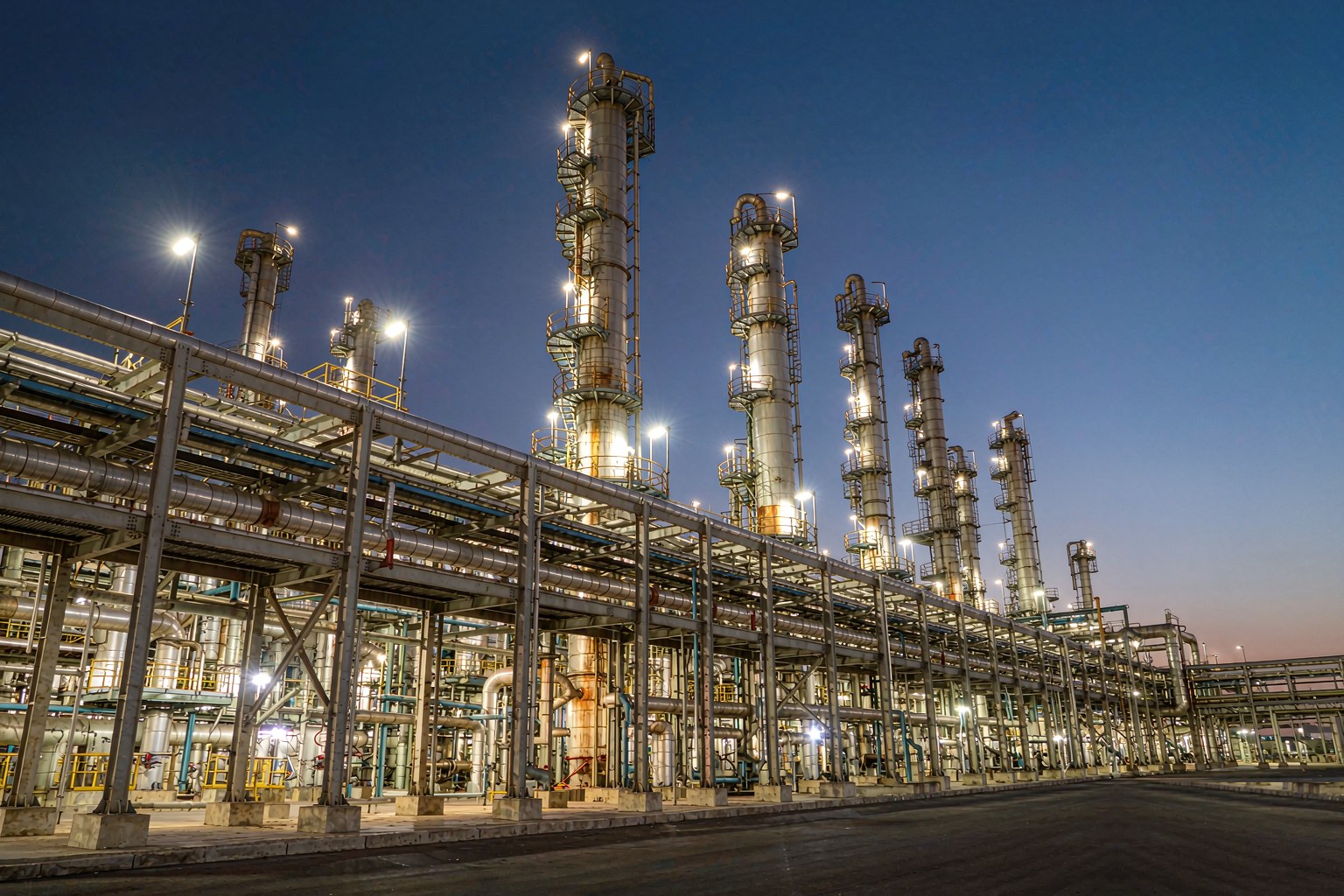
The project that matters most for luminaire specification now is the Dung Quat refinery upgrade and expansion, owned by BSR, a PetroVietnam member. The figures below are the BSR project record, describing a site already moving from earthworks into the phase where lighting packages are specified.
| Parameter | Figure |
|---|---|
| Total investment | VND 36.397 trillion ≈ USD 1.489 billion |
| Processing capacity | 148,000 → 171,000 barrels per day |
| Gasoline output | 65.9 → 79.7 thousand barrels per day |
| Diesel output | 53.2 → 59.2 thousand barrels per day |
| Jet fuel / kerosene output | 5.3 → 13.1 thousand barrels per day |
| Product quality | Euro V |
| Site preparation (earthworks) start | 2026-02-02 |
| EPC and PMC contracts signed | 2026-07-09 (BSR, EPC consortium and PMC) |
| Construction period | 37 months from EPC effectiveness |
| Commercial operation | 2028 |
| Procurement packages | 30 total; 24 implemented or under way; 6 pending |
| Earthworks progress | 57.2% (topsoil removal 100%) |
| Debt financing | about USD 600 million (≈ 40% of total); lender picked Q4 2026 |
Alongside Dung Quat, the Long Son petrochemical complex is advancing its LSPE (ethane feed) steps to improve feedstock flexibility. Our own analysis is that, with the EPC signed and 24 of 30 packages landed, the second half of 2026 through 2028 is the main procurement and fit-out window for explosion-proof luminaires across units, pipe racks, tank farms and loading zones.
Specifying for Vietnamese sites — zone, gas group, temperature class, ambient
Once the inspection route is clear, selection follows IEC 60079-14: match the equipment protection level to the zone, the gas group to the classified-area drawing, and the temperature class to the actual ambient rather than a default. Four site conditions drive the choice.
| Site condition | What it changes in selection | Our data point |
|---|---|---|
| Area classification (zone) | Zone 1 commonly uses Ex db; Zone 2 can use Ex nR. Dust duty (Zone 21/22) calls for Ex tb. | FL7 and HB21 rated Ex db for Zone 1; FL8, GS and LU rated Ex nR for Zone 2 |
| Gas group | Most hydrocarbon streams are IIA or IIB, but some chemical service is IIC; a site can mix groups, so one type cannot cover every point. | Gas group matched to the classified-area drawing, point by point |
| Temperature class | The T-rating must be read against the actual ambient, not a 40 °C default, with derating where exceeded. | T-class stated against the marked ambient; ambient confirmed per project |
| Ambient and corrosion environment | Coastal, saline and process atmospheres raise corrosion duty; deposited dust degrades heat dissipation and output. | Enclosure, fasteners, coating and seals to the project's corrosion class |
For concentrated points — tank tops, loading areas — a floodlight carries the output; we supply the FL8 Series explosion-proof floodlight for these. For pipe racks, walkways and long runs where uniform line light matters, a linear format uses fewer fittings; the LU Series LED linear luminaire is our Zone 2 linear line. Both ship with the IECEx and ATEX evidence listed below. Specifying one type across Zone 1 and Zone 2 is a specification error, not a saving.
Five mistakes that stall Vietnam luminaire packages
From IEC 60079-14 practice and the inspection regime above, the recurring failure points on Vietnamese hazardous-area lighting packages are predictable and mostly avoidable at the quotation stage.
1. Assuming lighting is exempt. It is not — Circular 33/2015 Annex I lists explosion-proof lights at all voltage levels as subject to technical safety inspection, so a quotation that treats luminaires as outside the inventory will not survive clearance.
2. Treating Circular 44/2026 as a blanket upgrade. It revises 14 mining-safety and explosion-proof electrical QCVNs and covers underground mining lighting, but its own terms limit it to those QCVNs and say it must not be auto-applied to other industrial environments. Reading it as "everything got stricter on 2026-11-01" misstates the scope.
3. Shipping ATEX-only without IECEx. Circular 32/2022 names both as compliant, and IECEx is the evidence Vietnam's inspection accepts directly; an ATEX-only file leaves a gap at import inspection that a verifiable IECEx Certificate of Conformity closes.
4. One type for mixed zones. Specifying a single luminaire type across Zone 1 and Zone 2 is a specification error — the protection concept (Ex db versus Ex nR) must match the zone on the drawing, point by point.
5. Missing the compliance file. Circular 32/2022 requires a retained risk assessment, equipment certification and compliance documents at the facility; without that file, the package stalls at the gate even when the product is sound.
Frequently asked questions
Does Vietnam require a mandatory local type-certification for explosion-proof luminaires?
No — not as a registration-system market does. Vietnam runs an inspection system: Circular 33/2015/TT-BCT lists explosion-proof lights on the equipment inventory subject to technical safety inspection, and Circular 32/2022/TT-BCT requires hazardous-area facilities to use equipment compliant with ATEX or IECEx. Because IECEx is named as a compliant standard and accepted as the technical basis, your IECEx Certificate of Conformity serves directly — which is why Vietnam is the lowest-threshold of the three markets we cover.
Is lighting exempt from inspection under Circular 33/2015?
No. Annex I of Circular 33/2015/TT-BCT — the list of electrical equipment subject to technical safety inspection — explicitly includes explosion-proof lights under "equipment for explosive gas and dust hazardous environments (all voltage levels)". Lighting is on the inspection inventory, not outside it, and the importer must account for luminaires at clearance the same way it accounts for motors or switchgear.
What does Circular 44/2026 actually change for my refinery or petrochemical project?
Circular 44/2026/TT-BCT was issued on 2026-08-27 and takes effect on 2026-11-01. It revises 14 mining-safety and explosion-proof electrical QCVNs; coverage includes underground mining lighting equipment. It limits its scope to those 14 QCVNs and must not be auto-applied to other environments. So for a refinery, tank farm or petrochemical plant, Circular 44/2026 does not by itself tighten your lighting specification — the governing basis remains QCVN 01:2020/BCT on IEC 60079, plus Circulars 33/2015 and 32/2022.
Can I use ATEX-only equipment in Vietnam?
It is weaker than using IECEx. Circular 32/2022/TT-BCT names both ATEX and IECEx as compliant standards, so ATEX is acceptable in principle, but Vietnam's technical safety inspection (Circular 33/2015) works directly against an IEC 60079 basis, and IECEx is the evidence that satisfies it most cleanly. An ATEX-only submission leaves a gap at import inspection that a verifiable IECEx Certificate of Conformity closes. Hold IECEx and let the local importer complete the inspection file on top of it.
Do you hold the Vietnamese statutory certificate for explosion-proof lighting?
No, and we do not claim to. Vietnam's technical safety inspection and any local conformity documentation are held on the Vietnamese side — by the buyer or local importer or agent, not the overseas manufacturer. As the manufacturer we provide the technical evidence — IECEx test reports, Certificate of Conformity and Quality Assessment Report, ATEX certificates and quality assurance notification — on which the local importer builds the inspection file. For certificate details and project documentation, contact sales02@seekingled.com.
Fact check
| Fact as stated | Source | How verified |
|---|---|---|
| Circular 33/2015/TT-BCT Annex I lists explosion-proof lights (all voltage levels) as subject to technical safety inspection | Circular 33/2015/TT-BCT, Annex I (MOIT) | MOIT annex text |
| Circular 32/2022/TT-BCT requires hazardous-area facilities to use ATEX/IECEx-compliant equipment, with risk assessment and retained compliance files | Circular 32/2022/TT-BCT (MOIT) | MOIT circular |
| QCVN 01:2020/BCT is mandatory; its explosion-proof electrical requirements are based on IEC 60079 | QCVN 01:2020/BCT (MOIT) | National technical regulation |
| Circular 44/2026/TT-BCT issued 2026-08-27, effective 2026-11-01; revises 14 mining-safety and explosion-proof electrical QCVNs; covers underground mining lighting; scope expressly limited and not auto-applicable to other industrial environments | Circular 44/2026/TT-BCT (MOIT) | MOIT circular and scope clause |
| Vietnam runs an inspection system, not a registration system; IECEx is accepted directly as the technical basis | Circulars 32/2022 and 33/2015 with QCVN 01:2020/BCT | Inference; cross-checked against Thailand (TISI) and Oman (DGSM CoC) |
| Dung Quat (see project table above): USD 1.489 billion / VND 36.397 trillion; 148k→171k b/d; gasoline 65.9→79.7 kb/d; diesel 53.2→59.2 kb/d; jet/kerosene 5.3→13.1 kb/d; Euro V; start 2026-02-02; EPC+PMC 2026-07-09; 37 months; 2028; 30 packages (24/6); earthworks 57.2%; financing ~USD 600 million | BSR (PetroVietnam member) project record | BSR official figures and project reporting |
| Our certificate numbers (ATEX CSANe 25 ATEX 1229X; IECEx CSA 25.0093X; QAN CSANe 26 ATEX M076; QAR GB/CSAE/QAR26.0002/00; TÜV CY 26 ATEX 0207611 / 0207612 / 0207613 X) | Our certificate files; issuers CSA Group and TÜV | Each number verifiable with the issuing body |
What we provide — and what we do not claim
SEEKING LED-LIGHTING LIMITED (brand SEEKINGLED, www.exlights.com) is the manufacturer. Vietnam's statutory technical safety inspection and any local conformity documentation are held on the Vietnamese side — by the buyer or local importer or agent, not the overseas manufacturer. We state which evidence we hold and let the importer build the file.
| Document | Number | Issued by / covers |
|---|---|---|
| ATEX Type Examination Certificate | CSANe 25 ATEX 1229X | CSA Group (Netherlands) — LO series |
| IECEx Certificate of Conformity | IECEx CSA 25.0093X | CSA Group — LO series |
| ATEX Quality Assurance Notification (QAN) | CSANe 26 ATEX M076 | CSA Group Netherlands — LO series |
| IECEx Quality Assessment Report (QAR) | GB/CSAE/QAR26.0002/00 | CSA Group (UK) — LO series |
| ATEX Type Examination Certificates | TÜV CY 26 ATEX 0207611 / 0207612 / 0207613 X | TÜV (Cyprus); FL8, GS and LU series |
What this means in practice: we supply the IECEx test reports, Certificate of Conformity and Quality Assessment Report, the ATEX certificates and quality assurance notification, as the technical basis for the importer's inspection under Circular 33/2015 and compliance file under Circular 32/2022. We do not claim to hold a Vietnamese statutory certificate — that document is held locally by the buyer or importer — nor any local type-approval or registration status; projects needing local registration go through the buyer's route, and we support it with documentation rather than assert a status we do not hold.
Related country pages in this series: Thailand, Oman, Saudi Arabia, and Indonesia.
- About Us
- Products
- Explosion proof light
- Portable explosion proof lighting
- Explosion proof emergency light
- Explosion proof LED T8 tube
- Explosion proof Junction Box
- Explosion proof street light
- Service
- FAQ
- Docs download
Service hotline
Tel:+86 755 29846615
Work time:9:00-20:00
E-mail:sales02@seekingled.com
address:5F, Building 5, Guole Science and Technology Park, Lirong Road, Dalang Street, Longhua, Shenzhen, China