

Explosion Proof Lighting Australia: IECEx & RCM Rules
Hazardous Area Lighting in Australia: IECEx Recognition and the RCM Gate
Australia pulls its explosion-protected lighting demand along three lines: iron ore and LNG in Western Australia, LNG and mining in Queensland, and a hydrogen belt still forming. Western Australia's Pilbara is the global iron-ore centre — the mines, processing plants, conveyors and maintenance shops of BHP, Rio Tinto and Fortescue are broadly classified areas or high dust / gas-protection sites; the same state concentrates Gorgon, Wheatstone, Pluto and North West Shelf LNG. Queensland is the other pole: Gladstone lines up QCLNG, APLNG and GLNG, backed by the Bowen / Surat basin coal and gas, regulated by Resources Safety & Health Queensland (RSHQ).
So Australia is not a "few scattered sites" market. It is three high-value lines — mining + LNG + hydrogen — running in parallel, with highly localised regulation (each state's WorkSafe / RSHQ system). The demand is real, long-term, and sensitive to certification and to the local responsible entity — which is why IECEx recognition and the RCM gate must be made clear.
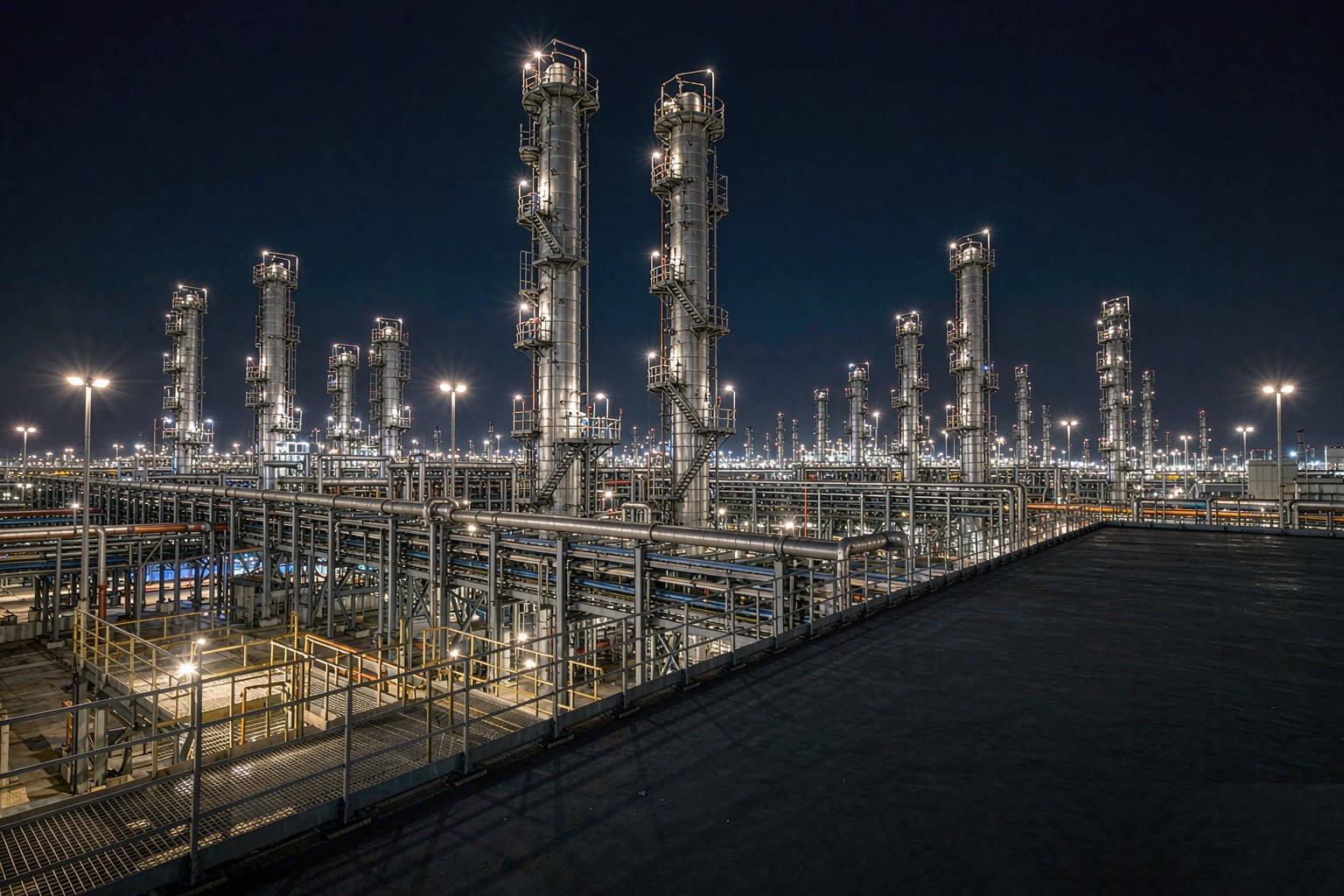
Where Australian hazardous-area lighting demand sits
The demand concentrates on two industrial axes — Western Australia (Pilbara iron ore, and the Gorgon / Wheatstone / Pluto LNG belt) and Queensland (Gladstone LNG plus Bowen / Surat basin coal and gas) — plus a hydrogen belt still taking shape. The table below maps the specification work now and over the next few years.
| Project | Location | Status / key figures | Lighting demand scene |
|---|---|---|---|
| Queensland Curtis LNG (QCLNG) | Gladstone, Qld | About 8.5 Mtpa; Shell system (ex BG); on stream 2015 | Receiving terminal, tank farm, regasification unit, trestle |
| Australia Pacific LNG (APLNG) | Gladstone / Bayali, Qld | About 9 Mtpa; Origin (upstream) and ConocoPhillips (downstream); on stream 2016 | Processing plant, compressor house, pipe racks |
| Gladstone LNG (GLNG) | Gladstone, Qld | About 7.8 Mtpa; Santos system; on stream 2016 | Liquefaction plant, tanks, shipping facilities |
| Gorgon LNG | Barrow Island, WA | About 15.6 Mtpa; Chevron-operated; on stream 2017; includes a domestic gas plant | Offshore platform, island processing plant, pipe racks |
| Wheatstone LNG | Near Onslow, WA | About 8.9 Mtpa; Chevron-operated; on stream 2017 | Onshore plant, jetty, pump area |
| Pluto LNG (incl. Pluto 2 expansion) | Murujuga, WA | Pluto 1 about 4.9 Mtpa; Pluto 2 about 5 Mtpa, first LNG targeted 2026; Woodside-operated | Processing plant, expansion site, trestle |
| Pilbara iron ore (BHP / Rio / Fortescue) | WA Pilbara | Global iron-ore centre; BHP South Flank and other large processing / transport systems | Processing plant, stockyard, conveyor, maintenance shop (dust / heavy load) |
| Central Queensland Hydrogen (CQ-H2, Gladstone) | Gladstone, Qld | Planned 720 MW electrolysis, initial 200 tpd hydrogen, commercial from 2029; Stanwell exited and terminated the project in June 2025 | Hydrogen / liquefaction / ammonia units (if restarted later) |
Figures are from public reporting (see Fact check). The hydrogen line is stated plainly as terminated at CQ-H2 in June 2025, so a shut project is not written as active demand; Gladstone remains a hydrogen-hub candidate zone, but the flagship project is not under construction.
The rule stated first: AS/NZS 60079 = IEC 60079, and IECEx almost clears it
Australian explosion-protected equipment uses the AS/NZS 60079 series, essentially the identical adoption of the IEC 60079 series — national deviations are minimal. The direct consequence: on the strength of an IECEx certificate (and Australia's own ANZEx), equipment in Australian hazardous areas is accepted almost without exception, with no separate local type testing.
The reverse: ATEX is not directly accepted in Australia. ATEX is EU law with some manufacturer self-declaration; Australian regulators typically require a per-case Conformity Assessment Document (CAD) proving equivalence to IECEx, bound to a specific end user — not a blanket market-entry. The North American NEC / Class & Division scheme is also not accepted and needs a per-case CAD, so IECEx should be the compliance axis.
| Certification / scheme | Directly accepted in Australia? | Path and notes |
|---|---|---|
| IECEx (Ex CoC from a certification body) | Yes, almost without exception | AS/NZS 60079 equals IEC 60079, no retest; gas group and temp class must match the site area |
| ANZEx (Australian local scheme) | Yes | Aligned with IECEx; high local recognition, often used for underground coal and specific scenes |
| ATEX (EU directive) | No (not directly accepted) | Usually a per-case CAD proving equivalent safety, bound to a specific end user / application; not blanket sales |
| North American NEC / Class & Division (UL / FM / CSA etc.) | No | Not accepted; needs per-case CAD; not recommended as the Australian compliance axis |
RCM / EESS is the other gate: it must be registered by an Australian importer
IECEx settles whether the equipment itself is recognised, but to legally sell / energise it in Australia it must also pass the EESS (Electrical Equipment Safety System) gate and carry the RCM (Regulatory Compliance Mark). The key fact: the RCM registration subject must be an Australian legal entity holding an ABN (Australian Business Number) or a New Zealand IRD number — the importer or a subsidiary. EESS rules state plainly that an overseas company cannot become a "Registered Responsible Supplier"; even an "Agent" under the ACMA system is not permitted to register on EESS.
For high-risk products like explosion-protected lighting, EESS places them in Level 3 (high risk), mandating a Certificate of Conformity (usually from an SAA-accredited body) and listing on the EESS database. The RCM mark applies per AS/NZS 4417.1 and 4417.2; the Registered Responsible Supplier carries non-transferable duties — sample cooperation, document retention (not less than 5 years) and recall.
| Item | Overseas manufacturer (us) | Australian importer / Responsible Supplier |
|---|---|---|
| EESS database registration subject | Cannot register (overseas company not eligible) | Must be an ABN/IRD-holding Australian or NZ legal entity |
| RCM mark application and placement | Provide compliance files and cooperate | Registers and marks RCM + supplier code on the product per rules |
| Level 3 high risk (explosion-protected lighting) | Provide IECEx / test files | Must hold Certificate of Conformity (SAA report) and complete registration |
| Sample cooperation / doc retention / recall | Cooperate with evidence | Statutory first responsible party, non-transferable duty |
| Mere "Agent" (ACMA sense) | — | Not allowed to register on EESS; must be a local entity |
How hazardous areas are classified (the question before selection)
Before certification and product, fix where the lamp is mounted — otherwise even compliant equipment can be mounted wrong. Australian installation follows AS/NZS 60079.14:
Zone (likelihood of explosive atmosphere): Zone 0 present continuously; Zone 1 may appear in normal operation; Zone 2 is unlikely and brief. Tank breather valves and loading jetties are often Zone 1; tank-farm perimeters and pipe racks mostly Zone 2.
Gas group (ease of ignition): IIA (propane), IIB (ethylene), IIC (hydrogen, acetylene). The higher the group, the stricter. LNG plants and refinery off-gas with hydrogen push an area to IIC — so IIB equipment must not serve an IIC area.
Temperature class T1–T6: the maximum surface temperature limit, below the medium's auto-ignition temperature. In Australia's hot outdoor service, the lamp's T-rating needs margin.
| Parameter | Definition | Why it changes selection |
|---|---|---|
| Zone 0 / 1 / 2 | Likelihood of explosive atmosphere appearing | Decides the protection concept and certified equipment level per point |
| Gas group IIA / IIB / IIC | Ease of ignition of the local gas | IIC (hydrogen, acetylene) needs a higher-certified unit; IIB equipment cannot cover an IIC area |
| Temperature class T1–T6 | Maximum permitted surface temperature | Must sit below the medium's auto-ignition temperature; hot Australian outdoor service needs margin |
So before we quote, we ask for the area classification drawing (Zone + gas group + temperature class), not a scheme on "explosion-proof lamp".
Queensland RSHQ evidence: uncertified equipment caught in audit
RSHQ, the Queensland regulator for mining, petroleum and gas, publishes Safety Notices / Alerts on compliance risk. Its notices have carried cases such as "a drilling rig using uncertified equipment, caught by the regulator" — showing certification is the direct basis for on-site inspection and legal liability, not paper. Luminaires without IECEx or equivalent files can be stopped before energisation. This is why we insist on "confirm certification and area grade first, then talk price".
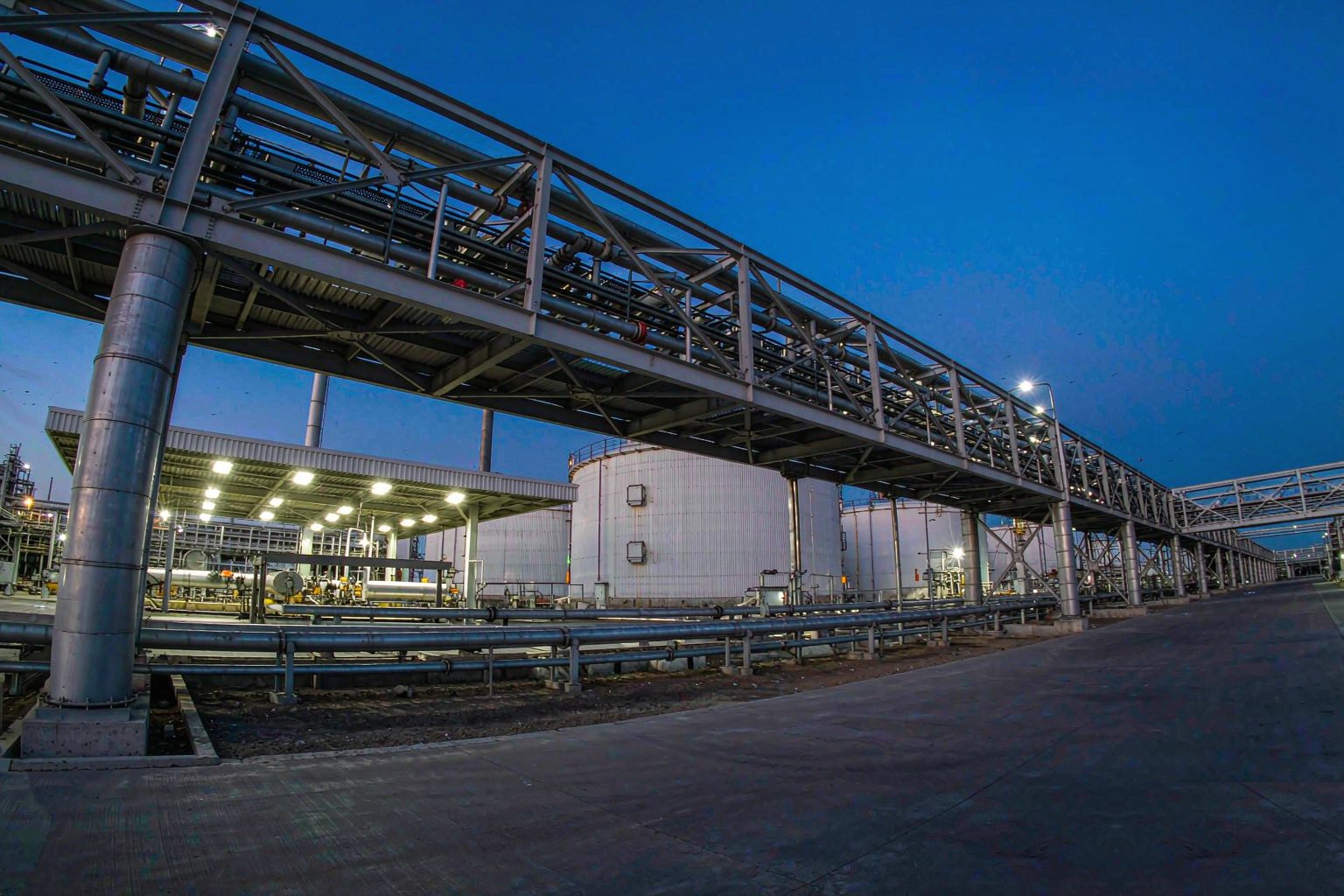
Why LNG and mining expansion is an opening for explosion-proof lamps
Read the projects together: Australia is a long-term top-tier LNG producer (about 10 operating liquefaction facilities, nominal total about 80–88 Mtpa), where the three Gladstone LNG plants and Gorgon / Wheatstone / Pluto with expansions in WA drive continuous maintenance and new lighting demand; the Pilbara iron ore is a year-round dust scene. Every terminal, trestle, tank farm and processing conveyor needs hazardous-area lighting. For a luminaire maker this demand is batched, continuous and strictly accepted — the buyer needs the IECEx files and local responsible entity ready before the construction window.
But honesty: the hydrogen side, CQ-H2, is terminated, so "Australia's hydrogen boom" cannot be the pitch; the demand is real but structural, by site and by operating status. We lead with operating LNG and operating mining, hydrogen as forward observation only.
Selection: marine / mining environment
Western Australia and coastal Queensland are high salt spray, strong UV, hot marine / desert environments. The selection position:
| Site condition | Selection rule | Our data point |
|---|---|---|
| Protection grade | Whole range enclosure IP67 + IK10 (BT8 series designed to IP33); we do not apply a lower ingress-protection grade | IP67 + IK10 as the baseline; BT8 to IP33 by design |
| Corrosion grade | C4 (ISO 12944) — covers the long-term corrosion risk of marine salt spray | C4 named explicitly, not a vague "anti-corrosion" |
| Explosion-proof cert | ATEX + IECEx (GS / LU series carry ATEX); issuing body by cert prefix: TÜV (FL8 / GS / LU), CSA Group (LO series); IECEx is the Australian compliance axis | Certificates issued by TÜV and CSA Group |
| Gas group / temp class | Set by site Zone 0/1/2 and medium; IIC with hydrogen calculated separately, no IIB unit standing in for an IIC area | Matched to the classified-area drawing per point |
Mounting and accessories: open areas use fixed explosion-protected floodlights and platform lights for broad coverage; jetties and pump areas use wall- or pole-mounted units; critical paths and escape routes need explosion-protected emergency lighting with the same IP67/IK10 and emergency runtime. Confirm cables and glands in Australia for any local mandatory-certified accessories.
What we provide — and what we do not claim
We state the following uniformly:
| Item | Position |
|---|---|
| What we provide | Certificates and ExTR built on ATEX + IECEx (issued by TÜV and CSA Group), technical data sheets, and IP67/IK10/C4 compliance evidence; we assist the Australian importer with EESS/RCM technical data and cooperate on sample and document supply |
| What we do not claim | Australian local RCM/EESS registration — this is the legal duty of the Australian importer / Responsible Supplier (a local entity holding an ABN); the registration subject must be the Australian importer, and an overseas company cannot self-register. We cooperate, but the qualification subject is not on our side |
What we need from you to quote
For a quote and lead time, please provide: the area classification drawing (Zone 0/1/2, gas group IIA/IIB/IIC, T1–T6); the installation environment (indoor/outdoor, coastal salt spray, temperature range); luminaire type and quantity; whether the Australian importer holds an ABN and acts as Responsible Supplier for RCM; and the project node and arrival time (drives EESS registration).
On format selection, the rule from IEC 60079-14 is to match the equipment protection level to the zone first, then choose the optical format for the point: concentrated points — tank tops, loading areas, perimeter — are carried by a floodlight format (the FL8 floodlight), while pipe racks, walkways and long process runs are served by a linear format (the LO / LU linear series) with fewer fittings and more uniform light along the run.
Frequently asked questions
Do explosion-proof lamps entering Australia always need IECEx?
IECEx (or ANZEx) is the smoothest compliance axis for Australia. AS/NZS 60079 equals IEC 60079, and an IECEx certificate is accepted almost without exception with no retest. ATEX is not directly accepted and needs a per-case CAD; North American NEC / Class & Division is also not accepted. Prioritise IECEx.
With IECEx, can I sell directly in Australia?
Not yet. IECEx settles recognition, but sale / energisation still needs the EESS gate and the RCM mark. RCM registration must be done by an ABN-holding Australian importer; an overseas factory cannot self-register. Explosion-protected lighting is Level 3 high risk and also needs a Certificate of Conformity and EESS registration.
Do you hold Australian RCM / EESS registration?
We do not hold Australian RCM/EESS registration. We provide ATEX + IECEx certificates (issued by TÜV and CSA Group), ExTR and compliance files, and cooperate with the Australian importer on EESS/RCM; the registration subject must be the Australian importer, by law, not on our side.
Can ATEX or North American certification be used in Australia?
ATEX is not directly accepted in Australia and usually needs a per-case CAD proving safety equivalent to IECEx, bound to a specific end user. North American NEC / Class & Division is also not accepted and needs per-case CAD. So neither scheme should be the Australian compliance axis.
What does Australian site acceptance mainly check?
The owner's electrical and HSE teams check the current valid IECEx / ANZEx certificate and confirm the gas group and temperature class on it match the site area; the installation must comply with AS/NZS 60079.14, and usually a Hazardous Area Verification Dossier and qualified install / inspection personnel are required. These are not optional — they are the hard precondition for legally energising the equipment. For certificate details and project documentation, contact sales02@seekingled.com.
Fact check
| Fact as stated | Source | How verified |
|---|---|---|
| AS/NZS 60079 series is identical adoption of IEC 60079; IECEx/ANZEx accepted in Australia almost without exception, no retest; ATEX needs per-case CAD | exsolutions.com.au; pulsetechnologyhub.com.au; autocontrols.com.au | WebSearch verification |
| EESS Responsible Supplier must be an ABN/IRD-holding Australian or NZ legal entity; overseas company cannot register on EESS; ACMA "Agent" not allowed on EESS | eess.gov.au official (Steps for Compliance; Manufacturers and Importers – Responsible Suppliers) | WebSearch verification (official) |
| RCM mark per AS/NZS 4417.1 and 4417.2; Level 3 high risk (explosion-protected lighting) mandates Certificate of Conformity (SAA report) and EESS registration | eess.gov.au official (Steps for Compliance / risk level definition) | WebSearch verification (official) |
| North American NEC / Class & Division not accepted in Australia, needs per-case CAD (stated only for "not recognised") | pulsetechnologyhub.com.au; excertify.com (ATEX vs IECEx country table) | WebSearch verification |
| RSHQ is Queensland mining/petroleum/gas regulator, publishes Safety Notices / Alerts; "drilling rig using uncertified equipment" is a warning-type case | Spreadsheet "Five-country market access" Australia row + rshq.qld.gov.au official safety-notice section | Spreadsheet base + WebSearch (body and section) |
| Australia about 10 operating LNG facilities, nominal ~80–88 Mtpa; QCLNG ~8.5, APLNG ~9, GLNG ~7.8 Mtpa (Gladstone); Gorgon ~15.6, Wheatstone ~8.9 Mtpa (WA); Pluto 2 ~5 Mtpa, first LNG targeted 2026 | accr.org.au; oedigital.com; rigzone.com | WebSearch verification |
| Pilbara (WA) is the global iron-ore centre, with BHP South Flank and other large processing / transport systems | eproadvisory.com.au (Projects: South Flank / Gorgon / Wheatstone) | WebSearch verification |
| Central Queensland Hydrogen (CQ-H2, Gladstone): planned 720 MW electrolysis, initial 200 tpd hydrogen, commercial from 2029; Stanwell exited and terminated in June 2025 | arena.gov.au (CQ-H2 FEED study, notes June 2025 termination); csiro.au; industrialinfo.com | WebSearch verification |
| Product position: whole range IP67+IK10 (BT8 to IP33), C4 (ISO 12944), ATEX+IECEx (GS/LU only ATEX); issuing body by cert prefix: TÜV (FL8 / GS / LU), CSA Group (LO series) | Spreadsheet "writing-position reference" | Spreadsheet base |
- About Us
- Products
- Explosion proof light
- Portable explosion proof lighting
- Explosion proof emergency light
- Explosion proof LED T8 tube
- Explosion proof Junction Box
- Explosion proof street light
- Service
- FAQ
- Docs download
Service hotline
Tel:+86 755 29846615
Work time:9:00-20:00
E-mail:sales02@seekingled.com
address:5F, Building 5, Guole Science and Technology Park, Lirong Road, Dalang Street, Longhua, Shenzhen, China