

Explosion Proof Lighting Indonesia: IECEx & SNI Rules
Explosion-Proof Lighting in Indonesia: What the Regulations Actually Require and How to Specify It
Indonesia has just finished the largest refinery project it has built in a generation. The Balikpapan Refinery Development Master Plan (RDMP) was inaugurated on 12 January 2026, lifting the plant's capacity from 260,000 to 360,000 barrels per stream day and making it the country's largest refinery. The investment was about US$7.4 billion. Nelson Complexity rose from 3.7 to 8, and the yield of high-value products from 75.3% to 91.8%. A second major project, the Tuban grass-root refinery, moved into main construction procurement in May 2026. Every one of those units — process areas, tank farms, loading gantries, utilities and flare zones — is a set of classified areas that must be lit with certified equipment.
For a luminaire supplier, though, the deciding question is not the project list. It is which certification the Indonesian regulator actually accepts inside a hazardous area, and whether an ATEX-only file is enough. Indonesia's answer is more permissive than Saudi Arabia's but has one twist most exporters miss: the regulations require international certification rather than naming a scheme, so the risk is not rejection — it is being asked to prove equivalence at the wrong moment. This page sets out what the rules say, what they do not say, and how to specify so that neither customs nor a commissioning engineer stops the shipment.
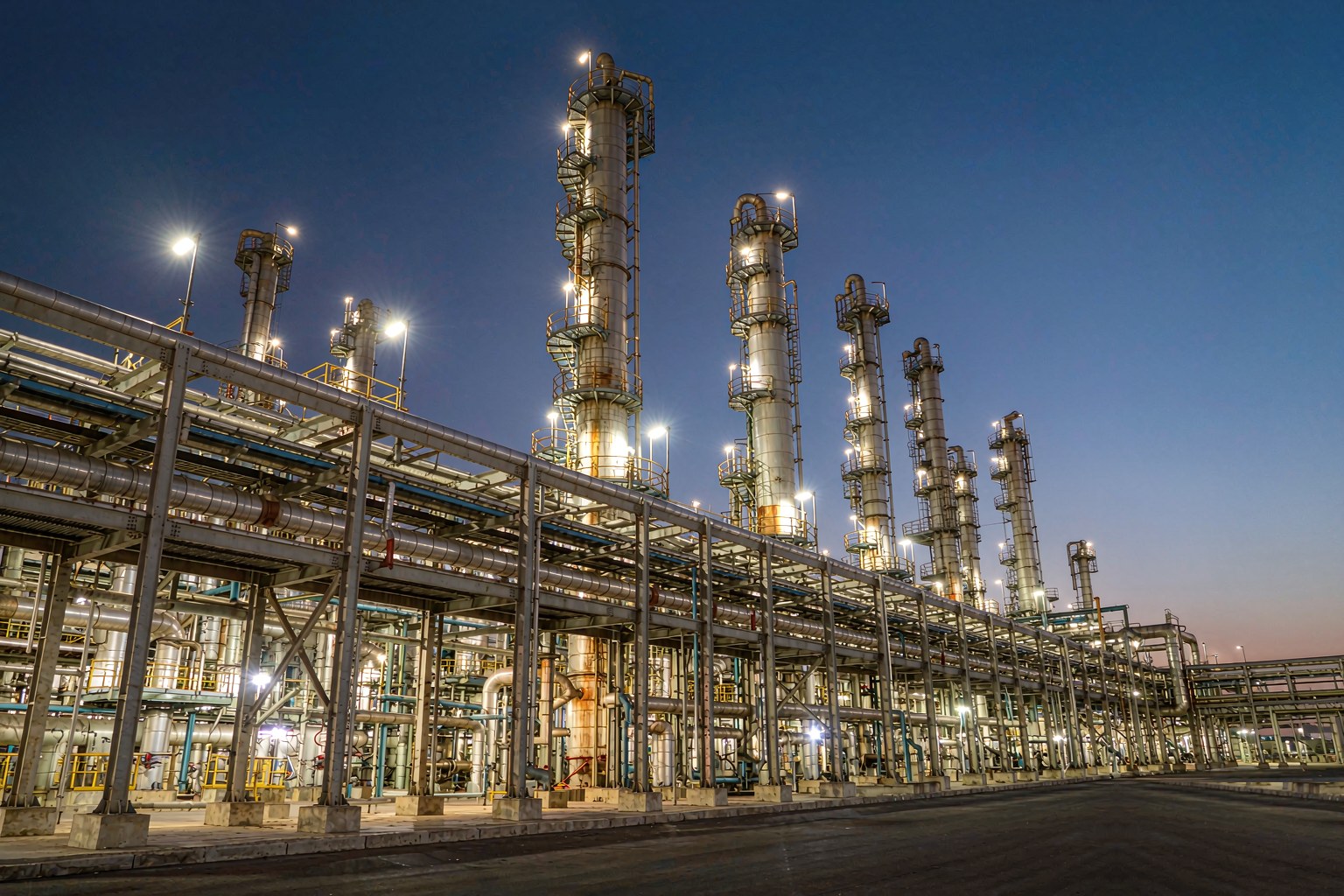
Where Indonesia's classified areas are being built
Indonesian demand concentrates on Java (Cilacap, Balongan, Plaju-adjacent downstream) and on Kalimantan and Sumatra, with the newest capital spending on refinery upgrading and petrochemical integration. The table below maps the projects that drive specification work now and over the next three years.
| Project / site | Type | Verified status |
|---|---|---|
| RDMP Balikpapan, East Kalimantan | Refinery upgrade, now Indonesia's largest | Inaugurated 12 January 2026; capacity raised from 260,000 to 360,000 barrels per stream day; about US$7.4 bn (≈Rp123 tn); product quality toward Euro 5 |
| GRR Tuban, East Java | Grass-root refinery and petrochemical complex | Planned capacity about 300,000 bpd; EPCC prequalification for refinery packages R1 and R2 opened 6 May 2026 — at procurement stage, not yet in construction |
| RDMP Balongan, West Java | Refinery upgrade | In Pertamina's strategic project list; capacity direction 125,000 to 150,000 bpd |
| Green Refinery Cilacap, Central Java | Renewable-feedstock refining (HVO, SAF, bionaphtha) | Phase I operating; Phase II EPC package of about 6,000 bpd in tender or prequalification during 2026 |
| Cilacap, Dumai and Plaju refineries | Operating refineries | Cilacap about 348,000 bpsd, Dumai about 170,000 bpsd, Plaju about 126,300 bpsd — steady demand for replacement and turnaround lighting packages |
| Petrochemical and fertiliser complexes | Olefins, aromatics, ammonia and urea plants | Operating and expanding; classified areas around compressors, pumps and storage |
The commercial consequence is that Indonesia rewards preparation rather than speed. The projects above run material requisitions through owner engineering and, for upstream work, through SKK Migas technical review — which means the certification file is examined long before a luminaire is specified. A supplier whose only paperwork is European will be asked to justify it at that point, and the answer is rarely available on the spot.
The admission gate: three regulations, and none of them names a scheme
Indonesia does not run a single national explosion-proof certificate in the way Saudi Arabia runs SIRC. Instead, three instruments combine, and they all point at the same requirement: internationally recognised certification, to IEC 60079. That phrase is where the subtlety lies, because it does not name ATEX, IECEx or NEC — it names a family of standards.
| Instrument | Authority | What it requires for equipment in hazardous areas |
|---|---|---|
| Permenaker No. 12/2015 — electrical safety in the workplace | Ministry of Manpower (Kemnaker) | Applies to all workplaces. Area classification to recognised international standards referencing IEC 60079-10; equipment must carry appropriate Ex certification; installation to IEC 60079-14; inspection and maintenance programmes required |
| Permen ESDM No. 18/2018 — K3 in upstream oil and gas | Ministry of Energy and Mineral Resources (ESDM) / Directorate General of Oil and Gas | Article 23: electrical equipment used in hazardous areas must hold international certification, comply with applicable international standards, be installed to the manufacturer's instructions and be maintained in line with the certification |
| PTK-007 Rev. 3 — electrical technical standard | SKK Migas (upstream regulator) | Electrical equipment for hazardous areas shall be certified to the IEC 60079 series, or to equivalent national standards (ATEX, NEC) |
| SNI adoption | National Standardization Agency (BSN) | Indonesia has adopted IEC 60079 into the SNI system (SNI IEC 60079 series), with SNI 04-0225 for mining applications and dedicated SNI requirements for explosion-proof luminaires |
What "IECEx is preferred" actually changes in a tender
The phrase appears in almost every guide to the Indonesian market and is usually left unexplained. In tender terms it changes three things: how the equipment is listed, how the file is reviewed, and what happens at inspection after installation.
| Item | ATEX only | IECEx |
|---|---|---|
| Basis in Indonesian regulation | Accepted as an equivalent national-standard scheme (EN 60079 series) | Directly matched to IEC 60079, which the regulations reference by standard family |
| Documentary burden | Equivalence must be argued from EN to IEC clause by clause where a reviewer asks | CoC number resolves the question; certificate is verifiable in the IECEx Online Certification System |
| Upstream (SKK Migas) submittals | Acceptable, with the equivalence point addressed explicitly | Aligns with PTK-007's reference to the IEC 60079 series without further argument |
| Inspection and maintenance duty | Certified assembly must still be maintained as certified under the workplace regulation | Same duty, but the certified baseline is publicly retrievable — useful during an inspection audit years later |
| Labeling and documentation | Local-language requirements still apply | Local-language requirements still apply |
One point that applies to both routes and is often overlooked: Indonesian regulation expects documentation and labeling in Bahasa Indonesia alongside the original language, and it expects installation and maintenance to follow the certification. A luminaire that arrives with an English-only manual and no Indonesian label is not non-compliant in itself, but it hands the commissioning engineer an avoidable objection. We supply bilingual installation manuals as standard for project orders.
What we provide — and what we do not claim
Indonesia, like most markets, places the national registration on the local importer or authorised representative. A manufacturer's honest position is to state exactly which technical evidence it holds so the importer can build the local file on top of it.
| Document | Number | Issued by / covers |
|---|---|---|
| IECEx Certificate of Conformity | IECEx CSA 25.0093X | CSA Group — LO series |
| IECEx Quality Assessment Report (QAR) | GB/CSAE/QAR26.0002/00 | CSA Group (UK) — LO series |
| ATEX Type Examination Certificate | CSANe 25 ATEX 1229X | CSA Group (Netherlands notified body) — LO series |
| ATEX Quality Assurance Notification (QAN) | CSANe 26 ATEX M076 | CSA Group Netherlands — LO series; valid to 2029-01-26 |
| ATEX Type Examination Certificates | TÜV CY 26 ATEX 0207611 / 0207612 / 0207613 X | TÜV (Cyprus); correspond to the FL8, GS and LU series |
In practice this means we supply the IECEx test reports, IECEx Certificates of Conformity, the IECEx Quality Assessment Report, the ATEX certificates and the quality assurance notification — the basis on which an Indonesian importer registers the product and completes whatever local certification the project requires. We do not claim to hold an SNI certificate or a Migas/SKK Migas approval ourselves; those are held on the Indonesian side. We also do not claim that certification alone qualifies equipment for a specific site: site acceptance is governed by the owner's specification and the project's hazardous area drawings.
Specifying for Indonesian conditions
Indonesia's selection pressures differ from the Gulf. It is not the dust that dominates — it is sustained heat, near-saturation humidity, salt air on coastal and island sites, and a regulatory environment that expects the certified assembly to stay certified for the life of the plant.
| Site condition | What it changes in selection | Our data point |
|---|---|---|
| Sustained heat and humidity | Ambient temperature plus humidity drive the temperature class and the sealing concept. Condensation management matters as much as ingress protection on coastal sites | T-class stated against marked ambient across the FL7, HB21, FL8, GS and LU series; ambient confirmed per project |
| Coastal and island salt exposure | Kalimantan and island terminals put corrosion duty well above inland norms | C4 to ISO 12944 as the selection baseline for enclosure, fasteners, coating and seals |
| Gas group | Most refinery and petrochemical streams are IIA or IIB; gas-processing and hydrogen-linked service is IIC | HB21 rated Ex db IIC T6/T5 Gb; FL7 rated Ex db IIB T6 Gb; group matched to the area drawing point by point |
| Ingress and impact | Washdown, monsoon rain and outdoor mechanical damage | Whole range IP67 and IK10; BT8 series is designed to IP33 as specified |
| Documentation language | Indonesian regulation expects Bahasa Indonesia documentation and labeling alongside the original | Bilingual installation manuals supplied as standard for project orders |
On zone and protection type the rule is the one set out in IEC 60079-14 and mirrored by the workplace regulation: match the equipment protection level to the zone. Zone 1 gas duty is commonly met with Ex db construction; Zone 2 can often use Ex nR, which costs less for the same output; dust duty (Zone 21/22) calls for Ex tb enclosure protection. Where a project applies one type number across several zones, that is a specification error rather than a saving.
For concentrated points — tank tops, loading gantries, process and perimeter areas — a floodlight format carries the output. For pipe racks, walkways and long runs, a linear format gives uniform light with fewer fittings. Internal reference: FL8 floodlight for concentrated points; LO / LU linear series for continuous runs. Both are supplied with the IECEx and ATEX evidence tabulated above; the certificate that applies to a specific type is confirmed against the certificate table, not assumed from the series name.
Installation and inspection: the duty that survives the warranty
Indonesian regulation goes further than most markets in one respect — it explicitly requires that installed equipment be maintained in accordance with its certification. That turns installation quality into a long-term compliance obligation, not a one-off commissioning task. Working from IEC 60079-14, the items that most often surface during material receiving and inspection audits are:
Cable entries and glands. Entries must match cable type, diameter and armouring, using certified stopping plugs or sealing glands, with no unused entry left open. An uncertified gland on a certified enclosure is a compliance gap in itself.
Earthing and bonding. Enclosure earth continuity must be verified after installation, with attention to structural steel and pipe-rack mounting.
Temperature class and position. Avoid mounting directly over heat sources or in recesses where water and dust collect, and keep the certified spacing so the marked T-rating holds in service.
Maintenance access. Driver and terminal compartment access should be confirmed at design stage; retrofitting access means scaffolding that was never budgeted.
Spare-part consistency. Replacement drivers, light engines and seals must match the certified construction. Any substitution can invalidate the type certificate — and with it the compliance position the site has declared to the regulator.
These five points are the fixed content of the technical handover we give project clients, because in hazardous areas compliance is half certificate and half field.
Frequently asked questions
Is IECEx mandatory in Indonesia?
No scheme is named as mandatory. Indonesian regulation requires electrical equipment in hazardous areas to hold international certification and to comply with applicable international standards; in the oil and gas sector that is reinforced by Permen ESDM No. 18/2018 and by SKK Migas technical standard PTK-007, which references the IEC 60079 series or equivalent national standards such as ATEX or NEC. In practice IECEx is the cleanest fit and is increasingly preferred, because it is IEC 60079 certification that can be verified publicly.
Can I sell ATEX-certified explosion-proof lighting in Indonesia?
Yes. ATEX is accepted under the "equivalent national standards" wording, since it is built on the harmonised EN 60079 series. The practical caveat is that equivalence may have to be argued during technical review, and an ATEX-only file creates avoidable friction. Where a project or an importer has a choice, IECEx removes the argument.
What is the difference between SNI, Migas and Kemnaker requirements?
They cover different things. Kemnaker (Permenaker No. 12/2015) sets workplace electrical safety, including hazardous-area classification and equipment certification, across all workplaces. ESDM / Ditjen Migas and SKK Migas set the oil and gas sector rules, including the requirement for international certification in hazardous areas. BSN maintains the SNI system, through which Indonesia has adopted the IEC 60079 series (and which includes dedicated requirements for explosion-proof luminaires). For a luminaire supplier, the common thread is IEC 60079-based certification.
Does the documentation need to be in Bahasa Indonesia?
Indonesian regulation expects documentation and labeling in Bahasa Indonesia alongside the original language, and expects installation and maintenance to follow the certification. We supply bilingual installation manuals as standard for project orders, so this is handled before the equipment ships rather than at commissioning.
Do you hold an SNI certificate or a Migas approval?
No, and we do not claim either. SNI certification and the oil and gas sector approvals are applied for and held on the Indonesian side, by the importer or authorised representative. As the manufacturer we provide the technical basis — IECEx test reports, IECEx Certificates of Conformity, the IECEx Quality Assessment Report, ATEX certificates and the ATEX quality assurance notification — on which the local party builds the file. For certificate details and project documentation, contact sales02@seekingled.com.
Fact check
| Fact as stated | Source | How verified |
|---|---|---|
| Permenaker No. 12/2015 covers electrical safety in the workplace, including hazardous areas, and references IEC 60079-10 and IEC 60079-14 | Indonesian K3 regulatory summary and certification-body guidance | Cross-checked across sources |
| Permen ESDM No. 18/2018, Article 23: equipment in hazardous areas must hold international certification and be installed and maintained to it | Indonesian ESDM regulation summary | Cross-checked |
| SKK Migas PTK-007 Rev. 3 requires hazardous-area electrical equipment to be certified to IEC 60079 or equivalent national standards (ATEX, NEC) | Indonesian upstream technical standard summary | Cross-checked |
| Indonesia has adopted the IEC 60079 series into SNI; SNI 04-0225 covers mining applications, and dedicated SNI requirements exist for explosion-proof luminaires | Indonesian standards and certification guidance | Cross-checked |
| RDMP Balikpapan inaugurated 12 January 2026; capacity 260,000 to 360,000 bpsd; about US$7.4 bn; Nelson Complexity 3.7 to 8; high-value yield 75.3% to 91.8% | ANTARA; Indonesian Ministry of Energy and Mineral Resources; Pertamina Kilang Internasional | Cross-checked across official and state news sources |
| GRR Tuban planned at about 300,000 bpd; EPCC prequalification for refinery packages R1 and R2 opened 6 May 2026 | Indonesian project reporting and PRPP | Cross-checked |
| Refinery capacities (bpsd): Balikpapan 360,000; Cilacap 348,000; Dumai 170,000; Balongan 150,000; Plaju 126,300; Tuban 100,000 | Indonesian state data (Databoks/Katadata) | Cross-checked |
| Our certificate numbers (IECEx CSA 25.0093X; QAR GB/CSAE/QAR26.0002/00; ATEX CSANe 25 ATEX 1229X; QAN CSANe 26 ATEX M076; TÜV CY 26 ATEX 0207611/12/13 X) | Our certificate files, issuers CSA Group and TÜV | Each number verifiable with the issuing body |
- About Us
- Products
- Explosion proof light
- Portable explosion proof lighting
- Explosion proof emergency light
- Explosion proof LED T8 tube
- Explosion proof Junction Box
- Explosion proof street light
- Service
- FAQ
- Docs download
Service hotline
Tel:+86 755 29846615
Work time:9:00-20:00
E-mail:sales02@seekingled.com
address:5F, Building 5, Guole Science and Technology Park, Lirong Road, Dalang Street, Longhua, Shenzhen, China