

Explosion Proof Lighting Philippines: BPS, PS & ICC Rules
Explosion-Proof Lighting in the Philippines: BPS/PS/ICC and How to Clear the Gate
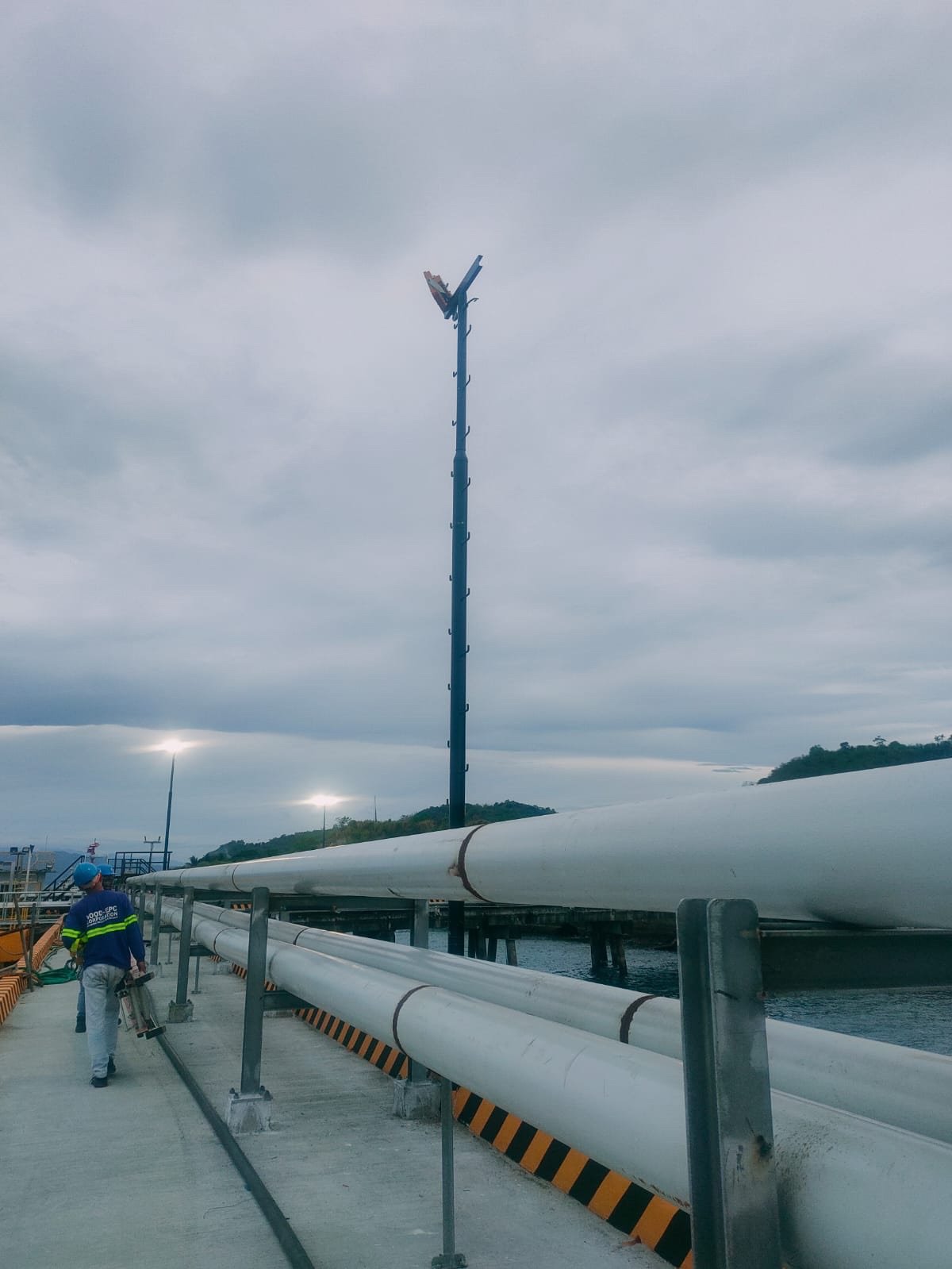
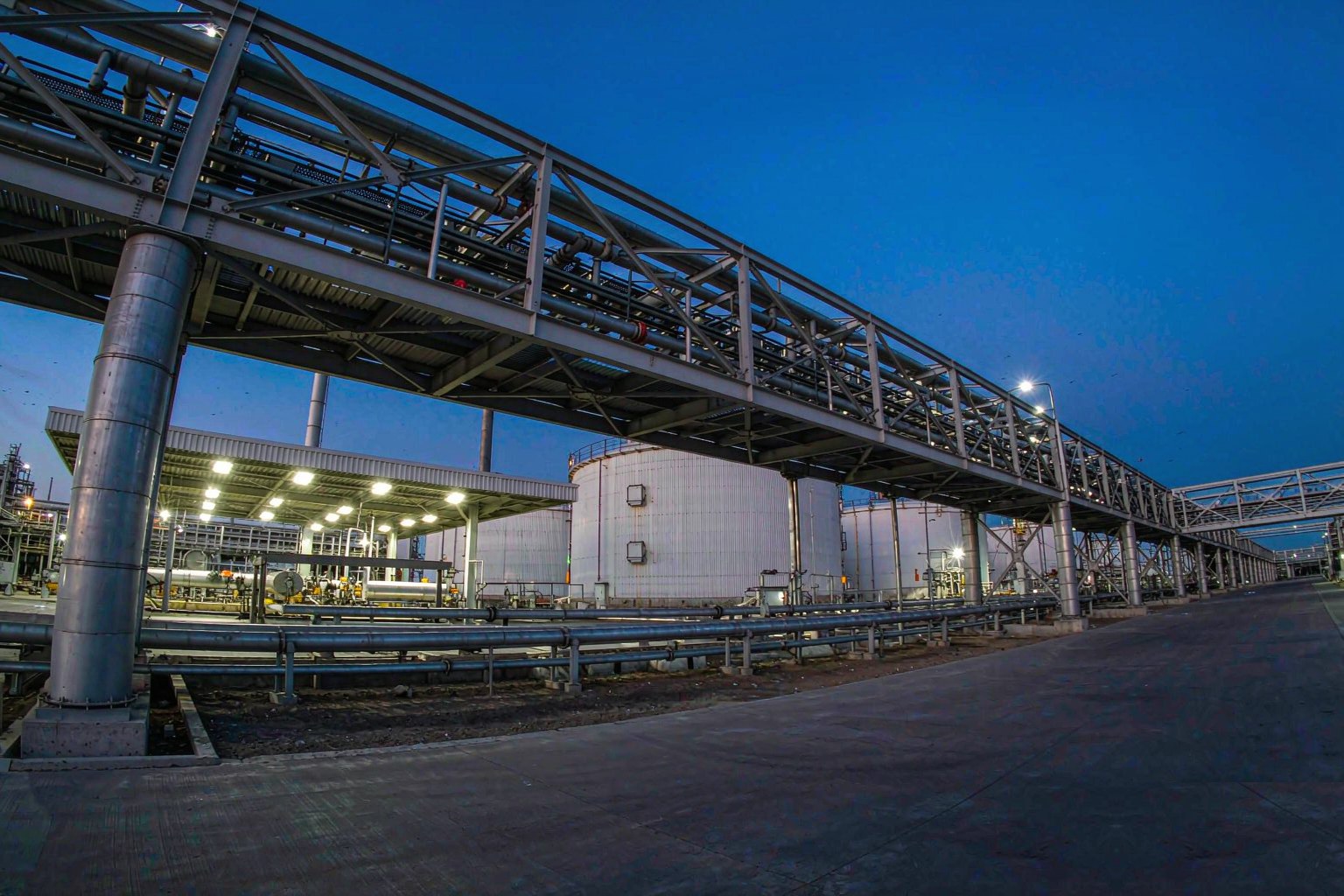
The Philippines runs its hazardous-area lighting demand along a single, well-defined coastline. The country's oil, gas and heavy-industry weight sits on the southwest coast of Luzon — Batangas and Bataan — where the Malampaya offshore gas field feeds an onshore gas plant at Batangas through roughly 504 km of subsea pipeline, import LNG terminals line the Batangas shore, and the Petron Bataan refinery at Limay remains the only integrated refinery and petrochemical complex in the country, rated at 180,000 barrels per day. Loading jetties, tank farms, compressor houses, pump areas and gas-processing units at these sites are all classified areas needing explosion-protected lighting.
Why this strip and not elsewhere? Two reasons. First, geography and infrastructure history: Batangas sits next to Manila Bay and the South China Sea shipping lane, which suits LNG receiving and gas processing; Bataan's Limay and Mariveles belt has refined and made petrochemicals since the 1970s. Second, climate: this coast is tropical marine — year-round heat and humidity, heavy salt spray, frequent typhoons — pushing protection and corrosion harder than an inland plant. So the Philippine market is not a generic explosion-proof lamp market; it needs material selection and protection design for coastal salt-spray service, which is why the selection section insists on C4 corrosion rating and IP67/IK10.
The gate explained: BPS, PS and ICC (and the trap buyers miss)
Mandatory certification in the Philippines is run by the Bureau of Philippine Standards (BPS) under the Department of Trade and Industry (DTI), on the legal basis of Republic Act 7394 (Consumer Act). BPS runs two parallel mandatory schemes:
PS License (Philippine Standard Quality/Safety Certification Mark License): under DAO 4:2008, issued to a manufacturer, proving the product and factory meet PNS; valid up to three years with annual surveillance.
ICC (Import Commodity Clearance): under DAO 5:2008, issued per shipment and bill of lading, releasing goods through Philippine customs.
The point buyers most often miss: ICC is the importer's obligation, not something a manufacturer can solve alone. The ICC must be applied for by the Philippine local importer or certificate holder to BPS, using that batch's PS certificate, commercial invoice, packing list and bill of lading, and it must be obtained before the goods arrive. If the paperwork is incomplete or no application was filed, the cargo is held at the port — or referred to BPS for inspection. In other words, no matter how compliant the luminaire, if the importer side has not landed PS/ICC, the lamps do not enter the Philippine market. This is the first thing we flag in any quotation and lead-time assessment.
| Dimension | PS License (DAO 4:2008) | ICC (DAO 5:2008) |
|---|---|---|
| Who it is issued to | Manufacturer (including an overseas factory, after BPS assessment) | Philippine importer / certificate holder |
| Legal basis | DAO 4:2008 (PS Quality/Safety Certification Mark Scheme) | DAO 5:2008 (Import Commodity Clearance) |
| Nature | Product + factory "identity", valid long term | Per-shipment "clearance token", one certificate per shipment |
| Validity | Up to 3 years, with annual surveillance | Bound to that batch, non-transferable |
| Relation to customs | One of the prerequisite documents for applying for ICC | Customs releases against the ICC; no ICC means no clearance |
| Who must act | Manufacturer (or authorised party) | Philippine importer (mandatory) |
| Meaning for a luminaire buyer | When selecting a supplier, confirm it already holds PS or will cooperate on PS | The buyer must land this; the factory can only cooperate |
The 87-category mandatory list and lighting
BPS mandatory certification covers about 87 product categories, including electrical, electronic and lighting products. Self-ballasted LED lamps are explicitly mandatory — DAO 18-02:2018 sets them as a mandatory PNS, so general-lighting LED products for the Philippine market must carry PS and ICC before sale or clearance. The table below lists the most relevant categories.
| Product category | Mandatory under BPS? | Relation to this page |
|---|---|---|
| Self-ballasted LED lamps (general lighting) | Yes (DAO 18-02:2018 mandatory PNS) | Directly applies; PS + ICC required |
| Luminaires / lighting equipment (fluorescent, LED, lampholders) | Yes (lighting is on the ICC mandatory list) | Explosion-protected luminaires fall in this class |
| Electrical accessories (plugs, sockets, breakers, cables) | Yes | Matching supply parts also need compliance |
| Household appliances / AV products | Yes | No direct link to this project; shows list breadth only |
| Building materials (cement, steel, PVC pipe) | Yes | Platform / rack structural parts may be involved |
Note: the mandatory list is updated with standards and administrative orders; confirm against the latest BPS catalogue before publishing.
How hazardous areas are classified (the question before selection)
Before certification, fix where the lamp is mounted — otherwise even a compliant lamp can be in the wrong place. The Philippine and international logic is:
Zone (likelihood of explosive atmosphere): Zone 0 is present continuously or for long periods; Zone 1 may appear occasionally in normal operation; Zone 2 is unlikely to appear and, if it does, only briefly. Tank breather valves and loading jetties are often Zone 1; tank-farm perimeters and pipe racks are mostly Zone 2.
Gas group (ease of ignition): IIA (propane), IIB (ethylene), IIC (hydrogen, acetylene). Higher group means stricter duty; hydrogen in LNG or off-gas pushes an area to IIC, so IIB equipment must not serve an IIC area.
Temperature class T1–T6: the maximum surface temperature, below the medium's auto-ignition point; tropical heat needs margin, so do not apply temperate-climate duty directly.
| Parameter | Definition | Why it changes selection |
|---|---|---|
| Zone 0 / 1 / 2 | Likelihood of explosive atmosphere appearing | Decides the protection concept and the certified equipment level per point |
| Gas group IIA / IIB / IIC | Ease of ignition of the local gas | IIC (hydrogen, acetylene) needs a higher-certified unit; IIB equipment cannot cover an IIC area |
| Temperature class T1–T6 | Maximum permitted surface temperature | Must sit below the medium's auto-ignition temperature; tropical heat needs margin |
So before we quote, we always ask the buyer for the area classification drawing (Zone + gas group + temperature class), rather than issuing a scheme on the word "explosion-proof lamp".
CE cannot replace PNS, but IECEx can serve as the technical basis
A common mistake: arrive with a CE certificate and assume it clears the Philippines. It does not — the Philippines mandates PNS, and CE cannot directly replace PNS. But BPS recognises IECEx as a technical basis, so an IECEx ExTR / certificate can support PNS equivalence and the PS/ICC application, cutting duplicate testing. This is not an exemption: the full PS/ICC process still applies.
What we put in front of a buyer is compliance technical documentation built on ATEX + IECEx (issuing bodies by certificate-number prefix: TÜV for the FL8, GS and LU series; CSA Group for the LO series). The PS/ICC application is handled by the Philippine importer — and we state honestly that we cannot claim to already hold a Philippine PS certification.
Key energy and industrial projects (the demand evidence)
| Project | Location | Status / key figures | Lighting demand scene |
|---|---|---|---|
| Malampaya offshore gas field + Batangas onshore gas plant | Palawan waters → Batangas | Only local gas source; gas carried ~504 km subsea to Batangas; once ~40% of Luzon power; output falling from 2024, depletion around 2027; SC 38 extended to 2039; Phase 4 first gas expected Q4 2026 | Offshore platform, onshore gas plant, compressor house |
| Batangas import LNG terminal | Batangas (Luzon) | First Gen + Tokyo Gas broke ground on an LNG terminal; First Gen received its first LNG cargo Aug 2023; Meralco / Aboitiz / San Miguel acquired Linseed's Batangas LNG facility for about US$3.3 bn (the country's "first and largest" LNG facility) | Jetty, tank farm, regasification unit, trestle |
| Petron Bataan refinery (Limay) | Limay, Bataan | Only integrated refinery and petrochemical complex; rated 180,000 bpd; meets about 40% of national fuel demand; RMP-2 upgrade about US$2 bn | Process unit, tank farm, loading jetty, pump house |
| JG Summit Olefins petrochemical complex | Batangas City | Largest polyolefin plant, only naphtha cracker; expanded Jan 2024 to >1 Mt/yr (about US$1.3 bn invested); note: from Jan 2025 in indefinite commercial shutdown for market reasons | Cracker and polymer units, pipe racks |
Figures are from public reporting (see Fact check); the JG Summit 2025 shutdown is stated plainly.
Why LNG and refinery expansion is an opening for explosion-proof lamps
Read the projects together and the Philippines is in a "gas-source replacement" window: local Malampaya output has fallen since 2024 and is expected to deplete around 2027, and imported LNG is the only fill. That means Batangas-coast LNG receiving, regasification and the supporting gas-power plants keep building, and every terminal, trestle and tank farm needs hazardous-area lighting. On the refining side, the Petron Bataan refinery is still the national fuel backbone (about 40%), and its maintenance and possible expansion bring replacement and new demand.
For a luminaire maker this demand is batched, continuous and delivery-sensitive: because ICC is per shipment and tied to the arrival node, the buyer needs lamps and certification data ready before the construction window. The JG Summit shutdown since 2025 shows the demand is real but structural, not a blanket "all petrochemical expanding" pitch.
Selection: tropical coastal salt-spray service
Batangas and Bataan are tropical marine — high salt spray, high humidity, strong UV, frequent typhoons. The matching selection position:
| Site condition | Selection rule | Our data point |
|---|---|---|
| Protection grade | Whole range enclosure IP67 + IK10 mechanical protection (BT8 series is designed to IP33); we do not apply a lower ingress-protection grade | IP67 + IK10 as the baseline; BT8 series to IP33 by design |
| Corrosion grade | C4 (ISO 12944) — covers the long-term corrosion risk of tropical marine salt spray | C4 named explicitly, not a vague "anti-corrosion" |
| Explosion-proof cert | ATEX + IECEx (GS/LU series carry ATEX); issuing body by cert prefix: TÜV (FL8 / GS / LU), CSA Group (LO series) | Certificates issued by TÜV and CSA Group |
| Gas group / temp class | Set by site Zone 0/1/2 and medium; IIC with hydrogen must be calculated separately, no IIB unit standing in for an IIC area | Matched to the classified-area drawing per point |
Mounting and accessories: open coastal areas use fixed explosion-protected floodlights and platform lights for broad coverage; jetties and pump areas use wall- or pole-mounted units; critical paths and escape routes need explosion-protected emergency lighting, with the same IP67/IK10 and emergency runtime. Cables and glands should be confirmed in the Philippines for any local mandatory-certified accessories so a compliant lamp is not held up by non-compliant wiring at acceptance.
What we provide — and what we do not claim
We state the following uniformly:
| Item | Position |
|---|---|
| What we provide | Certificates and ExTR built on ATEX + IECEx (issued by TÜV and CSA Group), technical data sheets, and IP67/IK10/C4 compliance evidence; we assist the Philippine importer with PS/ICC technical data and cooperate on factory audit and sample submission |
| What we do not claim | The Philippine local PS License and ICC clearance — these are the legal duty of the Philippine importer / certificate holder, and the certificate subject must be the Philippine importer. We can cooperate, but the qualification subject is not on our side |
What we need from you to quote
For an accurate quote and lead time, please provide: the hazardous-area classification drawing (Zone 0/1/2, gas group IIA/IIB/IIC, temperature class T1–T6); the installation environment (indoor/outdoor, coastal salt spray, temperature range); luminaire type and quantity; whether the Philippine importer already holds a PS License or plans to apply; and the project node and arrival time (drives the ICC batch plan).
On format selection, the rule from IEC 60079-14 is to match the equipment protection level to the zone first, then choose the optical format for the point: concentrated points — tank tops, loading areas, perimeter — are carried by a floodlight format (the FL8 floodlight), while pipe racks, walkways and long process runs are served by a linear format (the LO / LU linear series) with fewer fittings and more uniform light along the run.
Frequently asked questions
Do explosion-proof lamps entering the Philippines always need PS and ICC?
Yes, for lighting products on the Philippine mandatory list (including self-ballasted LED lamps, DAO 18-02:2018), PS and ICC are required before market entry / clearance. ICC is issued per shipment and is the hard gate at customs.
Can CE or ATEX directly replace PNS?
No. The Philippines mandates PNS, and CE cannot directly replace PNS certification. But BPS recognises IECEx as a technical basis, which supports PNS equivalence assessment and cuts duplicate testing; the full PS/ICC process still has to be completed.
Do you hold a Philippine PS certification?
We provide ATEX + IECEx certificates (issued by TÜV and CSA Group) and ExTR as compliance technical files, but the Philippine PS License and the ICC clearance are handled by the Philippine importer / certificate holder under the law — we cooperate and do not hold Philippine PS qualification.
Why must the importer handle ICC?
ICC is the per-shipment, per-bill-of-lading import clearance, issued by the Philippine local importer / certificate holder to BPS under DAO 5:2008, using the PS certificate, invoice, packing list and bill of lading, and obtained before arrival. It is the importer's legal duty; a manufacturer cannot hold it on the importer's behalf.
Is an IECEx certificate useful for the Philippines?
Yes. BPS recognises the IECEx system as a technical basis; an IECEx ExTR / certificate can support PNS equivalence assessment and the PS/ICC application, lowering duplicate-test cost. But it is not an "exemption" — the full PS/ICC process still must be completed. For certificate details and project documentation, contact sales02@seekingled.com.
Fact check
| Fact as stated | Source | How verified |
|---|---|---|
| BPS sits under DTI; legal basis RA 7394 (Consumer Act) | APEC/BPS institutional documents (apec.org PDF: Philippines Product Certification) | WebSearch verification |
| PS License under DAO 4:2008, to manufacturer, up to 3 years + annual surveillance | APEC/BPS documents; Huayu testing process note | WebSearch + spreadsheet base |
| ICC under DAO 5:2008, per shipment / per BL, clearance document, by importer | APEC/BPS documents; OCIC Philippines ICC guide | WebSearch + spreadsheet base |
| About 87 mandatory categories, incl. electrical/electronic and lighting; self-ballasted LED lamps mandatory (DAO 18-02:2018) | Spreadsheet "Five-country market access" Philippines row + APEC/BPS files | Spreadsheet base + WebSearch |
| CE cannot replace PNS; BPS recognises IECEx as technical basis but PS/ICC still required | Spreadsheet "Five-country market access" Philippines row | Spreadsheet base (DTI/BPS note + Product Compliance Institute) |
| Malampaya: only local gas source; ~504 km subsea to Batangas; once ~40% of Luzon power; falling from 2024, ~2027 depletion; SC 38 to 2039; Phase 4 first gas ~Q4 2026 | indopacificreport.com; inquirer.net; upstreamonline.com | WebSearch verification |
| Batangas LNG: First Gen + Tokyo Gas broke ground; First Gen first LNG cargo Aug 2023; Meralco/Aboitiz/San Miguel ~US$3.3 bn for Linseed Batangas LNG | inquirer.net; manilastandard.net | WebSearch verification |
| Petron Bataan refinery (Limay, Bataan): only integrated refinery & petrochem complex; 180,000 bpd; ~40% national fuel | petron.com sustainability report; Bataan entry | WebSearch verification |
| JG Summit Olefins (Batangas): largest polyolefin plant, only naphtha cracker; expanded Jan 2024 to >1 Mt/yr (~US$1.3 bn); from Jan 2025 indefinite commercial shutdown | jgsummit.com.ph; expertmarketresearch.com | WebSearch verification |
| Product position: whole range IP67+IK10 (BT8 to IP33), C4 (ISO 12944), ATEX+IECEx; issuing body by cert prefix: TÜV (FL8 / GS / LU), CSA Group (LO series) | Spreadsheet "writing-position reference" | Spreadsheet base |
- About Us
- Products
- Explosion proof light
- Portable explosion proof lighting
- Explosion proof emergency light
- Explosion proof LED T8 tube
- Explosion proof Junction Box
- Explosion proof street light
- Service
- FAQ
- Docs download
Service hotline
Tel:+86 755 29846615
Work time:9:00-20:00
E-mail:sales02@seekingled.com
address:5F, Building 5, Guole Science and Technology Park, Lirong Road, Dalang Street, Longhua, Shenzhen, China