

Explosion Proof Lighting Singapore: Jurong Island and Refinery Retrofit Selection
Singapore runs one of the three largest refining and petrochemical hubs in the world, and almost none of its near-term hazardous-area lighting demand comes from building new plants. The work sits inside what already exists — Jurong Island and Bukom Island, where capacity is essentially full, land is nearly exhausted, and the practical way to add output is to debottleneck the units already there rather than break ground on greenfield sites. That reframes the specification: the buyer is not lighting a fresh construction package but replacing and adding fixtures on live, Zone 1 and Zone 2 assets, where weight, footprint and sealing life matter as much as light output.
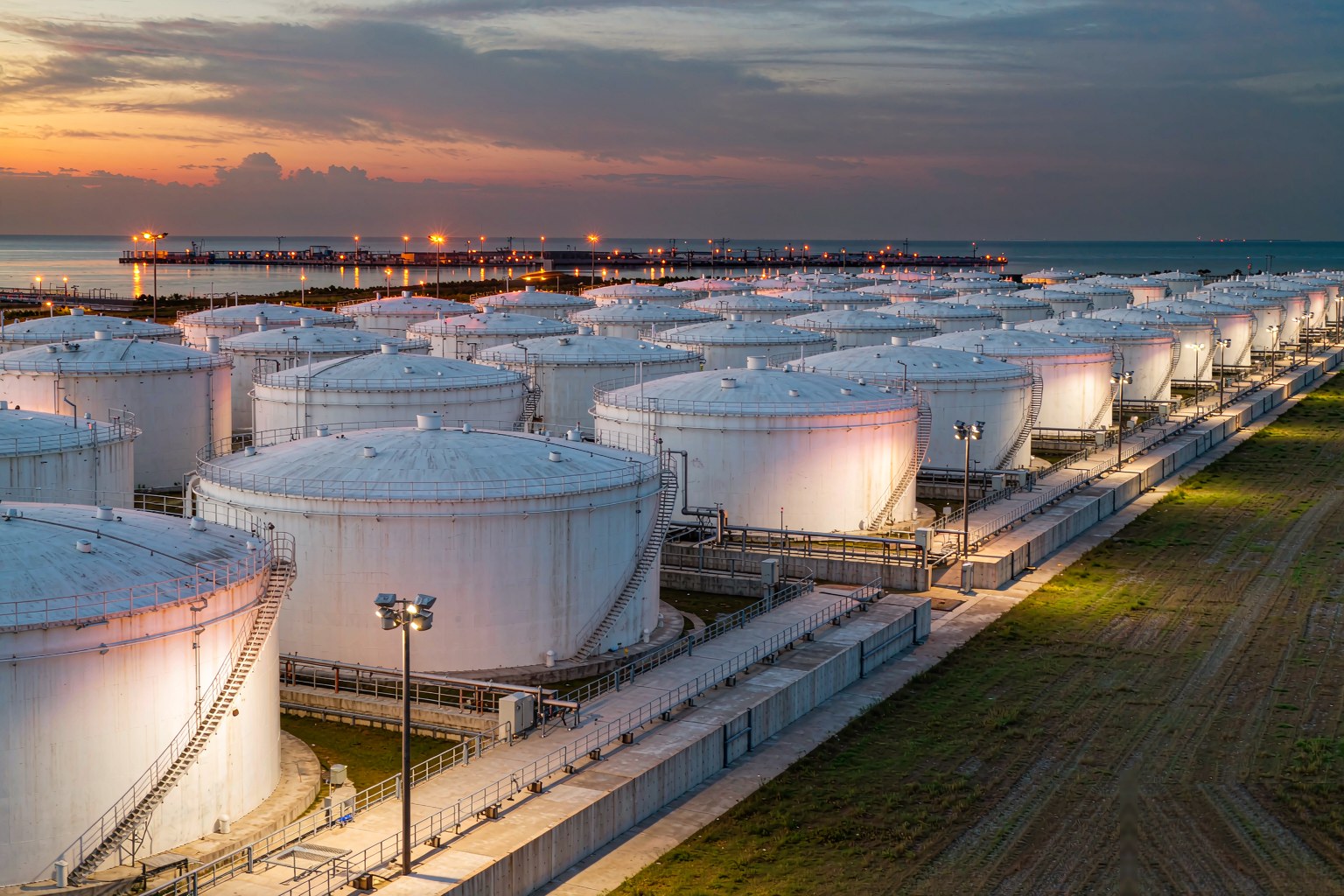
Where Singapore's classified-area lighting demand sits
Singapore's refining and petrochemical capacity is concentrated on two connected islands, and the numbers explain why the retrofit story dominates. National refining capacity is around 1,380,000 barrels per day, placing the country among the three largest refining and petrochemical hubs in the world alongside Houston and Rotterdam. The Jurong Island and Bukom Island cluster holds more than 100 global energy and chemical companies, over SGD 50 billion in cumulative investment, roughly 27,000 employees, and contributes about 3 percent of national GDP. Beneath Jurong Island, the Jurong Rock Caverns store liquid hydrocarbons 150 metres underground across 61 hectares, giving major operators strategic storage without consuming surface land.
| Operator | Capacity | Project or change in motion |
|---|---|---|
| ExxonMobil | About 592,000–605,000 bbl/day (Jurong Island) | Singapore Resid Upgrade Facility (SRUP) started up in 2025, converting heavy residues into low-sulphur fuel and high-value lube base oils; group II base-oil capacity up by 20,000 bbl/day (including the new EHC 340 MAX formulation); a steam cracker on Jurong Island is planned to shut down in March 2026 |
| Singapore Refining Company (SRC) | About 290,000–295,000 bbl/day (Jurong Island) | Joint venture of Chevron and Singapore Petroleum Company; Chevron plans to sell its stake in 2026 |
| Aster Energy and Chemicals | About 307,000 bbl/day (Bukom Island) | Took over the former Shell refining and chemical assets in 2025 (Chandra Asri–Glencore venture); plans to start up a 70,000 bbl/day condensate splitter in the second half of 2026 |
Why retrofit, not new build
The scale of the cluster is matched by how little room is left to grow into it. According to the Ministry of Trade and Industry (MTI, September 2026), Jurong Island covers about 3,000 hectares, less than one third of which remains developable, and the rest is reserved for specialty chemicals, sustainable materials, new energy, decarbonisation and low-carbon data-centre equipment. The policy shift is explicit: from "more land" to "smarter land". Lifting output from existing units makes debottlenecking and luminaire replacement a normal, recurring requirement rather than a one-off campaign.
| Cluster fact | Figure | Why it matters for lighting |
|---|---|---|
| National refining capacity | About 1,380,000 bbl/day | One of the world's three largest hubs; dense, continuous hazardous-area inventory |
| Jurong + Bukom cluster | 100+ companies; SGD 50 billion+ invested; ~27,000 staff; ~3% GDP | Sustained operation means sustained replacement, not campaign builds |
| Jurong Rock Caverns | 150 m deep; 61 hectares | Underground storage adds confined-space and inspection lighting points |
| Developable land | Under one third of 3,000 ha remains | Retrofit and debottlenecking, not greenfield, drive the work |
Where the work concentrates follows from that. First, in retrofit and debottleneck packages — the supporting points around a unit like SRUP that has just started up, and the new points that come with Aster's condensate splitter as it commissions. Second, in standardisation after an asset changes hands: when Chevron's SRC stake moves or the former Shell Bukom assets pass to a new operator, equipment and lighting standards get reconciled, and older fittings are replaced to match the new owner's specification. Third, in inspection lighting for the underground caverns and high-density process areas, where compact, maintainable fittings are preferred because access is tight.
What the tropical coastal site demands of the fitting
Singapore's environment is unforgiving in the ways that matter for luminaire life, and it is unforgiving differently from a temperate refinery. A fitting that would last a decade in a dry, cool climate can be defeated in three years by a sea-surrounded island that never stops being warm and damp. The conditions that decide whether a certified fixture survives commissioning and a decade of service convert directly into selection rules.
| Site condition | What it changes in selection | Our data point |
|---|---|---|
| Tropical heat and standing humidity | Year-round high temperature and humidity push corrosion and seal ageing harder than temperate sites; sealing and corrosion resistance are the decisive specs, not a secondary line item | Enclosure, fasteners, coating and seals selected for continuous tropical exposure; sealing verified rather than assumed |
| Salt-laden marine air | Jurong and Bukom are sea-surrounded; salt spray and onshore wind are the primary life-limiting factor for any outdoor or rack-mounted fitting | Corrosion duty treated as the baseline, not an upgrade; coastal exposure designed in from the start |
| Vibration and continuous running | Process units run without long stops; the change window is the turnaround, so service life and maintenance-free operation matter more than headline efficacy | Long-life, low-maintenance construction preferred; lamp changes planned around the shutdown, not forced by early failure |
| Zone mix and confined space | Unit areas are a Zone 1 and Zone 2 mix; caverns and enclosed spaces need matching zone and temperature-group selection | Zone and T-group matched to the classified-area drawing per point, not per plant |
| Space constraint | Island land is scarce, racks are dense, points are tight; mounting footprint and weight are real limits | Compact, light forms that drop into existing poles and racks are preferred by site engineering teams |
The single most important shift in mindset for a Singapore specifier is this: initial light output is not the deciding factor. A fixture that looks bright on a datasheet but fails its seal in year three, or needs a scaffold to service, costs more over the turnaround cycle than a more modest unit that simply stays certified and stays sealed. In a market where you cannot expand the footprint, you protect the one you have by choosing fittings that survive the climate and the shutdown schedule.
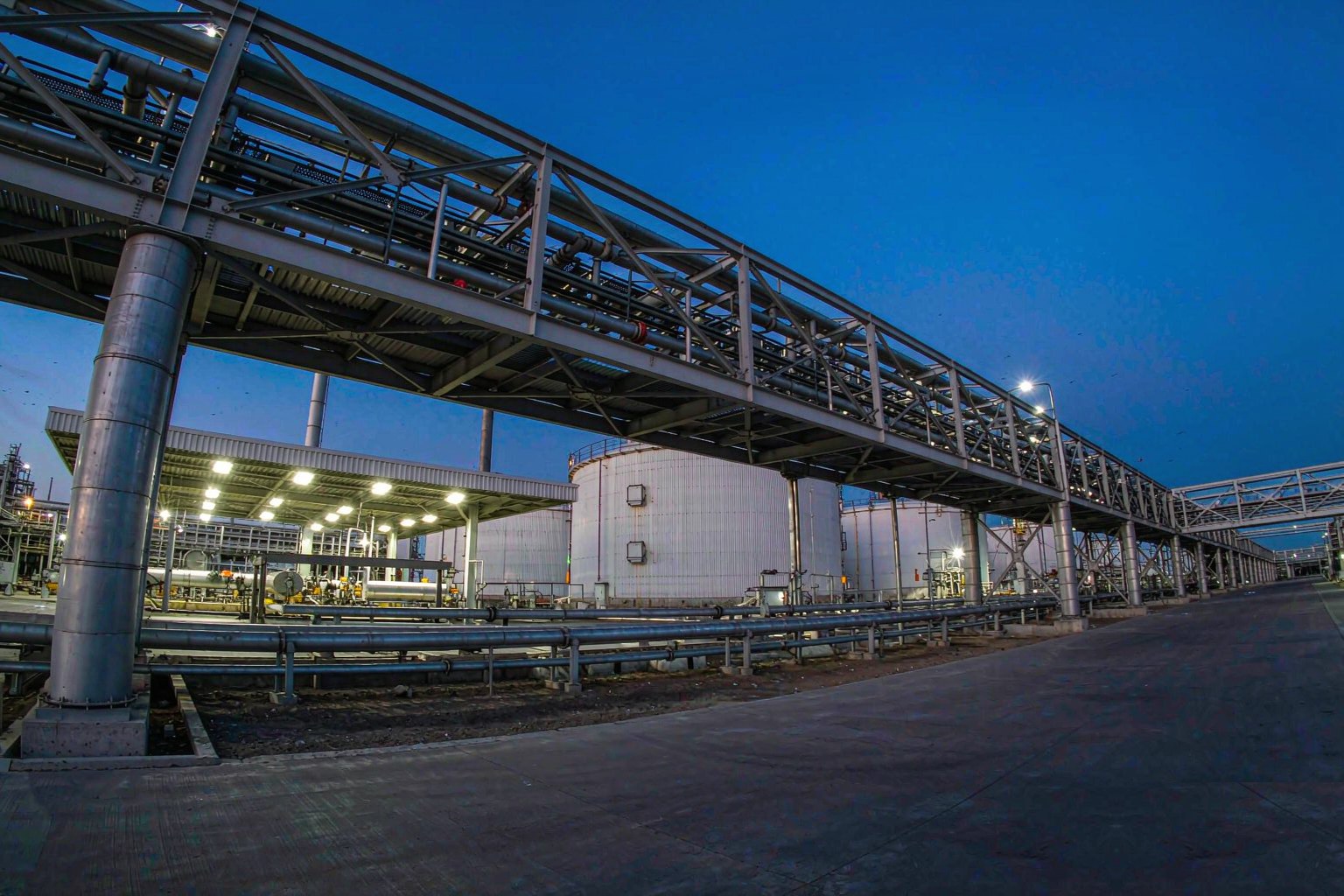
Specifying for these sites: zone, form and what fits the rack
Once the environment is understood, selection follows the zone and the mounting reality. The rule is unchanged from IEC 60079-14: match the equipment protection level to the zone. Zone 1 gas duty is met with Ex db (flameproof) construction; Zone 2 can often use Ex nR (restricted breathing), which usually carries the same light output for less cost and less weight. On a dense island rack, that weight and footprint difference is exactly what lets a replacement drop into an existing pole without re-engineering the support.
| Zone / duty | Protection type | Recommended form |
|---|---|---|
| Zone 1 gas | Ex db (flameproof) | FL7 / HB21 for flameproof duty where the classified drawing calls for Ex db |
| Zone 2 gas | Ex nR (restricted breathing) | FL8 floodlight for concentrated points; LU linear for continuous runs |
| Confined / underground (caverns) | Zone and T-group per point | Compact, low-maintenance forms matched to the access and ventilation of the space |
| Dense rack / tight pole | Weight and footprint limited | Light, small-footprint luminaires that fit existing structures without re-support |
For concentrated lighting points — tank tops, loading areas, perimeter and open process space — a floodlight carries the output. The FL8 Series explosion-proof floodlight is built for exactly these Zone 2 points. For pipe racks, walkways and long process runs where even light along a line matters more than throw, a linear format does the work with fewer fittings and less weight on the structure — the LU Series LED linear luminaire is the matching Zone 2 linear. Both are supplied with the IECEx and ATEX evidence listed below; the exact certificate that applies to a given type is confirmed against the certificate table, not assumed from the series name.
What we provide
The manufacturer's side of the technical file is what we hold and what we hand over. Every number below is stated as issued, and the certificate for a given type is the one listed against that type.
| Document | Number | Issued by / covers |
|---|---|---|
| ATEX Type Examination Certificate | CSANe 25 ATEX 1229X | CSA Group (Netherlands notified body) — LO series |
| IECEx Certificate of Conformity | IECEx CSA 25.0093X | CSA Group — LO series |
| ATEX Quality Assurance Notification (QAN) | CSANe 26 ATEX M076 | CSA Group Netherlands — LO series |
| IECEx Quality Assessment Report (QAR) | GB/CSAE/QAR26.0002/00 | CSA Group (UK) — LO series |
| ATEX Type Examination Certificates | TÜV CY 26 ATEX 0207611 / 0207612 / 0207613 X | TÜV (Cyprus); correspond to the FL8, GS and LU series |
In practice we supply the IECEx test reports, the IECEx Certificates of Conformity, the IECEx QAR, the ATEX certificates and the quality assurance notification, together with installation manuals and the parameter set behind each series — the technical evidence a project needs in order to assess the equipment.
What we need from you to quote
For a quote and lead time, please provide: the area-classification drawing (Zone 1 / Zone 2, gas group, temperature class); the site ambient temperature range and the mounting height; the existing mounting interface and any weight limit on the rack, pole or cavern ceiling; the required illuminance and uniformity for the task; the supply voltage and frequency; and the project node and required arrival time. With those we can match the EPL, the certified ambient range and the format to the duty, and return a bill of materials rather than a single catalogue item.
Frequently asked questions
Why is retrofit the main lighting demand in Singapore rather than new plants?
Jurong Island covers about 3,000 hectares with under one third still developable, and the remaining land is reserved for specialty chemicals, sustainable materials, new energy and low-carbon data centres. With capacity essentially full, output is lifted by debottlenecking existing units rather than greenfield builds, so luminaire replacement and retrofit packages are the recurring demand.
What environment factors matter most for luminaires on Jurong and Bukom?
Four conditions dominate: year-round tropical heat and standing humidity, salt-laden marine air on sea-surrounded islands, vibration and continuous running that constrains the change window to the turnaround, and dense, space-limited racks. Sealing and corrosion resistance are the decisive specs, and service life matters more than headline efficacy.
Which form should I choose for a Zone 2 pipe rack versus a tank-top point?
For concentrated points such as tank tops, loading areas and perimeter, a floodlight such as the FL8 carries the output. For pipe racks, walkways and long process runs where even light along a line matters, a linear form such as the LU series does the work with fewer fittings and less weight on the structure. Zone 1 points call for Ex db forms such as FL7 or HB21.
Are your luminaires suitable for the confined spaces of the Jurong Rock Caverns?
Compact, low-maintenance forms suit confined and underground points, where access is tight and ventilation is limited. The selection logic is the same as anywhere: match the EPL and the gas group to the classified area point by point, and confirm the certified ambient range against the space's actual conditions. Mounting and access arrangements are confirmed with the enquiry, because the cavern ceiling interface differs from an open rack.
How do you handle a retrofit where the existing pole or rack has a weight limit?
Weight and footprint are checked before the photometric figure. Where the existing support was sized for an earlier fixture, an Ex nR (restricted breathing) type often delivers the same output for less weight than an Ex db unit, which is usually what lets a replacement drop onto the existing pole without re-engineering the support. The mounting interface and any load limit belong in the enquiry alongside the zone and ambient data.
- About Us
- Products
- Explosion proof light
- Portable explosion proof lighting
- Explosion proof emergency light
- Explosion proof LED T8 tube
- Explosion proof Junction Box
- Explosion proof street light
- Service
- FAQ
- Docs download
Service hotline
Tel:+86 755 29846615
Work time:9:00-20:00
E-mail:sales02@seekingled.com
address:5F, Building 5, Guole Science and Technology Park, Lirong Road, Dalang Street, Longhua, Shenzhen, China